Encourage Ground Cover
Space plants 30–45 cm apart and gently pin down young, flexible stems with U-shaped landscape pins to encourage a dense, weed-suppressing groundcover mat when growing purple poppymallow.

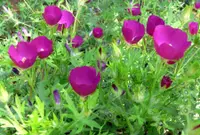
Purple poppymallow (Callirhoe involucrata) is a low-growing perennial wildflower in the mallow family, valued for its long season of magenta, cup-shaped blooms. It forms spreading mats of finely divided, dark green foliage that can trail over walls or edge sunny borders.
This species is native to prairies and open habitats in central North America, where it thrives in full sun and well-drained, often poor or rocky soils. Once established, it shows good drought tolerance, which makes it relatively easy to handle if soils do not stay wet. Gardeners who learn how to care for purple poppymallow often choose it for low-maintenance groundcover in dry, sunny sites.

Care Difficulty
Easy Care

Light Preference
Full Sun

Water Requirements
Low Water

Temperature Preference
Cold Hardy

Hardiness Zone
4–9

Soil Texture
Sandy, Loamy, Rocky

Soil pH
Slightly acidic (6.5–7.0), Neutral (7.0)

Soil Drainage
Well-drained

Fertilization
Minimal (feed rarely)
Scan your plant to receive care tips personalized for your specific plant
Available on iOS and Android
This sun-loving perennial thrives in bright, open conditions with limited shade.
This species prefers dry to moderately moist soil and dislikes staying wet for long periods.
This hardy prairie plant tolerates a wide temperature range once established outdoors.
This species is adapted to dry climates, so humidity is rarely a concern for Callirhoe involucrata.
This plant prefers lean, fast-draining soil that mimics dry prairie or rocky slope conditions.
This species can grow in containers if the setup prevents waterlogging and respects its deep root system.
Callirhoe involucrata is a low-input native perennial that needs only light feeding in most garden soils.
Callirhoe involucrata benefits from light, targeted pruning to maintain a tidy mat and encourage flowering.
This species is usually grown in the ground, and transplanting should be done carefully due to its deep taproot.
Callirhoe involucrata is most reliably propagated from seed, with some success from careful division.
This hardy perennial usually needs minimal winter care in most temperate climates.

Plant Health Check
Not sure what's wrong with your plant? Check your plant's health inside the app.
The magenta flowers typically open in late afternoon or early evening and may close again by the next day, an adaptation that helps reduce water loss and sun damage in its hot, dry native habitats.
This species develops a deep, thick taproot that allows it to access moisture far below the surface, making established plants highly drought-tolerant but difficult to transplant once mature.
Stems can trail 60–90 cm across the soil, forming a low, flowering mat that suppresses many competing plants while still allowing light to reach shallow-rooted companions.

Callirhoe involucrata naturally occurs in prairie and open grassland ecosystems from the central US into northern Mexico, where its long-blooming flowers provide an important nectar source for native bees and small butterflies during hot, dry parts of the growing season.
This species spreads moderately by trailing stems and self-seeding but is not usually aggressive. It forms low, mat-like patches over time. Occasional thinning or deadheading helps control spread and keeps neighboring plants from being crowded.
Keep your plants happy and healthy with plant identification, disease detection, and easy care guidance.