Tuberous grass pink Care (Calopogon tuberosus)

Also known as: grass-pink, Grass Pink Orchid
Tuberous grass pink

About Tuberous grass pink

Tuberous grass pink, Calopogon tuberosus, is a small terrestrial orchid native to bogs, wet meadows, and marshy edges across eastern North America. It grows from underground corm-like tubers and forms slender, grass-like leaves with upright flowering stems. The showy pink to magenta flowers have an upside-down look, with a bearded lip at the top that attracts pollinators. In cultivation it prefers cool, consistently moist, acidic substrates that mimic its wetland habitat. It is considered moderately challenging, as it dislikes drying out, hot roots, or compacted, nutrient-rich potting mixes. Understanding how to care for Tuberous grass pink starts with recreating its cool, bright, low-nutrient conditions.

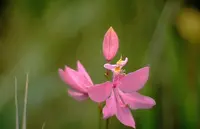
Main Plant Requirements

Care Difficulty

Hard Care

Light Preference

Full Sun

Water Requirements

Aquatic

Temperature Preference

Cold Hardy

Hardiness Zone

3–8

Soil Texture

Sandy, Loamy, Organic-rich

Soil pH

Strongly acidic (4.5–5.5), Acidic (5.5–6.5)

Soil Drainage

Waterlogged tolerant

Fertilization

Minimal (feed rarely)

Get Personalized Care Plan

Scan your plant to receive care tips personalized for your specific plant

Available on iOS and Android

How to Care for the Tuberous grass pink

This bog orchid prefers strong light but not harsh, drying exposure.

  • Provide 6–8 hours of full sun in cool, moist sites; in hotter regions, give morning sun with light afternoon shade to protect Tuberous grass pink from scorch.
  • Grow in open, unmowed areas so taller plants do not shade it; persistent shade reduces flowering and weakens plants over time.
  • In summer heat waves, slight dappled shade is beneficial, while in early spring and fall the plant can tolerate more direct sun without damage.

This species is adapted to consistently moist, boggy conditions.

  • Maintain soil that is damp to saturated, never fully drying; natural bogs, fens, and wet meadows suit Calopogon tuberosus best.
  • If cultivated, keep the root zone evenly moist; the surface may feel damp rather than dripping, and avoid letting the top 2–3 cm become dusty dry.
  • Watch leaves and buds: yellowing, limp growth can signal waterlogging without oxygen, while shriveled foliage usually indicates prolonged dryness.

This hardy orchid tolerates cool winters and mild to warm summers when moisture is stable.

  • Active growth is strongest at 65–80°F (18–27°C), provided the soil stays consistently moist and not hot around the roots.
  • Dormant tubers survive down to about 0°F (−18°C) under insulating snow or mulch, but repeated freeze–thaw without cover can damage them.
  • The plant manages short heat up to 90°F (32°C) if soil remains saturated; extended extreme heat with dry conditions can stunt growth and reduce flowering.

This bog orchid needs consistently moist air but adapts to typical home levels if roots stay wet.

  • Aim for 50–70% humidity, matching its native bog conditions, while never allowing the potting medium to dry out.
  • It tolerates brief drier air, but prolonged <40% humidity with dry roots causes leaf tip browning and stalled growth.
  • Increase humidity by grouping pots on a pebble tray with water, avoiding direct misting on flowers to prevent spotting.

This species requires nutrient-poor, acidic, water-retentive yet aerated soil that mimics a bog.

  • Use a mix of 50–70% long-fiber sphagnum moss with silica sand or fine perlite to hold moisture while maintaining air pockets.
  • Keep pH acidic, roughly 4.5–5.5, since Calopogon tuberosus declines in neutral or alkaline media.
  • Avoid rich composts, manures, and standard potting mixes, which encourage rot and suppress tuber development.
  • For outdoor beds, create a lined bog area with rainwater-saturated peat and sand, avoiding any added fertilizer salts.

This orchid can be grown in containers if the pot is managed as a mini bog rather than a standard planter.

  • Choose a tall, watertight outer sleeve or saucer that allows the inner pot to sit in 2–5 cm of rainwater during the growing season.
  • Use a narrow, deep pot to support vertical growth and keep tubers cool and submerged in consistently wet medium.
  • Select plastic rather than terracotta to slow evaporation and keep the bog-style mix evenly saturated without frequent topping up.

Calopogon tuberosus grows in naturally lean, acidic bog soils and needs only very light feeding in cultivation.

  • Use a weak, balanced orchid fertilizer (around 10-10-10) at 1/4 strength during active growth in late spring–mid summer.
  • Apply no more than every 4–6 weeks; excessive nutrients harm roots and reduce flowering.
  • Do not fertilize dormant tubers in fall–winter; allow Tuberous grass pink to rest in nutrient-poor, moist medium.
  • Avoid compost or rich slow-release products that raise nutrients and pH above its natural bog conditions.

Pruning needs for Calopogon tuberosus are minimal and focus on tidying spent growth.

  • In late summer or early fall, cut back only completely browned flower stems near the base with clean scissors.
  • Leave green leaves in place until they yellow naturally to let energy return to the underground tubers.
  • Remove any dead or diseased foliage promptly to limit fungal problems in damp bog conditions.
  • Avoid shaping cuts; this species has a natural upright habit and pruning does not enhance flowering.

This bog orchid is best left undisturbed, so transplant Calopogon tuberosus only when health or space clearly requires it.

  • Check for slow growth, declining flowering, or crowded tubers at the container edge as signs it may need transplanting every 3–4 years.
  • Plan moves for late fall after foliage dies back or very early spring before new shoots emerge.
  • Prepare a deep container or bog bed with acidic, low-nutrient mix (e.g., sphagnum peat and sand) kept consistently moist.
  • Slide the root mass out gently, keep tubers attached to their roots, replant at the same depth, and water carefully to reduce stress.

Propagation of Calopogon tuberosus is possible but slow and best suited to patient growers.

  • Divide clumps in late fall or very early spring, separating tubers with healthy roots and at least one growth point.
  • Replant divisions into acidic, moisture-retentive but low-nutrient bog mix, spacing them 5–10 cm apart.
  • Seed propagation requires fresh seed sown on sterile, consistently moist medium, ideally under high humidity.
  • Maintain cool to mild temperatures and bright, indirect light; expect seedlings to take several years to reach flowering size.

This cold-hardy North American orchid tolerates typical outdoor winters when grown in the ground within its hardiness range.

  • Dormant tubers withstand freezing down to around USDA zone 3–4 if soil remains moist but not waterlogged ice.
  • In colder or exposed sites, add a 5–8 cm layer of loose mulch after the ground cools to insulate the root zone.
  • For containers, move pots into an unheated but frost-free, bright area, keeping the medium slightly moist during dormancy.

Care Tips

Protect Dormant Tubers

After foliage dies back, mark clump locations and add a thin mulch of pine needles or shredded leaves to protect resting tubers from freeze–thaw cycles, then carefully remove most of the mulch in spring so new shoots are not smothered.

Use Net Pots

In containers, plant tubers in slotted or mesh orchid pots filled with sphagnum peat and sand, then sink these into a larger watertight cache pot so you can keep roots evenly moist while still providing high oxygen around the tubers.

Manage Winter Wet

In cold climates with poorly drained soil, lift tubers after the leaves yellow, dry them gently, and store them in barely moist sphagnum at 40–50°F, then replant in spring once the risk of prolonged waterlogging has passed.

Encourage Pollinators

To improve flowering and seed set, plant native grasses and wildflowers nearby and avoid insecticides, since this orchid relies on native bees that are attracted but not rewarded by its deceptive flowers.

Create Microbog Pockets

For growing Tuberous grass pink in gardens without natural bogs, line a shallow, sun‑exposed planting area with pond liner perforated with a few drainage holes, then fill with an acidic sand–peat mix and keep consistently moist to mimic a natural bog habitat.

Common Pests and Diseases

Aphids

These insects feed on tender flower stalks and buds, sucking sap and sometimes causing distorted growth and sticky honeydew on spikes and leaves.

Solution

Rinse infested spikes and foliage with a firm stream of water, then spot-treat remaining colonies with insecticidal soap or a ready-to-use neem oil spray, avoiding flowers on hot, sunny days. Reduce nearby nitrogen-rich fertilization that can encourage soft, aphid-attracting growth when growing Tuberous grass pink in garden settings.

Spider mites

These pests thrive in hot, dry conditions and can cause stippling, bronzing, and fine webbing on leaves and flower stems.

Solution

Increase humidity around plants, then hose down foliage to dislodge mites and webs. If needed, apply insecticidal soap or horticultural oil to both leaf surfaces at 5–7 day intervals until new growth appears clean, always avoiding treatment during high heat or direct midday sun.

Slugs and snails

These pests chew irregular holes in leaves and flower stalk bases, often leaving slime trails near the plants in moist boggy conditions.

Solution

Hand-pick at dusk or dawn and place traps such as shallow beer dishes or boards to concentrate them for removal. Use iron phosphate slug bait according to label directions, keeping pellets off the crowns and out of standing water where orchids grow.

Fungal leaf spots

This disease complex, often caused by various foliar fungi in humid bog habitats, leads to small dark or tan spots that can coalesce and cause partial leaf blight.

Solution

Remove and discard heavily spotted leaves to reduce spore load, and avoid overhead watering or splashing across plants. Improve spacing and airflow, and if the problem recurs yearly, use a preventive spray of a labeled fungicide such as a chlorothalonil or copper product at the start of the growing season.

Botrytis blight

This disease flourishes in cool, damp conditions and causes brown, water-soaked lesions on petals and buds that may develop gray fuzzy mold.

Solution

Promptly remove and discard affected flowers and any fallen floral debris, and reduce humidity and crowding around the flower spikes when possible. Improve air circulation, avoid wetting blooms, and if outbreaks are frequent, apply a blooming-stage fungicide labeled for ornamentals before extended cool, wet weather periods.

Interesting Facts

Insect-trapping deception

This orchid has hinged, hair-covered lips that mimic nectar guides and snap shut when a visiting bee lands, temporarily trapping the insect against the column to increase chances of pollination.

Upside-down flowers

Unlike most orchids, its flowers are non-resupinate, meaning they do not twist during development and the lip is held at the top of the flower instead of the bottom.

Bog habitat specialist

It naturally occurs in nutrient-poor acidic bogs, wet meadows, and sphagnum wetlands across eastern North America, relying on a tuber and fungal partnerships in the soil to survive these harsh conditions.

Botan icon

Did you know?

This species often blooms in the same habitats as pitcher plants and other carnivorous bog plants, forming visually striking and ecologically specialized plant communities in some of the nutrient-poorest ecosystems in eastern North America.

FAQs about Tuberous grass pink

This species performs best outdoors in cool, moist, acidic bog or wet meadow conditions with distinct winter dormancy. Indoor conditions rarely provide the required light, humidity, and seasonal temperature changes, so long-term indoor cultivation is usually weak or unsuccessful.

Grow Healthy Plants with Botan Care

Keep your plants happy and healthy with plant identification, disease detection, and easy care guidance.

Botan plant care app — identify plants on mobile

Explore More Plants