


Control Spreading Edges
Sink flexible lawn edging or a bottomless plastic pot (15–20 cm deep) into the soil around the clump to keep runners from invading nearby plants while still allowing good root depth.

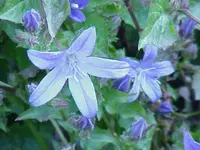
Serbian bellflower, Campanula poscharskyana, is a low-growing perennial often used as a groundcover or trailing plant in rock gardens, walls, and containers. It forms dense mats of small, toothed green leaves.
In bloom, it produces many star-shaped, lavender-blue flowers that create a soft, cascading effect. This spreading habit makes it useful for edging and for softening hard surfaces.
The species is native to rocky slopes in the Balkan region, where it thrives in crevices and well-drained sites. It adapts well to temperate gardens and is generally considered easy to grow.
It prefers bright light, moderate moisture, and well-drained soil, which guides how to care for Serbian bellflower successfully both outdoors and in containers.

Care Difficulty
Easy Care

Light Preference
Partial Sun

Water Requirements
Moderate Water

Temperature Preference
Cold Hardy

Hardiness Zone
3–8

Soil Texture
Sandy, Loamy, Organic-rich

Soil pH
Acidic (5.5–6.5), Slightly acidic (6.5–7.0)

Soil Drainage
Moist but well-drained

Fertilization
Light (every 4–6 weeks)
Scan your plant to receive care tips personalized for your specific plant
Available on iOS and Android
This low-growing perennial prefers bright, gentle light to flower well without leaf scorch.
This species prefers evenly moist, well-drained soil rather than cycles of drought and saturation.
This hardy groundcover tolerates a wide temperature range but flowers best in mild conditions.
This species manages well in typical indoor humidity if extremes are avoided.
Campanula poscharskyana grows best in loose, well-aerated, free-draining soil.
This species is well suited to container growing on patios, balconies, and window boxes.
Campanula poscharskyana benefits from light, consistent feeding during active growth but does not need heavy fertilization.
Pruning helps keep Campanula poscharskyana compact, tidy, and flowering well.
This species adapts well to both ground cover and containers, but it can outgrow its space over time.
Campanula poscharskyana is commonly propagated by division, cuttings, or seed.
This hardy perennial usually needs minimal winter care in most temperate climates.

Plant Health Check
Not sure what's wrong with your plant? Check your plant's health inside the app.
This species is native to rocky limestone cliffs and walls in the western Balkans, where it naturally creeps into cracks and ledges, anchoring itself in very shallow, mineral-rich substrates.
It forms dense mats through above-ground creeping stems that root at the nodes, allowing a single plant to slowly colonize gaps in pavements, walls, or rock gardens without relying heavily on seed production.
The plant is notably hardy, tolerating winter frosts in much of Europe and North America, and can resume flowering quickly once temperatures rise, often producing a long flush of small star-shaped flowers.
This species forms low, spreading mats through stems that root where they touch soil. It can fill gaps quickly but is usually manageable with edging, division, or lifting unwanted runners each season in smaller beds.
Keep your plants happy and healthy with plant identification, disease detection, and easy care guidance.

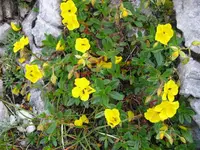
Common Rock-rose
Helianthemum nummularium
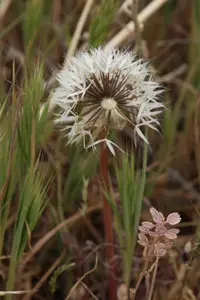
Lindley's Silverpuffs
Microseris lindleyi
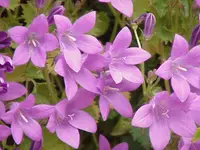
Dalmatian bellflower
Campanula portenschlagiana
Woody Rock-rose
Tuberaria lignosa

yellowfruit horse-gentian
Triosteum angustifolium
Glaucous Primrose
Primula glaucescens
 POPULAR
Naked Lady plants
Amaryllis belladonna
Siberian primrose
Primula nutans