Edge Containment
In garden beds, install a shallow root barrier or metal edging 10–15 cm deep to prevent the clumps from slowly creeping into paths or neighboring plants while still allowing natural arching growth above soil level.


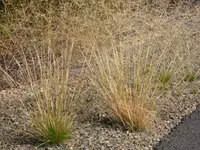
New Zealand hair-sedge (Carex comans) is a small ornamental grass-like sedge valued for its fine, arching foliage and soft, tufted mounds. It is commonly used in borders, rock gardens, and containers for gentle texture and movement.
This species is native to New Zealand, where it grows in open, often coastal habitats with cool, moist conditions. In gardens it typically forms low clumps, with leaves that may be green, bronze, or copper depending on the cultivar.
Carex comans is generally easy to grow when given light, free-draining soil and consistent moisture without waterlogging. Understanding how to care for New Zealand hair-sedge mainly comes down to providing suitable light, avoiding extreme heat, and preventing very dry soil.

Care Difficulty
Easy Care

Light Preference
Partial Sun

Water Requirements
Regular Water

Temperature Preference
Cool Climate

Hardiness Zone
6–9

Soil Texture
Sandy, Loamy, Organic-rich

Soil pH
Acidic (5.5–6.5), Slightly acidic (6.5–7.0)

Soil Drainage
Moist but well-drained

Fertilization
Minimal (feed rarely)
Scan your plant to receive care tips personalized for your specific plant
Available on iOS and Android
Carex comans prefers bright conditions with some protection from intense midday sun.
Carex comans prefers consistently moist, but not waterlogged, soil.
This grass favors cool to mild temperatures and tolerates a range of outdoor conditions.
Carex comans grows well in typical home humidity and does not need special humidification.
Carex comans prefers evenly moist, free-draining soil that never stays waterlogged.
This species is well suited to container growing outdoors on patios, balconies, or in mixed planters.
This sedge has modest nutrient needs but responds well to light feeding in active growth.
Carex comans benefits from light, periodic tidying rather than hard cutting.
This sedge is usually grown in the ground but can be transplanted or moved in containers when overcrowded.
New Zealand hair-sedge is most commonly propagated by division, which keeps cultivar traits consistent.
This ornamental sedge is generally cold hardy in mild to moderate winters and needs only simple care.

Plant Health Check
Not sure what's wrong with your plant? Check your plant's health inside the app.
In its native open habitats of New Zealand, this species often grows in windy sites, and the fine, arching leaves tend to lean in one direction, giving clumps a characteristic swept or windswept appearance valued in ornamental plantings.
Wild plants commonly show bronzy to copper tones when exposed to strong light and free-draining, often nutrient-poor soils, while those grown in richer, moister garden conditions tend to be greener and less intensely colored.
In coastal New Zealand, this sedge can occur among sand dune vegetation, where its fibrous root system helps bind loose substrates and contributes to stabilizing the soil surface against erosion.

Genetic and field studies have shown that some plants historically treated as separate New Zealand Carex species have been merged under Carex comans, so horticultural material in cultivation may include subtly different regional forms that all trace back to this single, variable species.
Brown tips usually come from irregular watering, excess fertilizer salts, or hot, drying wind. Trim damaged tips with clean scissors, improve watering consistency, flush the soil occasionally, and consider light wind protection to prevent further desiccation.
Keep your plants happy and healthy with plant identification, disease detection, and easy care guidance.