Install strong support
Use sturdy, weather-resistant trellis or wire mesh and attach new vines loosely with soft ties so the plant can climb without girdling or damaging the stems.

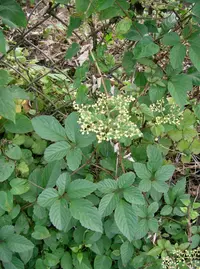
Bushkiller, Causonis japonica, is a fast-growing, twining vine known for its vigorous, scrambling habit. It often climbs over shrubs, fences, and small trees. The plant has compound, often glossy green leaves and produces small, inconspicuous flowers followed by clusters of berries. It is native to East Asia but has naturalized in several warm-temperate and subtropical regions, where it can become invasive outdoors. Its strong growth and tolerance of varied conditions make it easy to establish but difficult to control in the ground. Gardeners who care for Bushkiller in containers or controlled spaces should monitor its spread and provide support, moderate moisture, and reasonably fertile, well-drained soil.

Care Difficulty
Moderate Care

Light Preference
Partial Sun

Water Requirements
Moderate Water

Temperature Preference
Warm Climate

Hardiness Zone
6–9

Soil Texture
Loamy, Sandy, Organic-rich

Soil pH
Acidic (5.5–6.5), Slightly acidic (6.5–7.0)

Soil Drainage
Moist but well-drained

Fertilization
Light (every 4–6 weeks)
Scan your plant to receive care tips personalized for your specific plant
Available on iOS and Android
This vigorous vine prefers bright outdoor conditions with some protection from intense midday sun.
This species prefers consistently moist but not saturated soil during the growing season.
This hardy climber grows best in mild to warm outdoor conditions with protection from extreme cold and heat.
This vigorous vine prefers moderate to high humidity but adapts to many garden conditions.
This species grows best in moist, well-drained, moderately fertile soil.
This fast-growing climber can be grown in containers if given enough root space and stability.
This vigorous vine usually needs only light feeding, especially when grown in the ground.
Pruning helps manage the fast, climbing habit of Causonis japonica and prevents it from smothering nearby plants.
Moving this strong-growing vine is mainly about keeping roots contained and limiting unwanted spread.
New plants are most often produced from stem cuttings, but seeds and layering are also possible.
This vine is moderately cold hardy but may need some winter preparation in cooler climates.

Plant Health Check
Not sure what's wrong with your plant? Check your plant's health inside the app.
This species climbs and sprawls over shrubs and trees using branched tendrils, forming dense, layered mats that can block light and mechanically stress host vegetation.
It produces small bluish to black berries whose seeds are spread primarily by birds, helping the plant colonize new areas far from the original vine.
The vine thrives along forest edges, riverbanks, roadsides, and disturbed urban sites, showing high adaptability to different soil types and light levels from partial shade to full sun.

In parts of the eastern United States, this species is considered highly invasive because it can rapidly overtop native vegetation, creating near-monoculture tangles that are difficult to remove once established.
Poor flowering usually relates to low light, heavy nitrogen fertilization, or stress from drought, root disturbance, or repeated cutting back. Improve light exposure, use a balanced fertilizer, and avoid pruning tips heavily during the growing season.
Keep your plants happy and healthy with plant identification, disease detection, and easy care guidance.