Centrosema macrocarpum Care

Centrosema macrocarpum

About Centrosema macrocarpum

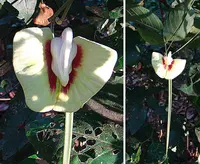
Centrosema macrocarpum is a twining perennial vine in the legume family, valued mainly for its climbing habit and pea-like flowers. It typically bears green, slender leaves and delicate, papilionaceous blooms that resemble small butterfly-shaped pea flowers.

This species is native to tropical regions of the Americas, where it often grows in open woodland, grassland edges, and disturbed areas with support to climb. It tends to establish quickly in warm conditions, which makes it vigorous but sometimes a bit sprawling in gardens.

For gardeners who want to care for Centrosema macrocarpum, the plant generally prefers bright light, moderate moisture, and well-drained soil. Its main challenges are sensitivity to cold and the need for a support structure to manage its growth.

Main Plant Requirements

Care Difficulty

Moderate Care

Light Preference

Full Sun

Water Requirements

Moderate Water

Temperature Preference

Tropical / Frost Sensitive

Hardiness Zone

10–11

Soil Texture

Sandy, Loamy, Organic-rich

Soil pH

Acidic (5.5–6.5), Slightly acidic (6.5–7.0)

Soil Drainage

Well-drained

Fertilization

Minimal (feed rarely)

Get Personalized Care Plan

Scan your plant to receive care tips personalized for your specific plant

Available on iOS and Android

How to Care for the Centrosema macrocarpum

This vigorous tropical vine needs strong light to flower well but dislikes extreme, dry heat on its roots.

  • Provide 6–8 hours of direct sun daily, ideally with morning sun and light afternoon shade, especially in hot, inland climates.
  • Plant where it receives at least 3–4 hours of unshaded light; in too much shade, Centrosema macrocarpum produces weak stems and sparse blooms.
  • In very hot summers, protect from harsh sun between 1–4 p.m. with partial shade or filtered light to prevent leaf scorch and moisture stress.

This species prefers evenly moist, well‑drained soil rather than constant wetness or repeated drying out.

  • Water when the top 3–5 cm of soil feel dry, soaking the root zone deeply, then let excess drain away to avoid root rot.
  • In hot, active growth periods, monitor more often; wilting at midday that does not recover by evening signals the need for a thorough watering.
  • During cooler seasons or reduced growth, extend intervals between waterings, watching for yellowing, mushy roots as a sign of overwatering in Centrosema macrocarpum.

This warm‑climate vine grows best in consistently mild to hot conditions without exposure to frost.

  • Aim for 70–90°F (21–32°C) during active growth, as this range supports strong vegetative development and abundant flowering.
  • Protect from temperatures below 40°F (4°C); repeated drops near 32°F (0°C) can damage foliage and stems, and hard frost may kill the plant to the ground.
  • In heatwaves above 95°F (35°C), provide afternoon shade and reliable soil moisture to limit heat stress and leaf scorch while maintaining growth.

This species prefers moderately humid air but usually adapts to typical indoor levels.

  • Aim for 40–60% humidity to support steady growth and flowering.
  • Dry air can be tolerated, but very low humidity may cause curled leaf edges, dull foliage, or slow growth.
  • Increase humidity by grouping plants, placing trays with water and pebbles nearby, or using a small room humidifier in very dry homes.

Centrosema macrocarpum needs airy, fast-draining soil that still holds moderate moisture.

  • Use a loose, loamy mix based on peat or coco coir with 30–40% perlite or coarse sand for drainage.
  • A slightly acidic to neutral pH around 6.0–7.0 supports nutrient availability and root activity.
  • Blend in a small amount of well-rotted compost to add organic matter without making the mix heavy or waterlogged.
  • Avoid dense clay, compacted ground, or containers that stay wet for more than 1–2 days after watering.

This species can be grown successfully in containers when given adequate root depth and support.

  • Choose a deep, relatively narrow pot to accommodate the taproot while limiting excessive surface wetness.
  • Select a heavier material such as terracotta or ceramic to stabilize the container against vine weight and wind.
  • Install a sturdy trellis or rim support directly in the pot so climbing stems do not pull or tip the container.

This subtropical vine responds well to light feeding on poor soils but often needs no fertilizer in rich ground.

  • Use a balanced liquid fertilizer (for example 10-10-10) at 1/2–1/4 strength every 4–6 weeks during active growth.
  • Apply in spring through late summer only, skipping feeds during fall and winter dormancy.
  • On sandy or very low‑nutrient soils, incorporate compost or a slow‑release fertilizer at the start of the growing season.
  • Avoid overfeeding Centrosema macrocarpum, which can cause lush foliage with reduced flowering.

Thoughtful pruning keeps Centrosema macrocarpum flowering well and prevents it from becoming too tangled.

  • Prune in late winter or early spring before strong new growth begins.
  • Remove dead, damaged, or crossing stems first, using clean, sharp hand pruners.
  • Shorten overly long vines to maintain the desired size and to encourage branching and more flower-bearing shoots.
  • Light thinning through the canopy improves air movement and reduces disease risk.

This vigorous climber is more often transplanted outdoors than kept long term in containers.

  • Transplant young plants in spring once soil is warming and frost risk has passed.
  • Look for signs such as roots circling the pot, slow growth, or rapid drying of the potting mix before moving to a larger container.
  • Shift to a pot 1–2 in wider or into a prepared garden bed with well-drained soil and a sturdy support.
  • Water thoroughly after transplanting, shade for a few days if sun is intense, and keep soil evenly moist to reduce root stress.

New Centrosema macrocarpum plants are usually raised from seed, with stem cuttings as a secondary option.

  • Sow fresh seed in spring in a warm (70–80°F), bright location using a free-draining seed mix.
  • Lightly scarify hard seed coats with sandpaper or nick with a blade to improve water uptake and germination.
  • Keep the substrate just moist, not wet, and provide good airflow to limit damping-off disease.
  • For semi-ripe cuttings, take 8–10 cm shoots in late spring or early summer, use rooting hormone, and root in a humid, shaded propagator.

In mild climates this vine needs minimal winter attention, but colder regions require some precautions.

  • Centrosema macrocarpum is frost-tender; growth is damaged near 32°F and killed by hard freezes.
  • In USDA zones cooler than 9, grow in containers and move plants indoors or into a heated greenhouse before frost.
  • Outdoors in warm zones, apply a light mulch around the root zone to buffer temperature swings and conserve moisture.

Care Tips

Provide climbing support

Install a sturdy trellis, fence, or wires early in the season and gently tie new shoots with soft ties so vines can anchor securely and produce more flowers along the supported growth.

Encourage flowering flushes

Lightly trim back spent flowering stems by 10–20 cm after a bloom wave to stimulate new lateral shoots, which often produce the next round of buds more quickly.

Monitor and manage pods

If seed production is not desired, remove young pods before they mature so the plant directs more energy into vegetative growth and repeat flowering instead of seed set.

Protect from root disturbance

Avoid frequent digging or cultivation around the root zone and use a light mulch instead, since this species resents root disturbance and performs better when its root area stays stable.

Check for twining damage

Regularly inspect where stems wrap around supports or nearby plants and gently redirect any overly tight or crossing stems to prevent girdling and mechanical damage as the vines thicken.

Common Pests and Diseases

Pseudocercospora leaf spot

This disease causes small, circular to irregular brown spots on leaves that can merge into larger blotches, often with a lighter center and darker edge. Symptoms include premature yellowing and drop of older foliage, especially in warm, humid conditions.

Solution

Remove and discard affected leaves, avoid overhead watering, and increase spacing or pruning to improve airflow along the vine. In humid climates, apply a preventive copper-based fungicide or chlorothalonil product according to label directions during peak rainy periods as part of broader Centrosema macrocarpum care instructions.

Anthracnose

This disease produces dark, sunken lesions on young stems, petioles, and leaf veins, which can lead to dieback of tender shoots. Symptoms include distorted new growth and irregular tan to dark brown patches along leaf margins.

Solution

Prune out and destroy infected shoots, disinfecting tools between cuts, and keep foliage as dry as possible by watering at soil level. In areas with frequent warm rain, protect new growth with a registered anthracnose fungicide such as a copper or mancozeb product, applied at the first signs of infection and repeated as label permits.

Bean pod borer

This pest is a small moth whose larvae bore into flower buds and developing pods, leading to poor pod set and distorted, prematurely yellow pods. Symptoms include small entry holes, frass (sawdust-like droppings), and pods that fail to develop seeds properly.

Solution

Handpick and destroy infested pods and nearby damaged flowers, and collect any fallen pods to reduce larval carryover. Light pheromone or UV traps can help monitor moth activity, and in outdoor plantings, timely applications of Bacillus thuringiensis (Bt) to flowers and young pods can reduce caterpillar damage when used according to label instructions.

Leaf-cutting ants

These insects remove semicircular sections from leaves and transport them to their nests, which can quickly defoliate tender vines in tropical and subtropical areas. Symptoms include rapidly thinning foliage and visible foraging trails on the ground or along supports.

Solution

Locate active trails and place targeted ant baits containing insect growth regulators or borate compounds along the foraging routes, keeping them away from children and pets. Physical barriers on supports, such as sticky bands, and destruction or professional treatment of large nests help protect the vines from recurring defoliation.

Spider mites

These pests are tiny sap-sucking arachnids that cause fine stippling, bronzing, and dulling of leaves, often with thin webbing on the undersides during hot, dry weather. Symptoms include gradual leaf yellowing and reduced vigor when populations build up on the vine canopy.

Solution

Rinse the foliage thoroughly with a strong but gentle stream of water, focusing on leaf undersides, and repeat several times per week to knock down populations. In persistent cases, apply horticultural oil or insecticidal soap, ensuring full leaf coverage and repeating at 5–7 day intervals as needed, while avoiding treatments during high heat above about 85°F to prevent leaf burn.

Interesting Facts

Specialized butterfly host

This vine serves as a larval host for certain Neotropical butterflies, whose caterpillars feed on its leaves while the adult insects help connect the plant to wider pollinator networks in its habitat.

Nitrogen‑fixing twining legume

As a member of the legume family, it forms root nodules with symbiotic bacteria that convert atmospheric nitrogen into forms the plant can use, improving soil fertility in pasture and restoration systems where it is grown.

Adapted to tropical pastures

Originally from tropical America, it has been widely evaluated and used as a forage and cover crop in humid and subhumid tropical pastures because of its vigorous twining growth and ability to persist under grazing when properly managed, which is a key aspect of Centrosema macrocarpum care instructions.

FAQs about Centrosema macrocarpum

This species is a twining vine that climbs by wrapping its slender stems around nearby supports. Without support it tends to sprawl along the ground, forming trailing mats rather than standing upright on its own.

Grow Healthy Plants with Botan Care

Keep your plants happy and healthy with plant identification, disease detection, and easy care guidance.


Botan plant care app — identify plants on mobile

Explore More Plants