Protect Spring Buds
Install temporary windbreak fabric or use existing structures to shield emerging flower buds from harsh late spring winds and cold snaps that can drastically reduce flowering.

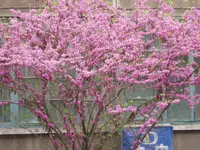
Chinese redbud (Cercis chinensis) is a small deciduous tree or large shrub valued for its early spring display of pink to rosy-purple blossoms on bare branches. It forms a rounded crown with attractive, heart-shaped leaves that provide a lush, green backdrop through the growing season.
This species is native to China and parts of East Asia, where it often grows along forest edges and slopes. It is generally considered a manageable landscape tree, as it stays relatively compact and responds well to pruning.
For many gardeners, how to care for Chinese Redbud is straightforward because it adapts to a range of garden soils and tolerates moderate urban conditions, provided it receives good light and steady moisture without waterlogging.

Care Difficulty
Moderate Care

Light Preference
Full Sun

Water Requirements
Moderate Water

Temperature Preference
Cold Hardy

Hardiness Zone
6–9

Soil Texture
Loamy, Clay, Organic-rich

Soil pH
Acidic (5.5–6.5), Slightly acidic (6.5–7.0)

Soil Drainage
Moist but well-drained

Fertilization
Minimal (feed rarely)
Scan your plant to receive care tips personalized for your specific plant
Available on iOS and Android
This deciduous tree thrives in bright outdoor light with some protection from intense afternoon sun.
This species prefers evenly moist but not saturated soil, especially during its establishment phase.
This hardy tree tolerates a wide temperature range but grows best in moderate conditions.
Humidity is rarely a limiting factor for this outdoor deciduous tree in typical garden conditions.
Cercis chinensis prefers moderately moist, well-drained, fertile soil with stable structure.
This species can be grown in large containers for several years if given sufficient root volume and stability.
Cercis chinensis benefits from modest feeding to support flowering and healthy growth in average garden soil.
Pruning Cercis chinensis is mainly done to maintain structure and remove problem wood, not to control size aggressively.
This species is usually grown in the ground, so focus on careful transplanting of young trees rather than frequent repotting.
Propagation of Cercis chinensis is possible but somewhat slow, most often done from seed or softwood cuttings by experienced growers.
Established Cercis chinensis trees are generally cold hardy in much of the US and require minimal winter care once rooted in.

Plant Health Check
Not sure what's wrong with your plant? Check your plant's health inside the app.
This species often produces clusters of pink to magenta flowers directly on older branches and the main trunk, a trait called cauliflory that is especially prominent and ornamental in this redbud compared to many related species.
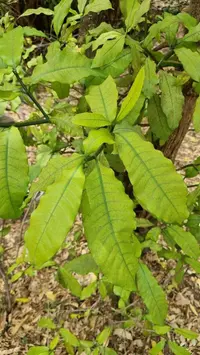
Its leaves are nearly circular with a pronounced heart-shaped base and a smooth, glossy surface, creating a dense, rounded canopy that is visually different from the smaller, often duller leaves of several other redbud species.
Native populations occur in China and parts of East Asia, and the species has been used in comparative studies of Eastern North American and Eastern Asian floras that share related redbud species, helping illustrate classic disjunct distribution patterns in plant evolution.

Some cultivated forms of this species, such as purple-leaved or weeping selections, have become important parent plants in breeding programs, influencing the development of many modern ornamental redbud cultivars grown far outside its native East Asian range.
Flowering usually occurs in early to mid spring, often before leaves appear. Individual blossoms last about 1–2 weeks, while the overall display on a mature tree can continue for 3–4 weeks in mild weather.
Keep your plants happy and healthy with plant identification, disease detection, and easy care guidance.