Wild Pomegranate Care (Burchellia bubalina)

Also known as: Bird's Nectar, Buffelhorn
Wild Pomegranate

About Wild Pomegranate

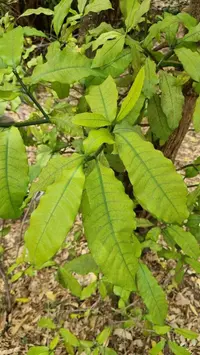
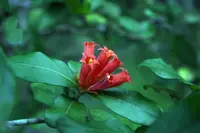
Wild pomegranate, Burchellia bubalina, is a small evergreen shrub or compact tree grown mainly for its clusters of bright orange to red tubular flowers. It has glossy green leaves and a dense, rounded habit, which makes it suitable for ornamental hedges, specimens, or large containers in mild climates.

This species is native to South Africa, where it grows on forest margins and rocky slopes, tolerating wind and coastal conditions. It is considered moderately easy to grow if given sun, well-drained soil, and regular but not excessive moisture. Gardeners who learn how to care for Wild Pomegranate often value it for its long flowering season and strong bird and pollinator appeal.

Main Plant Requirements

Care Difficulty

Moderate Care

Light Preference

Full Sun

Water Requirements

Moderate Water

Temperature Preference

Warm Climate

Hardiness Zone

9–11

Soil Texture

Sandy, Loamy, Organic-rich

Soil pH

Acidic (5.5–6.5), Slightly acidic (6.5–7.0)

Soil Drainage

Moist but well-drained

Fertilization

Light (every 4–6 weeks)

Get Personalized Care Plan

Scan your plant to receive care tips personalized for your specific plant

Available on iOS and Android

How to Care for the Wild Pomegranate

Burchellia bubalina prefers bright conditions that mimic its native sunny woodland edges.

  • Provide 4–6 hours of direct morning sun with light afternoon shade; in hotter regions, protect from strong sun after 1–2 pm to prevent leaf scorch.
  • Tolerates light to partial shade, but flowering of Wild Pomegranate decreases if it receives less than 3–4 hours of direct or very bright filtered light daily.
  • In summer, ensure air movement around sun‑exposed plants; in winter, choose the brightest spot available to offset shorter day length.

This shrub prefers evenly moist, well‑drained soil and does not like long periods of drought or saturation.

  • Water when the top 3–5 cm of soil feels dry, soaking the root zone deeply, then allow excess to drain away to avoid standing water.
  • Reduce watering in cooler months, allowing the top 5–7 cm to dry; in hot, windy weather, check soil more often as it dries faster.
  • Leaves yellowing and dropping from the lower stems often indicate overwatering or poor drainage, while dull, curling leaves and dry, brittle tips suggest underwatering.

This species grows best in mild, frost‑free climates with warm summers and cool, not cold, winters.

  • Aim for 65–80°F (18–27°C) for active growth; flowering is strongest when daytime temperatures stay within this range.
  • Burchellia bubalina tolerates brief drops to about 30–32°F (-1–0°C), but repeated or hard frosts can damage young shoots and flower buds.
  • In very hot spells above 90°F (32°C), provide mulch and some afternoon shade to protect roots and foliage from heat stress.

This species prefers moderate humidity and reacts when air becomes very dry.

  • Aim for 40–60% humidity for stable foliage and flowering of Wild Pomegranate.
  • Dry indoor air causes crispy leaf tips, curling edges, and slow new growth.
  • Increase humidity with a nearby tray of wet pebbles or grouping plants, rather than misting, to limit leaf disease risk.

This shrub prefers a loose, well-aerated mix that drains freely but does not dry out instantly.

  • Use a loamy, slightly sandy mix containing roughly 50% peat- or coir-based potting soil, 25% coarse sand, and 25% fine bark or perlite.
  • Ensure rapid drainage so water flows out within seconds, but choose a mix that still feels lightly moist 1–2 cm below the surface after a day.
  • Keep soil slightly acidic to neutral, around pH 6.0–7.0, which supports nutrient uptake for Burchellia bubalina.
  • Avoid heavy clay, compacted mixes, or pure sand, which either suffocate roots or dry out too fast and limit stable growth.

This shrub adapts well to container growing when the pot supports its woody root system and top-heavy canopy.

  • Choose a deep, wide pot that allows a spreading root ball so the plant does not rock or lean in wind.
  • Use a heavier material such as ceramic when grown tall, which stabilizes the container and reduces tipping risk.
  • Raise the pot slightly on feet or bricks so drainage holes stay clear and runoff leaves the root zone quickly.

Burchellia bubalina responds well to modest, consistent feeding during the warm growing season.

  • Use a balanced, slow-release fertilizer (for example 10-10-10) or a light top-dress of compost in spring as new growth starts.
  • Feed container plants every 6–8 weeks in spring and summer; outdoor in-ground plants usually need less frequent supplementation.
  • Reduce or stop feeding in fall and winter when growth slows, especially for Wild Pomegranate grown in cooler regions.
  • Apply at half the label strength for potted plants and water thoroughly afterward to prevent salt buildup and root burn.

Burchellia bubalina benefits from light, targeted pruning to maintain structure and encourage flowering.

  • Time main pruning for late winter or very early spring before vigorous new growth begins.
  • Remove dead, diseased, or storm-damaged wood first, cutting back to healthy tissue with clean, sharp bypass pruners.
  • Thin out crowded, crossing, or very inward-facing branches to improve light penetration and airflow within the canopy.
  • Shorten overly long shoots lightly to maintain a compact, rounded form and to direct energy toward strong flowering growth.

This shrub is more often grown in the ground, but young or container-grown plants sometimes need careful repotting or transplanting.

  • Look for roots circling the pot, slow growth despite good care, or the mix drying out very quickly as signs it needs a larger container.
  • Plan transplanting or repotting for late winter to early spring when conditions are mild and active growth is about to resume.
  • For repotting, move up only 1 pot size, using a free-draining mix, and keep the root ball intact to reduce shock.
  • After transplanting into the garden, water deeply, apply a 5–8 cm mulch layer, and shade temporarily if sun or wind exposure is strong.

Burchellia bubalina is usually propagated from semi-hardwood cuttings or seeds under warm, stable conditions.

  • Take semi-hardwood cuttings in late summer, 8–12 cm long, with several nodes, and remove lower leaves.
  • Dip cut ends in rooting hormone, then place in a coarse, well-drained medium kept evenly moist and around 70–75°F.
  • Provide bright, indirect light and high humidity using a propagator lid or plastic cover with ventilation holes.
  • Sow fresh seed in spring in a sandy mix, barely covered, and maintain gentle warmth and consistent moisture for germination.

In mild climates this species is relatively easy to overwinter but needs extra attention where frosts are common.

  • Burchellia bubalina is frost sensitive and can suffer leaf and shoot damage below about 30°F, especially when young.
  • Apply 5–8 cm of organic mulch over the root zone in late fall, keeping it slightly away from the main stem.
  • Wrap young stems with horticultural fleece during forecast freezes, particularly in exposed garden positions.
  • Move container plants indoors or into a frost-free greenhouse, giving bright light and slightly reduced watering through winter.

Care Tips

Formative branch training

In the first 2–3 years, lightly tie young shoots to a simple stake or fan them out on a small trellis to build a strong, open framework that lets light reach inner branches and encourages heavier flowering later.

Root zone mulching

Apply a 3–5 cm layer of fine bark or composted wood chips over the root zone, keeping it 3–5 cm away from the stem, to buffer soil temperature, reduce evaporation, and protect the rather shallow feeder roots from drying winds.

Targeted flower deadheading

After each main flush of blooms, remove spent flower heads back to a visible node to reduce energy loss into seed production and to stimulate a new wave of buds on the same framework.

Wind and salt protection

In coastal or exposed gardens, plant on the leeward side of a wall or hedge and use temporary windbreak fabric for young plants so foliage is not scorched or distorted by constant wind and salt-laden spray.

Container rotation routine

For potted specimens, rotate the container 90° every 2–3 weeks during the growing season so the canopy develops evenly and does not lean, which is especially helpful when growing Wild Pomegranate on a sunny patio or balcony.

Common Pests and Diseases

Soft scale

This pest feeds on stems and leaf undersides, causing yellowing, stunting, and sticky honeydew that can attract sooty mold. Infestations are fairly common on older, woody Burchellia bubalina shrubs in warm climates.

Solution

Wipe or gently scrub stems and leaves with a cloth or soft brush dipped in diluted insecticidal soap, then rinse with water. For heavier infestations, use a horticultural oil spray labeled for ornamental shrubs, making sure to cover stems and leaf undersides and repeat after 7–14 days if needed.

Aphids

These insects cluster on young shoots and flower buds, sucking sap and causing curling leaves, distorted new growth, and honeydew deposits. Flowering and overall vigor can be reduced if colonies are not controlled.

Solution

Spray affected shoots with a strong stream of water to dislodge colonies, then apply insecticidal soap or a light horticultural oil to new growth and bud clusters. Encourage lady beetles and other natural predators by avoiding broad-spectrum insecticides on nearby plants.

Leaf spot

This disease causes small dark brown to black spots on leaves that may merge into larger blotches, sometimes leading to early leaf drop. Symptoms include more severe spotting in dense, shaded, or poorly ventilated plantings, especially after extended wet periods.

Solution

Remove and discard heavily spotted leaves and any fallen debris around the base of the shrub to reduce sources of infection. Improve airflow by light pruning, avoid overhead watering, and if the problem recurs, apply a copper-based fungicide labeled for ornamental shrubs during wet seasons according to label directions.

Armillaria root and collar rot

This disease, caused by Armillaria fungi in the soil, leads to gradual decline with sparse foliage, dieback of branch tips, and poor flowering, often in sites with old tree stumps or woody debris. Symptoms include white fungal fans under the bark near the base and sometimes clusters of honey-colored mushrooms at the soil line in cool, wet conditions.

Solution

Carefully remove and discard severely affected plants along with as many infected roots and woody debris as possible, and avoid replanting Burchellia bubalina or other woody hosts in the same spot. For established shrubs showing early decline, reduce irrigation, improve drainage and aeration around the root zone, and keep the base of the plant dry and free of mulch buildup to slow disease progress.

Interesting Facts

Specialist bird pollination

The tubular, bright orange to red flower clusters are adapted for pollination by sunbirds, which access the nectar with their long, curved beaks and transfer pollen between plants.

Unusual square branches

Mature stems often become distinctly 4-angled, giving the branches a square cross-section, a structural feature that makes this shrub easy to distinguish from many other South African woody plants.

Restricted natural range

This species is native to a relatively narrow band of eastern and southern Africa, occurring from coastal and mist-belt forests in Kenya and Tanzania down through Mozambique to the Eastern Cape of South Africa, usually in warm, frost-free sites.

Botan icon

Did you know?

The species name bubalina refers to buffalo and recalls that the plant was first described from an area in South Africa where large herds of African buffalo were common, linking its scientific identity to a historical landscape that has changed significantly since its naming.

FAQs about Wild Pomegranate

Poor flowering is often due to insufficient light, heavy pruning at the wrong time, or excess nitrogen fertilizer. Old, exhausted potting mix can also reduce bloom. Focus on balanced nutrition and pruning only after the main flowering flush.

Grow Healthy Plants with Botan Care

Keep your plants happy and healthy with plant identification, disease detection, and easy care guidance.

Botan plant care app — identify plants on mobile

Explore More Plants