brittlebush Care (Encelia farinosa)

Also known as: White Brittlebush
brittlebush

About brittlebush

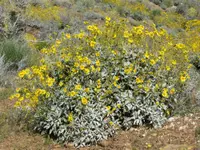
Brittlebush, Encelia farinosa, is a woody perennial shrub from arid regions of the southwestern United States and northern Mexico. It is common in desert washes, rocky slopes, and roadsides. The plant forms a rounded mound with many brittle gray-white stems and soft, silvery leaves that help reduce water loss and reflect intense sun. In season it produces bright yellow daisy-like flowers on tall stalks above the foliage, attracting pollinators. It is typically easy to grow in dry, sunny sites with fast-draining, poor soils and very little supplemental water. Gardeners who want to care for brittlebush should focus on providing strong light, warmth, and minimal moisture.

Main Plant Requirements

Care Difficulty

Easy Care

Light Preference

Full Sun

Water Requirements

Low Water

Temperature Preference

Warm Climate

Hardiness Zone

8–10

Soil Texture

Sandy, Loamy, Rocky

Soil pH

Neutral (7.0), Slightly alkaline (7.0–7.5)

Soil Drainage

Well-drained

Fertilization

Minimal (feed rarely)

Get Personalized Care Plan

Scan your plant to receive care tips personalized for your specific plant

Available on iOS and Android

How to Care for the brittlebush

Encelia farinosa thrives in strong desert sun but can adapt slightly to lighter conditions.

  • Provide 6–10 hours of direct sun daily; full, open exposure suits brittlebush in most arid and semi-arid climates.
  • Allow light afternoon shade in very hot regions to reduce leaf scorch and premature leaf drop during peak summer heat.
  • In winter, ensure plants are not shaded by buildings or trees, as low-angled sun is important for compact growth and abundant spring flowering.

This desert shrub prefers infrequent, deep watering in sharply drained soil.

  • Outdoors in the ground, water only when the top 5–8 cm of soil is completely dry, then soak the root zone thoroughly and allow it to dry again.
  • Reduce watering in fall and winter, supplying just enough to prevent severe wilting, especially for newly established Encelia farinosa plants.
  • Watch for yellowing, soft stems or persistent damp soil as signs of overwatering; crisp, drooping leaves that do not recover overnight indicate underwatering.

This species is adapted to hot, arid climates and handles a wide temperature range once established.

  • Optimal growth occurs around 70–90°F (21–32°C), with strong sun and low humidity supporting compact, healthy foliage.
  • Mature plants usually tolerate brief drops to about 20–25°F (-7 to -4°C), but young shrubs are more vulnerable and benefit from protection during cold snaps.
  • In extreme heat above 100°F (38°C), the plant commonly sheds some leaves to reduce water loss, so focus on airflow and avoid reflected heat from walls or pavement.

Humidity is not a significant factor for Encelia farinosa, which thrives in very dry air.

Encelia farinosa prefers very lean, fast-draining, mineral soils that mimic desert conditions.

  • Use sandy or gravelly soil with low organic matter, such as 60–80% coarse sand or small grit blended with a light potting base.
  • Ensure extremely rapid drainage; water should pass through within seconds and not leave the soil feeling heavy or compacted.
  • Aim for slightly alkaline to neutral pH around 7.0–8.0, avoiding strongly acidic mixes rich in peat.
  • Mix in small gravel or pumice to increase aeration and prevent root rot in periods of unexpected rain.

This species can be grown in containers if the setup prevents waterlogging and overheating of roots.

  • Choose a wide, heavy container to counterbalance the shrubby, branching top growth and reduce tipping in strong wind.
  • Use a mineral-based mix with high gravel content so the root zone dries quickly between irrigations in exposed locations.
  • Select light-colored pots in hot climates to reduce heat absorption and protect roots from excessive temperature spikes.

This desert shrub, commonly called brittlebush, needs little to no fertilizer in typical garden soils.

  • If growth is very weak in poor soil, apply a light layer of compost in early spring, kept away from the stem base.
  • Use a low-dose, slow-release balanced NPK, diluted to 25–50% of label strength, only once in the growing season.
  • Avoid feeding in late fall and winter to prevent soft growth that is more vulnerable to cold and drought stress.

Pruning Encelia farinosa is mainly done to maintain shape and remove spent or damaged growth.

  • Best time is late winter to early spring, before strong new growth starts.
  • Use clean, sharp hand pruners to remove dead, diseased, or crossing stems at their base.
  • Lightly thin crowded interior branches to improve airflow and keep a rounded, open form.
  • Shear off spent flower stalks after blooming if a tidier appearance is desired, avoiding deep cuts into old woody stems.

This desert shrub is usually grown in-ground, so focus on careful transplanting rather than frequent repotting.

  • Transplant in late fall or early spring when temperatures are mild and soil is workable.
  • Move plants when roots lightly fill the pot or growth slows, usually every few years in containers.
  • Handle the root ball gently, keeping roots intact and planting at the same depth in fast-draining, gritty soil.
  • Water once after transplanting, then allow soil to dry between waterings to limit root stress and encourage reestablishment.

Encelia farinosa is commonly propagated from seed and softwood cuttings under warm, dry-leaning conditions.

  • Sow fresh seeds in spring in a fast-draining, sandy mix, barely covered and kept lightly moist until germination.
  • Provide bright light, 70–80°F warmth, and low to moderate humidity for seedlings to avoid damping-off disease.
  • Take 7–10 cm softwood cuttings in late spring, remove lower leaves, and insert into gritty, barely moist medium.
  • Use a rooting hormone on cuttings and maintain bright shade with good airflow until roots form.

Encelia farinosa is a warm-desert shrub with limited frost tolerance, so some winter care is helpful in colder climates.

  • Established plants tolerate light frosts but may suffer damage below about 20°F, especially in wet soil.
  • In borderline climates, apply a thin gravel or coarse sand mulch to improve drainage around the root zone.
  • For container plants, move pots under a dry, bright shelter or indoors near a cool, sunny window before hard freezes.

Care Tips

Summer establishment

During the first hot season, place a wide, flat rock or light gravel mulch around the root zone to shade the soil surface and reduce heat and moisture stress while the plant establishes.

Intentional renewal pruning

Every 2–3 years, cut back one-third of the oldest, woodiest stems at ground level at the end of winter to encourage dense new growth and maintain a compact, floriferous shrub.

Flowering performance check

If flowering declines, lightly thin out crowded interior stems rather than shearing the top, which improves air flow and light penetration and restores better bloom coverage.

Controlled self‑seeding

If you want a naturalistic colony, leave some seed heads on the plant until they dry, then shake them onto nearby bare, unwatered soil, but remove seed heads in areas where you want to limit spread.

Heat and wind acclimation

When growing brittlebush from nursery stock, harden plants off over 7–10 days by gradually exposing them to full sun and prevailing winds to reduce transplant shock and stem breakage after planting.

Common Pests and Diseases

Leaf beetles

These insects chew irregular holes in leaves and young shoots, sometimes skeletonizing the foliage on stressed plants in dry, disturbed sites.

Solution

Hand-pick adults and larvae where practical, shake branches over a container to remove feeding beetles, and encourage birds and predatory insects; in heavier outbreaks, use a labeled neem or pyrethrin spray applied in the early morning, focusing only on actively infested foliage to protect non-target insects.

Spider mites

This pest thrives in hot, very dry conditions and causes stippled, yellowing leaves and fine webbing on the undersides of brittlebush foliage.

Solution

Rinse foliage thoroughly with a firm but gentle stream of water to dislodge mites, prune and discard heavily infested stems, and increase ambient humidity slightly with occasional overhead rinsing; if populations persist, use an insecticidal soap or horticultural oil labeled for mites, applied to leaf undersides and repeated as directed.

Leaf spot

This disease produces small tan to brown spots on leaves that may merge into larger blotches, more often on plants grown in irrigated landscapes with overhead watering.

Solution

Remove and discard affected leaves to reduce inoculum, shift to drip or low-angle watering to keep foliage dry, and improve spacing and air movement; if spotting continues to spread, a copper-based fungicide can be used preventively on new growth following label directions.

Stem canker

This disease causes sunken, discolored lesions on stems that can girdle branches, leading to dieback from the tip inward, especially after mechanical damage or prolonged moisture on stems.

Solution

Prune out infected stems several inches below visible damage using clean, sharp tools, then disinfect tools between cuts; reduce overhead irrigation, avoid wounding stems, and remove nearby plant debris to lower pathogen survival.

Interesting Facts

Leaf salt strategy

Its gray-white, felted leaves are covered with tiny hairs and surface salts that reflect sunlight and reduce water loss, an adaptation that lets the plant stay active under intense desert heat.

Drought-deciduous habit

This shrub drops most or all of its leaves during severe drought to cut water use, then rapidly releafs and resumes photosynthesis after rainfall, matching the erratic moisture of Sonoran and Mojave deserts.

Pollinator and seed specialist

The bright yellow flower heads support a wide range of native bees and butterflies, while finches and other desert birds rely on its abundant, oil-rich seeds as an important seasonal food source.

Botan icon

Did you know?

Native peoples in the Sonoran Desert traditionally burned the dried stems of this shrub as a smoke source in hunting and rituals, taking advantage of their very resinous, easily combustible tissue.

FAQs about brittlebush

Insufficient light, overly rich or frequently fertilized soil, and excessive watering all reduce flowering. Old, woody plants may also bloom less. Light pruning after flowering and maintaining lean, well‑drained conditions usually restores abundant blooms when growing brittlebush outdoors.

Grow Healthy Plants with Botan Care

Keep your plants happy and healthy with plant identification, disease detection, and easy care guidance.

Botan plant care app — identify plants on mobile

Explore More Plants