Ceropegia candelabrum Care

Ceropegia candelabrum

About Ceropegia candelabrum

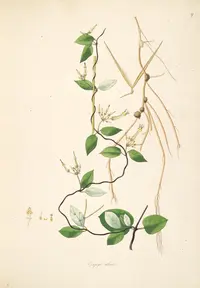
Ceropegia candelabrum is a twining, succulent vine known for its narrow cylindrical leaves and unusual tubular flowers, often called lantern or parachute flowers. Stems are slender and trailing, making it suitable for hanging baskets or trained on small supports indoors.

This species occurs naturally in dry, rocky habitats of India and neighboring regions, where it copes well with heat and short dry spells. Its succulent tissues store water, so overwatering is a greater risk than drought, which influences how to care for Ceropegia candelabrum.

The plant prefers bright light, very well-drained soil, and careful, infrequent watering, which makes it manageable for growers who can avoid constant moisture around the roots.

Main Plant Requirements

Care Difficulty

Moderate Care

Light Preference

Partial Sun

Water Requirements

Low Water

Temperature Preference

Tropical / Frost Sensitive

Hardiness Zone

11–12

Soil Texture

Sandy, Loamy, Rocky

Soil pH

Acidic (5.5–6.5), Slightly acidic (6.5–7.0)

Soil Drainage

Well-drained

Fertilization

Minimal (feed rarely)

Get Personalized Care Plan

Scan your plant to receive care tips personalized for your specific plant

Available on iOS and Android

How to Care for the Ceropegia candelabrum

This succulent climber prefers bright, indirect light with some gentle direct sun.

  • Provide 4–6 hours of filtered or morning sun daily, with bright shade or dappled light the rest of the day.
  • Tolerates light partial shade, but stems may stretch and leaves pale if light stays low, especially indoors when caring for Ceropegia candelabrum.
  • Avoid harsh midday summer sun, which can scorch leaves; increase light gradually in spring after darker winter conditions.

This plant has tuberous, water-storing roots and needs infrequent, careful watering.

  • Let the top 3–5 cm of soil dry fully before watering; in fast-draining soil this often means waiting several days or longer.
  • In spring and summer, water thoroughly, then drain away excess; in fall and winter, reduce frequency once growth slows.
  • Watch for shriveling, limp stems as a sign of underwatering, and yellowing, mushy bases or a sour smell as signs of overwatering and poor drainage.

This species prefers warm, stable temperatures with protection from cold and frost.

  • Aim for 65–80°F (18–27°C) during active growth, as this range supports steady photosynthesis and root activity.
  • Protect from temperatures below 50°F (10°C); brief dips to 45°F (7°C) may be tolerated but can slow growth and stress the plant.
  • In hot spells above 90°F (32°C), provide light shade and good airflow to limit heat stress, especially for plants in dark containers or near walls.

This species handles typical indoor humidity but benefits from slightly drier air than most tropical houseplants.

  • Aim for 30–50% humidity, similar to many heated homes, to prevent tuber and stem rot.
  • Dry air is usually tolerated; issues arise more from prolonged dampness than from low humidity.
  • Watch for soft, mushy stems or blackened tubers as signs of excess humidity combined with poor air movement and overwatering.
  • Increase air circulation with a small fan and avoid grouping tightly with moisture-loving plants to keep foliage dry.

Ceropegia candelabrum prefers a lean, fast-draining, airy mix that mimics rocky, sandy habitats.

  • Use a cactus/succulent base mix amended with extra coarse sand, fine grit, or perlite for sharp drainage.
  • Aim for slightly acidic to neutral pH around 6.0–7.0 to keep nutrients available without encouraging rot pathogens.
  • Include only a modest amount of organic matter, such as fine bark or a small portion of compost, to avoid waterlogged, heavy substrate.
  • Avoid dense, peat-heavy or clay-based mixes; if water sits on the surface for more than a few seconds, add more coarse material for aeration.

This species is well suited to container culture, especially hanging baskets or tall pots that allow its stems to trail.

  • Choose a pot only 2–4 cm wider than the root system to prevent unused, wet mix from staying cold and soggy.
  • Select unglazed terracotta if the environment is humid or watering is frequent, as it allows quicker evaporation from the root zone.
  • Use a tall or weighted container when stems become long to prevent tipping as growth shifts the plant’s center of gravity.

Light feeding supports healthy growth without forcing soft, weak tissue in Ceropegia candelabrum.

  • Use a balanced liquid fertilizer (around 10-10-10 or 20-20-20) diluted to 25–50% strength for container-grown plants.
  • Apply every 4–6 weeks during the active growing season, typically spring through early fall.
  • Skip or greatly reduce feeding in winter when growth slows, to avoid salt buildup in the potting mix.
  • Organic compost is usually unnecessary in pots; use a lean, fast-draining cactus or succulent mix instead.

Pruning is mainly used to tidy and shape Ceropegia candelabrum, not to control vigorous woody growth.

  • Best time for pruning is late winter to early spring, just before active growth resumes.
  • Remove any dead, shriveled, or damaged stems first, cutting back to healthy tissue with clean, sharp scissors or snips.
  • Trim excessively long or tangled vines to promote a fuller, more compact habit and easier support training.
  • Avoid very heavy cutting in one session; moderate pruning maintains flowering potential and reduces stress.

This species prefers a snug pot and only needs repotting when clearly root-bound.

  • Check for roots circling the container, emerging from drainage holes, or noticeably slower growth as signs it needs a larger pot.
  • Plan to repot every 2–3 years in late winter or early spring, just before strong growth begins.
  • Move to a pot only 2–3 cm wider, using a gritty, well-draining cactus or succulent mix to limit waterlogging stress.
  • Gently loosen the root ball, keep tubers intact, water lightly after repotting, and keep in bright, indirect light until fully recovered.

Propagation of Ceropegia candelabrum is commonly done from stem cuttings and tuber pieces.

  • Take 7–10 cm stem cuttings in late spring or summer, including at least 2 nodes, and remove lower leaves.
  • Lay or plant cuttings on a very free-draining mix, keeping nodes in contact with the substrate for rooting.
  • Maintain bright, indirect light, 70–80°F warmth, and slightly moist (not wet) medium to encourage root formation.
  • Seeds can also be sown on the surface of a sterile, gritty mix and kept warm and lightly moist until germination.

This plant is frost-sensitive and needs protection in regions with cold winters.

  • In USDA zones cooler than 10, grow in containers and move indoors before temperatures drop below 50°F.
  • Indoors, provide bright light and keep temperatures around 60–75°F with low to moderate watering.
  • Outdoors in mild climates, keep soil sharply drained and avoid waterlogged conditions during cool periods.
  • Do not expose stems or tubers to freezing conditions; extended cold can cause rot and tissue collapse.

Care Tips

Support climbing stems

Provide a thin, rough-textured stake, hoop, or wire frame and gently wind new vines around it while flexible, which keeps the plant compact and reduces breakage of brittle, older stems.

Encourage tuber health

Grow the plant in a slightly snug pot and keep the tuber just at or slightly above the soil surface to reduce rot risk and make it easier to monitor for soft spots or damage.

Seasonal rest adjustment

In late fall and winter, allow a brief dry rest by extending the interval between waterings and avoiding repotting, which supports the plant’s natural growth cycle and improves flowering the following season.

Targeted pest checks

Inspect the undersides of leaves, inside the tubular flowers, and along stem nodes every few weeks, since mealybugs and aphids often hide in these tighter spaces on this species.

Propagation timing

Take 1–2 node stem cuttings in late spring or early summer and lay them horizontally on barely moist, gritty mix, which usually roots faster and more reliably than single-node, upright cuttings when growing Ceropegia candelabrum.

Common Pests and Diseases

Mealybugs

This pest often hides in leaf joints, along stems, and around tubers, sucking sap and leaving white, cottony clusters. Symptoms include stunted growth, distorted new shoots, and sticky honeydew that can encourage sooty mold.

Solution

Isolate the plant, then dab visible insects with cotton swabs dipped in 70% isopropyl alcohol and gently wipe affected areas. For larger populations, shower the plant with lukewarm water to dislodge insects, then apply a ready-to-use insecticidal soap or neem oil spray every 7–10 days until no new mealybugs appear.

Root mealybugs

These insects live on underground tubers and roots, forming white, cotton-like masses in the potting mix and causing gradual yellowing, wilting, and poor growth despite adequate watering.

Solution

Remove the plant from its pot, gently wash all soil from the roots and tubers, and cut away heavily infested or rotten tissue with a sterile tool. Repot into fresh, well-draining cactus or succulent mix, discard the old soil, and use a systemic insecticide labeled for root mealybugs if the infestation is severe.

Spider mites

This pest thrives in warm, dry indoor air and feeds on the thin stems and leaves, causing fine stippling, dull or silvery foliage, and delicate webbing along vines and nodes.

Solution

Rinse the plant thoroughly under a gentle shower to remove mites and webbing, then increase humidity slightly and improve air movement. Follow with repeated applications of insecticidal soap or neem oil to all leaf surfaces and stems every 5–7 days, ensuring good coverage on the undersides of leaves.

Stem and tuber rot

This disease affects the succulent stems and tubers, especially under cool, wet conditions, leading to blackened, mushy sections and sudden collapse of vines.

Solution

Cut out all soft, discolored tissue well into healthy, firm material and allow cut surfaces to dry for 24–48 hours before replanting. Use a very free-draining mix, water only when the soil is mostly dry, and maintain good airflow around the plant to reduce excess moisture and prevent recurrence while following general Ceropegia candelabrum care instructions.

Fungal leaf spots

Symptoms include small brown or black lesions on leaves and tender stems, sometimes with a yellow halo, which can spread during prolonged humidity or poor air circulation.

Solution

Remove and discard affected leaves and any fallen plant debris, then improve airflow and avoid wetting foliage when watering. If spotting continues, use a copper-based or other houseplant-safe fungicide according to label directions, and keep the plant in bright, indirect light to support healthy new growth.

Interesting Facts

Specialized fly pollination

This species has tubular, lantern-shaped flowers that temporarily trap small flies, using downward-pointing hairs and a slick inner surface to hold them while pollination occurs before releasing them unharmed.

Seasonal tuber strategy

It forms underground tubers that store water and carbohydrates, allowing the plant to survive seasonal drought in its native habitats and regrow vigorously when rains return.

Distinctive cage-like corolla

The flower lobes are joined at the top to form a cage-like structure, a hallmark of its section within the genus that helps guide pollinators precisely to the reproductive structures.

Botan icon

Did you know?

In parts of its native range in India, the fleshy tubers of Ceropegia candelabrum have been traditionally collected and eaten as a local wild food, which has contributed to population pressure and conservation concern in some areas.

FAQs about Ceropegia candelabrum

Lack of flowering usually comes from insufficient light, overwatering, or too much nitrogen fertilizer. Provide bright conditions, allow the potting mix to dry slightly between waterings, use a low-nitrogen fertilizer, and avoid disturbing the tuber during the growing season.

Grow Healthy Plants with Botan Care

Keep your plants happy and healthy with plant identification, disease detection, and easy care guidance.


Botan plant care app — identify plants on mobile

Explore More Plants