Namaqua Oxtongue Care (Gasteria pillansii)

Namaqua Oxtongue

About Namaqua Oxtongue

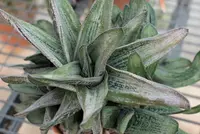
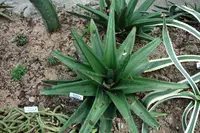
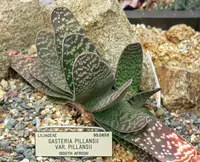
Namaqua oxtongue (Gasteria pillansii) is a compact, slow-growing succulent from arid regions of South Africa and Namibia. It forms low rosettes or loose fans of thick, tongue-shaped leaves. Leaves are usually mottled or banded in gray-green tones, often with rough texture and firm, pointed tips. Mature plants produce arching flower spikes with small, tubular, pink to coral blooms. This species is adapted to strong light, poor rocky soils, and long dry periods, which makes it forgiving of occasional neglect indoors. Understanding how to care for Namaqua Oxtongue mainly involves avoiding excess water and providing bright, indirect light.

Main Plant Requirements

Care Difficulty

Easy Care

Light Preference

Bright Indirect Light

Water Requirements

Low Water

Temperature Preference

Tropical / Frost Sensitive

Hardiness Zone

10–11

Soil Texture

Sandy, Loamy, Rocky

Soil pH

Slightly acidic (6.5–7.0), Neutral (7.0)

Soil Drainage

Well-drained

Fertilization

Minimal (feed rarely)

Get Personalized Care Plan

Scan your plant to receive care tips personalized for your specific plant

Available on iOS and Android

How to Care for the Namaqua Oxtongue

This succulent thrives in bright, indirect light with some gentle direct sun.

  • Provide 3–5 hours of early morning or late afternoon sun, with filtered or dappled light for the rest of the day.
  • Protect Namaqua Oxtongue from harsh midday summer sun, which can cause leaf scorching, bleaching, or dry brown patches.
  • In winter, move plants to a brighter position if possible; long periods in deep shade lead to stretched, weak leaves and dull coloration.

Watering should mimic brief desert rain followed by dry spells.

  • Allow the top 3–5 cm of soil to dry completely before watering, then soak thoroughly so excess drains away.
  • In spring and fall, expect to water roughly every 10–21 days, less often in winter; use wrinkling, slightly soft leaves as a sign the plant is ready for water.
  • Watch for overwatering signs such as mushy, translucent leaves or a sour smell from the soil, especially if drainage is poor for Gasteria pillansii.

Stable, mild temperatures support steady growth and prevent stress damage.

  • Aim for 65–80°F (18–27°C) during active growth, with good air movement but no cold drafts or sudden swings.
  • Gasteria pillansii tolerates brief drops to about 35–40°F (2–4°C) if dry, but repeated exposure near freezing increases risk of tissue damage.
  • In hot weather above 90°F (32°C), provide shade and avoid reflected heat from walls or pavement to prevent leaf scorch and root stress.

Humidity is rarely a limiting factor for Gasteria pillansii, which prefers fairly dry air.

  • Aim for 30–50% humidity, similar to most heated indoor homes.
  • This Namaqua Oxtongue tolerates very dry air; issues usually come from excess moisture, not lack of it.
  • If leaves turn mushy or show translucent patches, humidity plus overwatering is too high; improve air movement and reduce watering.

Soil for Gasteria pillansii must be fast-draining and airy to prevent root rot.

  • Use a gritty mix: roughly 50% cactus/succulent mix combined with 50% mineral material such as pumice, perlite, and coarse sand.
  • Aim for slightly acidic to neutral pH, around 6.0–7.0, which supports nutrient uptake without encouraging rot organisms.
  • Increase aeration by using large, irregular particles; avoid fine sand or heavy peat that compact and hold excess water.
  • Do not use dense garden soil or moisture-retentive potting blends intended for tropical foliage plants.

This species is well suited to container growing due to its compact, shallow root system.

  • Choose a wide, shallow pot that matches the root spread, which keeps the mix drying evenly and limits waterlogging in deeper layers.
  • Select unglazed terracotta if extra evaporation is needed, as it helps the mix dry faster than plastic or glazed ceramic.
  • Ensure drainage holes are fully open and raised off the saucer surface so excess water escapes quickly instead of reabsorbing into the root zone.

This slow-growing succulent needs only light feeding, so focus on modest, well-timed applications rather than heavy fertilization when caring for Namaqua Oxtongue.

  • Use a balanced, low-strength liquid fertilizer (such as 10-10-10) diluted to 25–50% for container plants.
  • Feed once every 4–6 weeks during active growth in spring and summer, after watering, to avoid root burn.
  • Skip compost-heavy mixes and choose a product suitable for succulents to keep the soil lean and well-drained.
  • Reduce or stop feeding in fall and winter when growth slows, as the plant uses fewer nutrients.

Gasteria pillansii needs minimal pruning, mainly to maintain a clean, healthy rosette.

  • Prune in late spring or early summer when the plant is actively growing and recovers faster.
  • Remove dead, dried, or damaged leaves at the base with clean, sharp scissors or pruning snips.
  • Trim away crowded or crossing offsets only if they distort the clump or reduce air flow around the plant.
  • Discard pruned material and disinfect tools to lower the risk of fungal or bacterial problems.

Repotting is infrequent for this small, slow-growing succulent, but it benefits from fresh soil and space when slightly root-bound.

  • Plan to repot every 3–4 years or when roots circle the pot, growth slows, or the plant becomes top-heavy.
  • Choose late spring as the best time, allowing new roots of Gasteria pillansii to establish in warm, bright conditions.
  • Use a shallow container with drainage holes and a gritty succulent mix to prevent waterlogging and root rot.
  • Gently loosen roots, remove old soil, let any damaged roots dry for a day, then replant and water lightly after 3–5 days.

Propagation of this species is commonly done by removing offsets, with leaf cuttings and seeds used less often.

  • Take offsets in late spring or early summer, when temperatures and light support steady root formation.
  • Gently detach pups with a clean knife, keeping some roots attached, then let cut surfaces dry for 1–2 days.
  • Plant offsets in a dry, gritty succulent mix and keep slightly moist, not wet, until new roots anchor firmly.
  • For seeds, use a shallow tray, warm temperatures (70–75°F), bright indirect light, and very light, even moisture.

This succulent is not fully frost hardy and needs simple winter care in cold climates, especially in containers.

  • Keep temperatures above 40°F; brief dips to near freezing may mark leaves but can damage roots in wet soil.
  • Move potted plants indoors to a bright, cool room, and reduce watering to prevent rot during slower growth.
  • Outdoors in mild climates, use a sharply drained, raised bed and a gravel mulch to keep the crown dry in winter.

Care Tips

Rotate For Symmetry

Turn the pot 90° every 2–3 weeks so the rosette receives even light from all sides and develops balanced, upright leaves instead of bending toward a single light source.

Use Top Dressing

Add a 0.5–1 in layer of coarse gravel or pumice on the soil surface to keep leaf bases dry, reduce fungus gnat activity, and stabilize the plant in its pot.

Dry Rest In Winter

From late fall to late winter, reduce watering and keep the plant slightly cooler and brighter to mimic its natural dry season, which helps maintain compact growth and reduces rot risk.

Inspect Leaf Bases

Check the tight leaf bases every few weeks for trapped debris or soggy organic matter and gently remove it with tweezers or a soft brush to prevent localized rot.

Prepare For Repotting

Repot only when the roots fill the container, then handle the fleshy roots gently, remove old mushy material, and let any broken roots dry for a few hours before placing the plant into fresh mix when caring for Namaqua Oxtongue.

Common Pests and Diseases

Mealybugs

This pest often hides in leaf bases and between thick leaves, sucking sap and causing slow decline, yellowing, and sticky residue. Symptoms include white, cottony clusters in tight rosettes or on roots in very dry or stressed plants.

Solution

Isolate the plant, then dab visible insects with cotton swabs dipped in 70% isopropyl alcohol and rinse the foliage gently after treatment. For heavier infestations, repeat alcohol spot-treatments weekly, inspect leaf bases closely, and consider a systemic insecticide labeled for succulents if physical removal is not enough.

Aloe mite

This pest (eriophyid gall mite) causes distorted, swollen, warty, or rough growth on leaves, especially on older rosettes, and may create brown, crusty, tumor-like patches. Symptoms include abnormal leaf texture and deformed new growth rather than obvious insects.

Solution

Remove and discard all affected leaves or entire rosettes with severe distortion, cutting 1–2 cm into healthy tissue, and dispose of waste in the trash, not compost. Keep the plant isolated, improve air circulation, and if distortion continues to appear, treat with a miticide that specifically lists eriophyid mites and repeat as directed.

Soft scale

These insects appear as small, domed, tan to brown bumps on leaves and stems, feeding on sap and excreting honeydew that may lead to sooty mold. This pest can cause slowed growth and dull, sticky foliage in Gasteria pillansii care.

Solution

Gently scrape or wipe off scales with a soft cloth or cotton swab dipped in soapy water or 70% isopropyl alcohol, then rinse the plant. For ongoing infestations, apply a horticultural oil or insecticidal soap labeled for succulents, ensuring full coverage of leaf surfaces and repeating every 7–10 days for several cycles.

Basal stem rot

This disease starts at the leaf bases or stem junction, often after cold, overly wet conditions, and causes soft, brown, water-soaked tissue and collapsing rosettes. Symptoms include leaves breaking away easily at the base and a foul smell in advanced stages.

Solution

Remove the plant from its pot, cut away all soft or discolored tissue with a sterile knife, and allow any firm, healthy offsets to dry for 1–2 days before replanting in fresh, sharply draining soil. Reduce watering, keep the plant in a warm, bright, well-ventilated spot, and avoid water sitting in the rosette or around the stem base, especially in cool weather.

Leaf spot

This disease causes small, sunken, brown or black spots with a defined edge on the thick leaves, sometimes surrounded by a pale halo, and may follow prolonged leaf wetness or high humidity with poor airflow. Symptoms include gradual coalescing of spots that can weaken affected leaves.

Solution

Remove heavily spotted leaves with a clean blade and improve air circulation, avoiding overhead watering so leaves dry quickly. Keep the plant on the dry side, water at the soil level, and if new spots continue to appear, apply a copper-based or broad-spectrum fungicide labeled for ornamentals, following label directions carefully.

Interesting Facts

Namaqualand cliff specialist

This species is naturally restricted to the arid winter-rainfall region of Namaqualand in South Africa, where it often grows wedged in rock crevices and cliff faces that protect its roots from extreme heat and desiccation.

Tongue-shaped leaf armor

The thick, tongue-shaped leaves are covered with a tough, waxy cuticle and fine surface roughness that reduce water loss and reflect intense desert sunlight, an adaptation to its harsh, low-rainfall habitat.

Distinct spotted banding

Mature plants often show transverse bands of pale, rounded spots on the dark green to gray leaves, a pattern that helps distinguish it from many other Gasteria species in cultivation and in the field.

Botan icon

Did you know?

Like several other strictly localized Namaqualand succulents, this species has suffered habitat pressure from mining and over-collection, which has led to conservation concern and discussion among botanists and succulent societies about the need to protect remaining wild populations.

FAQs about Namaqua Oxtongue

Blooming is often sparse and linked to maturity, seasonal light, and mild winter rest. Plants usually flower in late winter to spring. Avoid heavy summer fertilizing and do not disturb roots frequently to improve chances of flowering.

Grow Healthy Plants with Botan Care

Keep your plants happy and healthy with plant identification, disease detection, and easy care guidance.

Botan plant care app — identify plants on mobile

Explore More Plants