Shallow potting
Use a wide, shallow pot and keep the root ball near the surface to reduce rot risk and allow the stems to spread and root along the soil line.

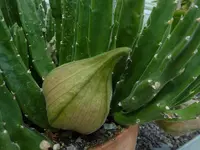
Stapelia asterias is a small, clumping succulent from arid regions of southern Africa. It grows low to the ground, forming fleshy, four-angled stems that resemble cactus pads but without spines. In suitable conditions it produces large, star-shaped flowers with patterned, often hairy petals and a strong scent that attracts carrion flies for pollination.
The plant is adapted to dry, rocky habitats and stores water in its stems, which makes it sensitive to overwatering but quite drought-tolerant. It stays compact, so it suits containers and small indoor collections. Understanding how to care for Stapelia asterias mainly involves controlling moisture, providing bright light, and using a very free-draining soil mix.

Care Difficulty
Moderate Care

Light Preference
Partial Sun

Water Requirements
Low Water

Temperature Preference
Tropical / Frost Sensitive

Hardiness Zone
10–11

Soil Texture
Sandy, Loamy, Rocky

Soil pH
Slightly acidic (6.5–7.0), Neutral (7.0)

Soil Drainage
Well-drained

Fertilization
Minimal (feed rarely)
Scan your plant to receive care tips personalized for your specific plant
Available on iOS and Android
This succulent prefers bright, indirect light with some gentle direct sun each day.
Watering should mimic arid conditions with occasional, thorough soakings and long dry intervals.
Temperature management is important to keep this succulent growing steadily and to avoid cold damage.
This arid succulent prefers dry air and only moderate humidity control.
This species needs a very fast-draining, airy mix that mimics rocky desert soil.
This plant is very suitable for container growing due to its compact, shallow root system.
This succulent benefits from modest feeding during active growth but is sensitive to excess nutrients.
Pruning is light and mainly hygienic, aimed at keeping Stapelia asterias tidy and disease-free.
This succulent prefers a stable container environment and only needs infrequent repotting in well-draining soil.
Stapelia asterias is most practically multiplied by stem cuttings taken in warm weather.
This species is not frost hardy and needs dry, cool, but above-freezing conditions in winter.

Plant Health Check
Not sure what's wrong with your plant? Check your plant's health inside the app.
The flowers form a flat, five-pointed, star-shaped disk densely covered in soft hairs, closely resembling a dried starfish when viewed from above.
This species relies primarily on carrion-associated flies for pollination, which are attracted by the flower’s color pattern and odor that mimic decaying organic matter.
Unlike taller Stapelia species, it typically grows as low, spreading, 4-angled succulent stems that form tight clumps close to the soil surface in its native habitat.

Stapelia asterias has one of the flattest, most disk-like corollas in its genus, with the corolla lobes barely reflexed, giving the open flower a distinctive, almost perfectly circular outline compared to many other Stapelia species.
Lack of flowering usually comes from insufficient light, cool temperatures, or a pot that is too large. This species blooms best when slightly rootbound, given strong light, and allowed a distinct dry, cool rest period between growth phases.
Keep your plants happy and healthy with plant identification, disease detection, and easy care guidance.