

Summer rain protection
In regions with summer rainfall, place the pot under a deep overhang or use a simple clear cover during extended wet spells to keep water off the rosette and reduce the risk of rot.

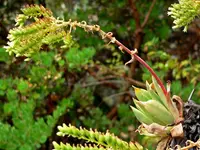
Candleholder liveforever (Dudleya candelabrum) is a small, rosette-forming succulent native to rocky coastal cliffs of California’s Channel Islands. It stores water in thick, pale leaves and produces tall branched flower stalks that resemble a candelabrum. Growth is slow and the plant is long-lived when kept dry and cool in winter, with strong light and excellent drainage. It is sensitive to excess summer water and high humidity, which makes it more challenging than common houseplant succulents. Those conditions should guide how to care for candleholder liveforever, especially in indoor or non-coastal settings.

Care Difficulty
Hard Care

Light Preference
Full Sun

Water Requirements
Low Water

Temperature Preference
Warm Climate

Hardiness Zone
9–11

Soil Texture
Sandy, Rocky, Loamy

Soil pH
Slightly acidic (6.5–7.0), Neutral (7.0)

Soil Drainage
Well-drained

Fertilization
Minimal (feed rarely)
Scan your plant to receive care tips personalized for your specific plant
Available on iOS and Android
This coastal succulent needs bright conditions that mimic its native, exposed cliffs.
This species prefers a dry regime with brief, infrequent soakings rather than constant moisture.
This succulent is adapted to mild, maritime climates with cool summers and frost-free winters.
This succulent prefers dry air and low ambient humidity, similar to coastal bluffs.
Soil for this species must be extremely fast-draining and mineral-dominant.
This species can be grown successfully in containers if drainage and mineral substrate are prioritized.
This dry-climate succulent needs minimal feeding, as excessive nutrients can damage its roots and waxy leaves.
Dudleya candelabrum needs only light, occasional grooming rather than structural pruning.
This species dislikes frequent disturbance, so repotting or transplanting should be infrequent and carefully planned.
Propagation of Dudleya candelabrum is possible but slow and should be done thoughtfully, especially with wild-origin plants.
This succulent prefers mild, dry winters and is not suited to prolonged hard frost or saturated cold soils.

Plant Health Check
Not sure what's wrong with your plant? Check your plant's health inside the app.
This species is naturally restricted to a small area on Santa Cruz Island off the coast of California, where it grows on steep, rocky volcanic cliffs exposed to coastal fog and wind.
Its leaves are covered in a thick, pale waxy bloom called farina, which helps reflect intense sunlight and reduce water loss in its harsh coastal habitat.
In its native climate it often slows or nearly stops growth in summer, conserving resources until cooler, moister conditions return, a typical survival strategy for many island dudleyas.

Conservation authorities have highlighted this species in recent years because wild populations have been threatened by illegal succulent collecting, leading to increased monitoring and enforcement efforts on Santa Cruz Island.
This species usually blooms once a year in late spring or early summer, producing tall, branching flower stalks. After flowering, it returns to a resting phase and focuses energy on its rosette and roots rather than repeat blooming.
Keep your plants happy and healthy with plant identification, disease detection, and easy care guidance.

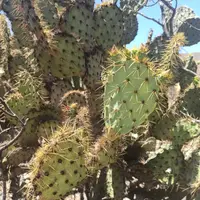
Engelmann's Prickly Pear
Opuntia engelmannii
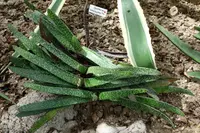
Short Oxtongue
Gasteria brachyphylla
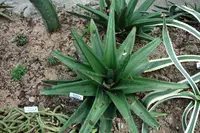
Blade Oxtongue
Gasteria excelsa
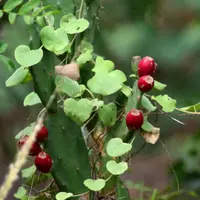
Opuntia bonaerensis
Opuntia bonaerensis
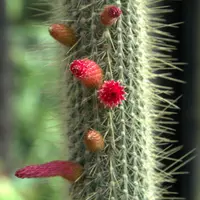
Cleistocactus parviflorus
Cleistocactus parviflorus
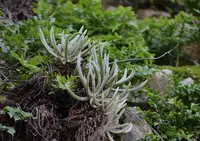
San Gabriel Mountains liveforever
Dudleya densiflora
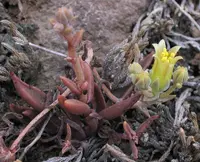
Abrams' liveforever
Dudleya abramsii
Tephrocactus verschaffeltii
Tephrocactus verschaffeltii