

Summer Dry Rest
If you grow this species in a region with hot summers, gradually reduce watering in late spring and keep the plant almost dry through the hottest months to mimic its natural summer dormancy and prevent rot.

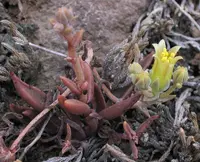
Abrams' liveforever (Dudleya abramsii) is a small, rosette-forming succulent native to rocky slopes and cliffs in California. It often grows in tight clusters, hugging exposed stone outcrops. Leaves are thick, often powdery or waxy, and can range from pale green to bluish, with short flower stalks carrying yellow to cream star-like blooms. This species is adapted to harsh, dry conditions with intense sun and excellent drainage. In cultivation, it can be challenging, as it dislikes excess summer water and poorly drained soil. Gardeners who care for Abrams' liveforever should aim to mimic its native conditions as closely as possible, especially in terms of drainage and seasonal watering patterns.

Care Difficulty
Hard Care

Light Preference
Full Sun

Water Requirements
Low Water

Temperature Preference
Warm Climate

Hardiness Zone
8–10

Soil Texture
Sandy, Rocky, Loamy

Soil pH
Slightly acidic (6.5–7.0), Neutral (7.0)

Soil Drainage
Well-drained

Fertilization
Minimal (feed rarely)
Scan your plant to receive care tips personalized for your specific plant
Available on iOS and Android
This compact rock-dwelling succulent needs strong light that mimics exposed coastal or inland bluffs.
This species is adapted to dry, rocky habitats and is very sensitive to excess moisture around the roots.
This plant prefers mild, dry conditions but tolerates a fairly broad outdoor temperature range when kept on the dry side.
This species prefers dry air and low humidity, similar to arid outdoor conditions.
Dudleya abramsii needs very fast-draining, mineral-based soil to avoid root and crown rot.
This species can grow in containers if drainage is carefully managed.
This drought-adapted succulent needs very little feeding, so use fertilizer sparingly to avoid damage to roots and foliage in Abrams' liveforever.
Pruning needs for Dudleya abramsii are minimal and focus on cleanliness rather than reshaping the plant.
This species prefers stable conditions, so repot or transplant Dudleya abramsii only when clearly necessary.
Propagation of Dudleya abramsii is possible but slow and best attempted by growers willing to match its specific habitat needs.
Winter care focuses on keeping this succulent cool, bright, and relatively dry, since many forms experience winter growth.

Plant Health Check
Not sure what's wrong with your plant? Check your plant's health inside the app.
This species often grows on steep rocky cliffs and outcrops in small, isolated populations, showing strong preference for very shallow, fast-draining soils on exposed slopes.
Several recognized subspecies differ in rosette size, leaf shape, and flower traits, and many are narrowly endemic, meaning each is restricted to a small geographic area in California.
In its native Mediterranean-type climate, this plant typically slows growth and can shed older leaves in the hot, dry summer, conserving water in its thick remaining leaves and stem base.

This species and its close relatives are so sensitive to disturbance that unauthorized collection from the wild has become a conservation concern in California, leading land managers and botanists to discourage wild harvesting and promote only nursery-propagated plants.
Lack of blooms usually comes from too much summer water, excess fertilizer, or growing in rich organic soil. This species flowers best after a cool, dry winter rest and in very lean, fast-draining, mineral-based substrate.
Keep your plants happy and healthy with plant identification, disease detection, and easy care guidance.

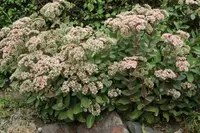
Orpine
Hylotelephium telephium
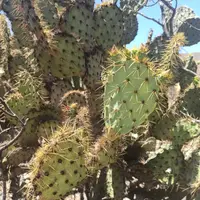
Engelmann's Prickly Pear
Opuntia engelmannii
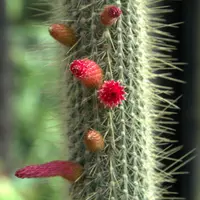
Cleistocactus parviflorus
Cleistocactus parviflorus
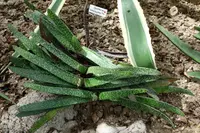
Short Oxtongue
Gasteria brachyphylla
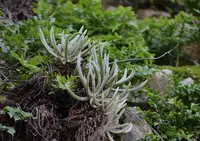
San Gabriel Mountains liveforever
Dudleya densiflora
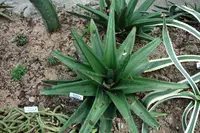
Blade Oxtongue
Gasteria excelsa
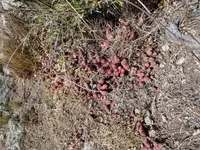
Tephrocactus verschaffeltii
Tephrocactus verschaffeltii
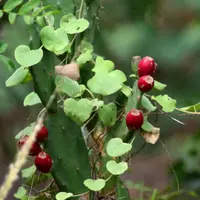
Opuntia bonaerensis
Opuntia bonaerensis