Maule's quince Care (Chaenomeles japonica)

Also known as: Japanese Quince
Maule's quince

About Maule's quince

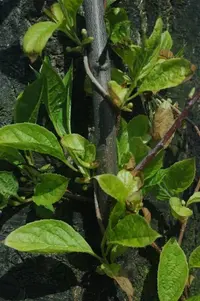
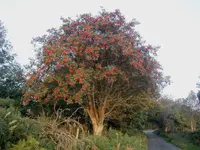
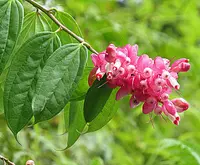
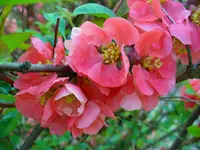
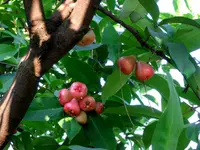
Maule's quince, Chaenomeles japonica, is a compact deciduous shrub grown mainly for its early spring flowers and dense, twiggy structure. It typically forms a low, spreading mound with thorny branches. Flowers appear before the leaves, in shades of red, pink, or orange, followed by small, hard, aromatic fruits often used for preserves. The species is native to Japan and is widely used in temperate gardens as a hedge, border shrub, or feature plant. It is generally hardy, tolerant of cold, and adapts to many soils, which makes it relatively easy to grow. Those traits simplify how to care for Maule's quince in typical home gardens.

Main Plant Requirements

Care Difficulty

Easy Care

Light Preference

Full Sun

Water Requirements

Moderate Water

Temperature Preference

Cold Hardy

Hardiness Zone

4–9

Soil Texture

Sandy, Loamy, Clay

Soil pH

Acidic (5.5–6.5), Slightly acidic (6.5–7.0)

Soil Drainage

Well-drained

Fertilization

Minimal (feed rarely)

Get Personalized Care Plan

Scan your plant to receive care tips personalized for your specific plant

Available on iOS and Android

How to Care for the Maule's quince

Chaenomeles japonica performs best with strong outdoor light to support dense growth and flowering.

  • Provide full sun for 6–8 hours daily; 4–6 hours is acceptable but flowering may be lighter, especially on Maule's quince hedges.
  • Aim for morning sun with some protection from intense late-afternoon summer sun in hotter regions to reduce leaf scorch and premature leaf drop.
  • In areas with hot summers, allow light dappled shade from trees; in cooler climates, choose an open south or west exposure to maximize winter and early-spring light.

This shrub prefers evenly moist, well-drained soil and becomes more drought-tolerant as it matures.

  • Water established plants when the top 5–8 cm of soil are dry; young shrubs may need attention once soil feels dry to that depth during the first 1–2 growing seasons.
  • Use soil that drains freely; avoid standing water or heavy, compacted clay, which encourages root rot and yellowing leaves from overwatering.
  • In summer heat, watch for limp or curling leaves as a sign to water, and in cooler seasons reduce watering so soil dries slightly between soakings.

This hardy shrub tolerates a wide temperature range but flowers and grows best within moderate outdoor conditions.

  • Optimal growth occurs around 60–75°F (16–24°C); flowering wood forms well under these mild conditions in spring and early summer.
  • Chaenomeles japonica is cold-hardy to about -10°F to -20°F (-23°C to -29°C), and winter chill helps set strong flower buds for the following season.
  • Mature plants handle summer heat up to about 90–95°F (32–35°C) if soil moisture is maintained, but prolonged extreme heat with dry soil can reduce flowering and stress foliage.

Chaenomeles japonica grows well in typical outdoor humidity and rarely needs special humidity management.

Chaenomeles japonica prefers moderately fertile, well-drained soil with stable structure around the root zone.

  • Use a loamy or sandy-loam soil with plenty of mineral content and 20–30% compost for moderate organic matter.
  • Aim for slightly acidic to neutral pH, around 6.0–7.0, and avoid strongly alkaline or saline conditions that limit nutrient uptake.
  • Improve drainage and aeration on heavy clay sites by incorporating sharp sand and fine gravel into the top 20–30 cm.
  • Avoid compacted, waterlogged, or peat-heavy mixes that stay wet for long periods and increase the risk of root rot.

This species can be grown in containers if the pot provides enough root volume and stable drainage outdoors.

  • Choose a wide, heavy container that resists tipping, as branching growth and flowers can make the shrub top-heavy in wind.
  • Select a pot deep enough to hold a 30–40 cm root zone so structural roots do not circle tightly near the surface.
  • Use a mineral-based mix that drains quickly yet holds moderate moisture, such as garden loam with coarse sand and fine gravel.

Chaenomeles japonica benefits from modest feeding but tolerates lean soils once established.

  • Apply a balanced slow-release fertilizer (around 10-10-10) at 1/2 label strength in early spring, just before new growth begins.
  • In average garden soil, one feeding per year is usually enough for caring for Maule's quince.
  • On poor or sandy soils, supplement with a thin layer of compost around the root zone in spring.
  • Avoid feeding in late summer or fall to prevent soft growth that may be damaged by winter cold.

Chaenomeles japonica responds well to thoughtful pruning that maintains structure and flowering wood.

  • Prune just after flowering in late spring so flower buds for the next season are not removed.
  • Cut out dead, diseased, or crossing branches with clean, sharp bypass pruners or loppers.
  • Thin congested interior shoots to allow light and air, encouraging strong flowering spurs on remaining branches.
  • Shorten overly long or arching stems to shape the shrub, keeping a balanced, open framework.

This shrub is most often grown in the ground, so focus on careful transplanting rather than frequent repotting.

  • Transplant in late fall or early spring when the plant is dormant and soil is workable.
  • Move plants only every several years, when overcrowded or poorly placed, to limit root disturbance and stress.
  • Look for signs such as stunted growth or poor flowering in cramped beds as indicators that division or relocation may help.
  • Water deeply before and after moving, keep the root ball intact, and mulch lightly to conserve moisture while roots re-establish.

Chaenomeles japonica plant care often includes propagation to create new, matching shrubs for hedges or borders.

  • Take semi-ripe cuttings in midsummer, 10–15 cm long, and root them in moist, free-draining sand or perlite mix.
  • Use hardwood cuttings in late fall, inserting pencil-thick pieces into a sheltered bed until rooted by spring.
  • Sow fresh seeds in fall outdoors or use cold stratification at 35–40°F for 2–3 months before spring sowing.
  • Encourage simple layering by pegging a low, flexible stem into the soil in spring and severing once well rooted.

This shrub is generally cold hardy and needs little special winter care in most temperate gardens.

  • Tolerates typical frost in USDA zones 5–8 once established, though young plants appreciate some shelter from severe winds.
  • Apply a 5–8 cm layer of mulch around the root zone in late fall, keeping it slightly away from the main stems.
  • For container plants, move pots to a sheltered, unheated area or against a south-facing wall to avoid root freezing.

Care Tips

Spur Management

After flowering, shorten some of the previous season’s shoots to 2–3 buds to encourage dense spur formation that will carry heavier blooms the following spring.

Flower Display Renewal

Every 2–3 years, remove a few of the oldest, thickest stems right at the base to keep the shrub young and maintain a strong floral display along the full length of the branches.

Branch Training

While stems are still flexible, tie selected shoots to a fence, trellis, or wires at a shallow angle (30–45° from horizontal) to create a fan shape that shows more flowers and makes pruning easier.

Thorn-Safe Handling

Use thick gloves and long sleeves when pruning or harvesting fruit, and keep children and pets away from low branches with sharp thorns by lightly thinning or lifting the canopy.

Fruit Use And Thinning

Leave some fruits on the shrub to ripen fully for jelly or ornamental use, but thin out clustered fruits in midsummer so remaining fruit sizes up better and the branches are not weighed down, which supports long-term success when growing Maule's quince.

Common Pests and Diseases

Fire blight

This disease causes sudden blackening and dieback of blossoms, shoots, and sometimes entire branches, which often look scorched. Symptoms include wilted, brown to black flowers and leaves that remain attached, and oozing cankers on stems in severe cases.

Solution

Prune out infected twigs and branches 20–30 cm below visible damage during dry weather, disinfecting pruning tools between each cut. Avoid high-nitrogen fertilization and heavy summer pruning, improve air circulation, and in areas with a known history of fire blight, consider registered copper or streptomycin sprays at bloom, following local extension guidance for Chaenomeles japonica care.

Quince rust

This disease produces bright orange or rust-colored spots on leaves and young shoots and can distort fruit, sometimes forming swollen, corky areas. Symptoms include premature leaf drop and poor fruit quality where infections are heavy.

Solution

Remove and destroy infected twigs and mummified fruit, and rake up fallen leaves to reduce spores. Improve air movement around plants, avoid overhead watering, and in regions where rust is common, use a labeled fungicide at bud break and after flowering if past infections have been severe, following all safety directions.

Pear leaf blister mite

These mites cause small, raised blisters on leaves that begin pale green or yellow and turn brown or reddish over time. This pest can reduce photosynthesis and overall vigor when infestations are heavy.

Solution

Prune and dispose of heavily infested shoots during dormancy and collect and destroy fallen leaves. For persistent problems, apply a horticultural oil spray during late winter or very early spring to target overwintering mites, ensuring thorough coverage of branches and buds.

Scale insects

These insects appear as small, rounded or oval bumps on stems and sometimes leaves, and they feed on sap, causing yellowing, reduced growth, and occasional sooty mold from honeydew deposits. This pest often hides along older wood and in branch crotches, making it easy to overlook until populations are high.

Solution

Gently scrape or wipe off individual scales with a soft brush or cloth and prune out heavily infested twigs. Apply horticultural oil during dormancy or in early spring to smother overwintering stages, repeating as needed according to label instructions, and encourage natural predators such as lady beetles by minimizing broad-spectrum insecticides.

Aphids

These insects cluster on young shoots and leaf undersides, sucking sap and causing curling, distortion, and sticky honeydew that can lead to sooty mold. This pest is particularly attracted to soft new growth after pruning or heavy fertilization.

Solution

Spray affected shoots with a strong stream of water to dislodge aphids and pinch off heavily infested tips. If populations remain high, use insecticidal soap or a light horticultural oil, applied in the cool part of the day and repeated as needed, while avoiding excessive nitrogen that promotes lush, aphid-prone growth.

Interesting Facts

Cold-season flowering shrub

Japanese quince often flowers in late winter to early spring, sometimes while snow is still on the ground, due to flower buds that are adapted to withstand repeated light frosts once acclimated to cold.

High-pectin, sour fruits

The small, hard pomes are extremely astringent and rarely eaten raw, but they are rich in pectin and used in jams, jellies, and marmalades to improve set and aroma.

Dense, thorny structure

This species forms a low, intricately branched, thorny shrub that has been used as a barrier hedge and as cover for small birds in gardens and landscapes.

Botan icon

Did you know?

Japanese quince has been widely used as a dwarfing and flowering rootstock in breeding programs and ornamental horticulture, influencing many modern flowering quince cultivars grown around the world.

FAQs about Maule's quince

Lack of flowers usually comes from insufficient sun, heavy pruning at the wrong time, or excess nitrogen fertilizer. Flower buds form on older wood, so prune right after flowering and avoid cutting off 1–2-year-old shoots.

Grow Healthy Plants with Botan Care

Keep your plants happy and healthy with plant identification, disease detection, and easy care guidance.

Botan plant care app — identify plants on mobile

Explore More Plants