Beaked Clockfig Care (Cheiridopsis rostrata)

Beaked Clockfig

About Beaked Clockfig

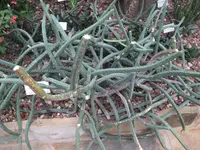
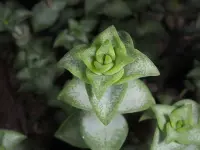
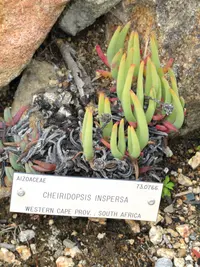
Beaked clockfig (Cheiridopsis rostrata) is a compact, clumping succulent from the arid regions of South Africa. It forms pairs of thick, bluish-green leaves that resemble small beaks. New leaf pairs emerge from the center as older ones dry and protect them, a common survival strategy in dry habitats.

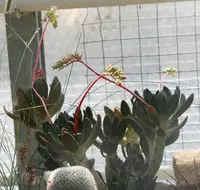
In late winter or early spring, it can produce bright yellow, daisy-like flowers that open in strong light. This species stays small and is usually grown in pots or rock gardens.

Its slow growth, drought tolerance, and preference for bright, direct light make it suitable for patient beginners who want to learn how to care for Beaked Clockfig. It prefers fast-draining mineral soil and careful, infrequent watering.

Main Plant Requirements

Care Difficulty

Moderate Care

Light Preference

Full Sun

Water Requirements

Low Water

Temperature Preference

Tropical / Frost Sensitive

Hardiness Zone

10–11

Soil Texture

Sandy, Loamy, Rocky

Soil pH

Slightly acidic (6.5–7.0), Neutral (7.0)

Soil Drainage

Well-drained

Fertilization

Minimal (feed rarely)

Get Personalized Care Plan

Scan your plant to receive care tips personalized for your specific plant

Available on iOS and Android

How to Care for the Beaked Clockfig

This compact South African succulent needs strong light to stay compact and maintain its bluish leaves.

  • Provide 6–8 hours of direct sun daily, ideally with bright morning sun and lighter exposure after 2–3 p.m. to reduce scorch risk.
  • Outdoors, place Beaked Clockfig in an open, unshaded spot; in very hot, dry climates, give light afternoon shade or filtered sun in midsummer.
  • Insufficient light causes stretching and dull color; if this happens, gradually increase sun over 10–14 days to avoid sudden leaf burn.

This species stores water in its leaves and needs sparse, carefully timed watering.

  • Allow the top 3–5 cm of soil to dry completely before watering, then soak thoroughly and let excess drain away fully.
  • Use a very fast-draining mineral mix; persistent moisture, a sour smell, or soft, translucent leaves indicate overwatering and possible root rot.
  • During active growth in cooler months, water when leaves wrinkle slightly; in hottest summer dormancy, water only enough to prevent severe shriveling of Cheiridopsis rostrata.

This desert-adapted plant prefers mild to warm temperatures with good air movement.

  • Aim for 65–80°F (18–27°C) during active growth, with cooler, bright conditions in winter improving color and flowering.
  • Protect from frost; short dips to 30–32°F (-1–0°C) may be survived if perfectly dry, but growth is safest above 40°F (4–5°C).
  • In heat above 90°F (32°C) it may slow or go semi-dormant; provide light afternoon shade and avoid watering hot soil to prevent root damage.

This succulent thrives in dry air and usually needs no special humidity adjustment indoors.

  • Target 20–40% humidity, similar to a dry, heated room, for stable growth of Beaked Clockfig.
  • Leaves that soften, wrinkle while soil is moist, or split unexpectedly can indicate excess humidity combined with poor airflow.
  • Increase airflow with an open shelf, spacing between pots, and a small fan rather than adding humidity.

Cheiridopsis rostrata requires a very fast-draining, mineral-based substrate to prevent root rot.

  • Use a gritty, sandy mix such as 60–70% inorganic material (pumice, coarse sand, small gravel, perlite) and 30–40% lean cactus potting mix.
  • Ensure water runs through in seconds and the pot feels noticeably lighter within a day, indicating high drainage and aeration.
  • Aim for slightly acidic to neutral pH, around 6.0–7.0, avoiding strongly alkaline or peat-heavy mixes that stay wet.
  • Avoid dense, loamy, or clay-based soils and do not add water-holding amendments like vermiculite or fine compost.

This species is well suited to container growing when the pot encourages rapid drying of the roots.

  • Choose a wide, shallow pot so the fibrous roots spread horizontally and the mix dries quickly after watering.
  • Prefer unglazed terracotta over plastic to allow faster evaporation and reduce the risk of chronically damp substrate.
  • Elevate the pot on feet or a mesh stand so drainage holes never sit in runoff, keeping the lower mix from remaining saturated.

This small South African succulent needs only light feeding to stay healthy, making caring for Beaked Clockfig straightforward.

  • Use a low-dose, balanced liquid fertilizer (around 10-10-10) diluted to 25–50% strength.
  • Feed once at the start and once mid-way through the active growing season, if growth appears pale or weak.
  • Avoid rich composts and slow-release granules that can hold excess salts in the gritty mix.
  • Stop feeding completely during summer dormancy and during the coolest winter months.

Pruning Cheiridopsis rostrata is minimal and focuses on cleanliness rather than reshaping.

  • Best time is late winter to early spring, just before or as new growth begins.
  • Pinch or cut away dry, shriveled leaves and any dead flower stalks at the base.
  • Remove soft, rotting, or damaged tissue with a sterile, sharp blade to prevent disease spread.
  • Light tidying maintains an open clump and better air flow without forcing dense, leggy growth.

This species prefers a stable container environment and only occasional repotting in a very free-draining mix.

  • Repot every 3–4 years or when roots circle the pot and growth slows despite correct light and watering.
  • Time repotting for late winter to early spring, before strong new growth and after main dormancy.
  • Use a shallow pot with large drainage holes and a gritty mineral mix, handling the fleshy roots gently.
  • Minimize root stress by keeping old soil around the root ball, watering lightly once, then allowing full drying before normal care.

Cheiridopsis rostrata is commonly propagated by seed and careful division of mature clumps.

  • Sow fresh seeds in late winter–early spring in a sterile, very sandy mix under bright, indirect light.
  • Keep the seed surface just barely moist, with good air movement and temperatures around 65–75°F for germination.
  • For division, separate clustered heads with attached roots during repotting, allowing any wounds to callus 1–2 days.
  • After planting divisions, water sparingly until firm new growth indicates successful establishment.

This succulent is not fully frost-hardy and needs protection in colder climates.

  • Keep plants above 40°F; brief light frosts may scar leaves and repeated freezes can kill roots.
  • Grow in containers in regions below USDA zone 10 and move indoors to a bright, cool, dry spot for winter.
  • Maintain a mostly dry substrate; give only very light sips of water to prevent severe shriveling.

Care Tips

Summer dormancy management

Reduce watering to almost none and move the pot to a very bright but slightly cooler, airy spot during the hottest part of summer, as this species often slows or pauses growth and is prone to rot if treated as actively growing.

Seasonal repot timing

Schedule repotting for early autumn just as new leaf pairs begin to emerge, using this moment of renewed root activity to minimize transplant shock and encourage fast re‑establishment.

Cluster division technique

When clumps become crowded, gently divide only well-rooted side offsets with at least 2–3 leaf pairs in early active growth, letting cut or broken surfaces dry for 3–5 days before replanting in dry mix.

Winter light adjustment

In winter, shift the plant to the brightest, sunniest window available or under a strong grow light to keep the compact rosette form and prevent weak, elongated leaves.

Targeted pest checks

Inspect old leaf sheaths and tight crevices every few weeks for mealybugs, removing dried skins by hand or with tweezers to reduce hiding spots and simplify caring for Beaked Clockfig.

Common Pests and Diseases

Mealybugs

This pest feeds on succulent leaf pairs and in tight crevices, sucking sap and causing puckering, yellowing, and sticky honeydew deposits. Symptoms include white, cottony clusters at the leaf base and between old and new growth.

Solution

Isolate the plant, then dab visible insects with cotton swabs dipped in 70% isopropyl alcohol and repeat weekly until no new pests appear. Improve light and airflow, avoid overfertilizing, and, if needed, use a light application of insecticidal soap, keeping it off sunlit leaves to prevent scorch.

Aphids

These insects cluster on young leaf pairs and flower stalks, extracting sap and deforming the new growth while excreting honeydew that can attract ants. Symptoms include curling tips, pale new leaves, and small soft-bodied insects in green, black, or brown.

Solution

Rinse the plant gently with a firm stream of water to dislodge colonies, then treat remaining pests with insecticidal soap or a neem oil spray applied in the early morning or evening. Repeat every 5–7 days for several cycles and reduce nitrogen-rich feeding that encourages soft, aphid-prone growth, especially when growing Beaked Clockfig under warm indoor conditions.

Spider mites

This pest thrives on Cheiridopsis in hot, dry indoor or greenhouse air, piercing leaf surfaces and causing fine stippling and a dull, rough texture. Symptoms include tiny pale specks, slight webbing in crevices, and a general grayish cast to the foliage.

Solution

Increase humidity slightly around the plant without wetting the soil, then rinse foliage under lukewarm water to remove mites and webbing. Follow with targeted use of insecticidal soap or a miticide labeled for succulents, repeating treatments and monitoring closely during hot, dry periods.

Fungal leaf spots

This disease develops on thick leaves when moisture lingers on the surface in cool, stagnant air, leading to small brown or black spots that may sink slightly into the tissue. Symptoms include localized lesions that stay on individual leaves rather than spreading rapidly through the plant.

Solution

Remove and discard affected leaves, then keep foliage dry by watering the soil directly and avoiding overhead misting. Improve airflow, provide strong light, and, if new spots continue to form, apply a low-toxicity fungicide labeled for succulents according to the product directions.

Soft bacterial rot

This disease occurs when wounds or split leaves stay wet and contaminated, turning leaf tissue soft, translucent, and foul-smelling. Symptoms include rapid collapse of individual leaves starting from a damaged point or water-soaked area at the base.

Solution

Cut away all affected tissue with a sterile blade back to firm, healthy material, then allow the plant to dry thoroughly in bright, airy conditions and reduce watering until new growth appears. Keep water off the foliage, avoid splashing soil onto leaves, and ensure the potting mix drains very quickly to support Cheiridopsis rostrata plant care in cool, damp weather.

Interesting Facts

Beaked leaf pairs

This species produces opposite pairs of thick, bluish-grey leaves that fuse at the base and taper into a distinct beak-like tip, an adaptation that helps reduce water loss in its arid South African habitat.

Winter-growing succulent

In its native Namaqualand, it grows mainly in the cooler, wetter winter months and rests in summer, timing its active season to match the region’s winter-rainfall climate.

Solitary yellow flowers

Mature plants produce single, daisy-like yellow flowers that open in bright light, attracting insect pollinators in their natural quartz and sandstone outcrop habitats.

Botan icon

Did you know?

In the wild, this species often grows nestled between pale quartz stones, where the reflective rock surface reduces leaf temperature and light stress, creating a cooler microhabitat that improves survival in extreme sun and heat.

FAQs about Beaked Clockfig

Brown, papery tips usually result from underwatering, very low humidity, or intense reflected heat around the pot. Check the root zone, adjust watering slightly, and keep the plant away from hot walls or metal surfaces.

Grow Healthy Plants with Botan Care

Keep your plants happy and healthy with plant identification, disease detection, and easy care guidance.

Botan plant care app — identify plants on mobile

Explore More Plants