tall thistle Care (Cirsium altissimum)

tall thistle

About tall thistle

Tall thistle, Cirsium altissimum, is a North American native perennial in the aster family that often forms bold vertical accents in naturalistic plantings. It typically develops a sturdy, upright stem with spiny, lobed leaves and showy purple flower heads that attract bees, butterflies, and other pollinators.

This species is common in prairies, open woods, and roadsides, especially in the central and eastern United States. It tends to be relatively easy to manage in gardens that mimic these conditions, though its height and self-seeding habit require some planning.

Gardeners who want to know how to care for tall thistle should note that it prefers full sun, moderately moist but well-drained soil, and space to develop its deep root system.

Main Plant Requirements

Care Difficulty

Easy Care

Light Preference

Full Sun

Water Requirements

Low Water

Temperature Preference

Cold Hardy

Hardiness Zone

3–8

Soil Texture

Sandy, Loamy, Clay

Soil pH

Slightly acidic (6.5–7.0), Neutral (7.0)

Soil Drainage

Well-drained

Fertilization

Minimal (feed rarely)

Get Personalized Care Plan

Scan your plant to receive care tips personalized for your specific plant

Available on iOS and Android

How to Care for the tall thistle

This North American native thistle prefers open, sunny sites to build strong stems and abundant blooms.

  • Provide 6–8 hours of direct sun daily; morning and midday sun are ideal for tall thistle in open meadows or prairie-style plantings.
  • Tolerates light afternoon shade, especially in hotter regions, but dense shade leads to weaker, leaning stems and fewer flowers.
  • Avoid placing it where tall plants or structures cast heavy summer shade; monitor sun patterns seasonally as trees leaf out or nearby plants grow taller.

This deep-rooted perennial is adapted to periods of dryness once established, but young plants need more consistent moisture.

  • Water when the top 3–5 cm of soil feels dry, focusing on deep soaking rather than frequent light splashes, especially in the first 1–2 growing seasons.
  • Ensure sharply draining soil; prolonged puddling, foul smell, or yellowing, limp lower leaves suggest overwatering or poor drainage.
  • In hot, dry spells, increase frequency if foliage wilts early in the day and soil is dry, but reduce watering in cool, rainy periods to avoid root stress in Cirsium altissimum.

This hardy prairie species tolerates a wide temperature range typical of continental climates.

  • Active growth and flowering are strongest in 65–85°F (18–29°C), with cool nights supporting sturdy stems and bud formation.
  • Established plants survive winter lows near -20°F (-29°C) in the ground when soil is well drained and crowns are not waterlogged.
  • Tolerates summer heat up to about 95°F (35°C) if soil is not extremely dry, but prolonged extreme heat with drought can stunt growth or shorten bloom duration.

This species is adapted to outdoor conditions and does not have specific humidity requirements when grown in typical temperate climates.

Cirsium altissimum prefers moderately fertile, well-drained soils that stay evenly moist but not waterlogged.

  • Use a loamy or sandy-loam soil with some organic matter to support tall growth without becoming heavy.
  • Aim for slightly acidic to neutral pH, around 6.0–7.0, which suits most garden beds and prairie-style plantings.
  • Blend in compost to improve structure, then add coarse sand if the native soil holds water for more than a day after rain.
  • Avoid compacted clay, boggy sites, or spots where standing water lingers, as roots are prone to rot in saturated conditions.

This species can be grown in containers, but it is more demanding than in open ground due to its tall, deep-rooting habit.

  • Choose a deep, heavy pot that anchors the tall top growth and reduces the risk of tipping in wind.
  • Fill the container with a gritty, well-draining mix such as garden loam blended with coarse sand and a small amount of compost.
  • Position the pot where strong sun and wind are consistent so the stems stay sturdy and do not lean excessively as they elongate.

This native perennial usually thrives in average soils with minimal feeding.

  • If soil is very poor, apply a light layer of compost around plants once each spring as growth begins.
  • Where additional nutrition is needed, use a balanced NPK granular or slow-release fertilizer at half strength in early spring.
  • Avoid summer overfeeding, which encourages weak, lanky growth and may reduce flowering on tall thistle.
  • Do not apply fertilizer in fall or winter, as plants are entering or in dormancy.

Thoughtful pruning keeps Cirsium altissimum flowering well while limiting unwanted spread.

  • Cut back spent flower heads in late summer to reduce self-seeding and direct energy to roots.
  • Remove dead, diseased, or storm-damaged stems whenever noticed using clean, sharp hand pruners.
  • Thin crowded or leaning stems at the base in early summer to improve air flow and reduce flopping.
  • In late fall or very early spring, shear old stalks close to ground level to refresh new-season growth.

This species is most often grown in-ground, so transplanting is more relevant than container repotting.

  • Plan moves for early spring or early fall, when temperatures are mild and soil is evenly moist.
  • Transplant clumps only every few years, mainly when growth declines or plants crowd neighboring species.
  • Dig a wide root ball to limit damage, replant at the same depth, and firm soil gently around roots.
  • Water thoroughly after transplanting, then keep soil slightly moist for 1–2 weeks to reduce transplant shock.

New plants are usually raised from seed, with limited division used in established stands.

  • Collect ripe seed heads in late summer, then sow fresh outdoors in fall for natural cold stratification.
  • For controlled sowing, stratify seeds 6–8 weeks in moist medium at 35–40°F before spring sowing under bright light.
  • Thin seedlings to provide strong air flow and space, reducing competition and disease risk.
  • Mature clumps can be divided in early spring, keeping sizable root sections and replanting promptly into moist soil.

This cold-hardy native usually needs little winter attention in typical temperate climates.

  • Crown and roots tolerate freezing conditions in the ground without special covers in most regions.
  • After hard frost, cut back dried stems to 10–15 cm or leave some for wildlife habitat and winter interest.
  • Apply a light 3–5 cm mulch in colder zones to stabilize soil temperature, avoiding direct contact with the crown.
  • Container-grown plants in cold climates benefit from moving to a sheltered, unheated but frost-moderated area.

Care Tips

Early staking

Install sturdy stakes or a low wire grid in early spring before stems elongate so the tall plants stay upright and resist wind damage later in the season.

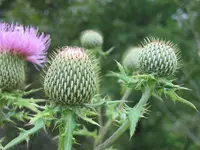
Controlled self-seeding

If you want a managed colony, let only a few central flowers set seed and deadhead the rest before fluff forms, which limits spread while still supporting seed-eating wildlife.

Basal rosette protection

Mark and lightly mulch around first-year basal rosettes so they are not accidentally weeded or trampled, since these low leaf clusters are the foundation for next year’s flowering stems.

Targeted thinning

In dense patches, thin out the weakest stems in late spring, spacing main plants 30–45 cm apart to improve air flow, reduce foliar disease, and encourage stronger, taller flowering shoots.

Wildlife-friendly integration

When caring for tall thistle in mixed plantings, group it with sturdy native grasses or other tall perennials that can buffer wind and provide habitat continuity for pollinators using its flowers.

Common Pests and Diseases

Aster yellows

This disease causes yellowing, stunted growth, distorted stems, and sometimes witches-broom type clustering of shoots and flower heads. Symptoms include malformed, greenish flowers that fail to set normal seed.

Solution

Remove and destroy symptomatic plants promptly to reduce the source of infection, since this disease is spread by leafhoppers and does not cure. Reduce nearby weedy hosts, monitor for leafhopper activity, and, if needed, use row covers or targeted insecticidal soap on leafhoppers early in the season as part of broader Cirsium altissimum care.

Powdery mildew

This disease appears as white to gray powdery patches on leaves, especially on lower or crowded foliage, and can cause premature leaf yellowing. Symptoms include reduced vigor and a somewhat dull, dusty look to the plant.

Solution

Improve air circulation by spacing plants properly and thinning surrounding vegetation, and avoid overhead watering in the evening. Remove heavily infected leaves and, if needed during extended humid periods, apply a labeled sulfur or potassium bicarbonate fungicide to protect new growth.

Thistle stem gall fly

This insect causes swollen, rounded galls on stems where larvae feed inside the plant tissue. Symptoms include localized stem swelling and sometimes weakened or bent stems, though plants often survive with minor impact.

Solution

Prune out and destroy galled stems before adults emerge in late spring to reduce the next generation. Encourage natural predators by maintaining plant diversity nearby, and tolerate low levels of galls since they rarely threaten plant survival.

Thistle weevils

These insects, such as stem and flower-head weevils, bore into stems and flower heads, reducing seed production and causing wilting or distortion of infested parts. This pest is often used as a biological control on thistles and may target tall thistle in mixed stands.

Solution

Handpick and destroy visible adults and remove heavily damaged stems or flower heads before seeds mature. Where conservation of native tall thistle is a goal, limit introduction of biological-control weevils nearby and maintain plant vigor through good site selection and reduced stress.

Aphids

These insects cluster on tender stems and undersides of leaves, sucking plant sap and sometimes causing curling or yellowing foliage. This pest also excretes sticky honeydew that can attract sooty mold fungi.

Solution

Dislodge colonies by spraying plants with a strong stream of water, repeating as needed. Encourage lady beetles, lacewings, and other natural enemies, and only use insecticidal soap or horticultural oil if populations remain high and are actively stressing the plant.

Interesting Facts

Late-season nectar source

Tall thistle often flowers into late summer and early fall, providing an important nectar and pollen source for migrating monarch butterflies and many native bees after many other wildflowers have finished blooming.

Native prairie specialist

This species is native to tallgrass prairies, open woodlands, and roadside habitats in central and eastern North America, where its deep taproot helps it persist in seasonally dry, disturbed, or fire-managed landscapes.

Bird-dispersed seed heads

American goldfinches and other songbirds feed on its seeds and also pull apart the downy seed heads, which helps disperse the wind-borne achenes to new sites while providing nesting material.

Botan icon

Did you know?

Tall thistle is a native North American species that is sometimes mistakenly targeted as a noxious weed, even though it often supports more native insect and bird species than many non-native thistles and can play a key role in prairie and meadow restoration plantings.

FAQs about tall thistle

This species spreads mainly by seed, not by running roots. In rich, disturbed soil it can seed around freely, but is usually not strongly aggressive. Deadhead spent flower heads before seeds ripen to limit spread in small gardens.

Grow Healthy Plants with Botan Care

Keep your plants happy and healthy with plant identification, disease detection, and easy care guidance.

Botan plant care app — identify plants on mobile

Explore More Plants