

Begonia Vine (Cissus discolor) Light Needs

Begonia Vine grows best in bright, indirect or filtered light with only gentle direct sun.

Light Preference

Bright Indirect Light

Cissus discolor Light Requirements

Cissus discolor is a tropical climbing vine from humid forest habitats in Southeast Asia, where it grows with support from surrounding vegetation. In that setting, its thin, patterned leaves receive filtered light, shifting shade, and brief soft sun rather than exposed midday sun.

This background explains its indoor preference for brightness without harsh rays. Preferred light is bright, indirect or filtered light.

  • Ideal exposure:

    Cissus discolor needs about 6–8 hours of bright, indirect or filtered light daily, including up to 1–2 hours of gentle direct morning sun.

  • Direct sun:

    Short morning sun is tolerated, but direct midday or afternoon sun can scorch the thin leaves.

  • Lower light:

    Shade is tolerated better than harsh sun, but dim rooms often cause stretched stems and weaker leaf color.

  • Seasonal shifts:

    Winter light is softer, so a brighter position may be useful if growth becomes pale or leggy.

Indoors, Begonia Vine usually performs best near a bright window with filtered or gentle light.

NConditional
North-facing window:

Use only if the window is large, unobstructed, and bright enough to keep leaf color strong and growth compact.

EBest
East-facing window:

Place it close to an east-facing window where it receives bright morning light and shade from stronger afternoon sun.

SConditional
South-facing window:

Set it 3–6 ft from the glass or use a sheer curtain to soften direct midday sun.

WConditional
West-facing window:

Keep it back from the window or behind a sheer curtain, because hot afternoon sun can scorch the leaves.

Choose the brightest position that protects the leaves from hot, direct rays through glass.

Harsh sun can mark the thin leaves quickly.

Bleached pattern:

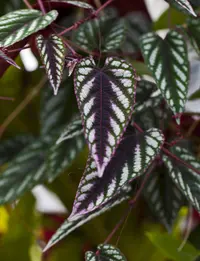
The silver and purple markings may look washed out after exposure to direct afternoon sun.

Scorched patches:

Tan or brown dry spots can appear on the most exposed leaf surfaces.

Crisped edges:

Leaf edges may turn dry where hot glass or direct rays hit repeatedly.

Leaf curling:

Newer leaves may curl or hang during bright, hot periods near a window.

Move Cissus discolor out of direct afternoon sun, or add a sheer curtain. Keep it in bright filtered light while new growth is assessed.

Low light usually shows in new growth first. The plant may stay alive but lose its compact, colorful appearance.

  • Long internodes:

    Stems may stretch, leaving wider gaps between leaves than normal.

  • Leaning growth:

    New stems may angle strongly toward the nearest light source.

  • Duller pattern:

    Leaf contrast can look weaker when light is too dim for steady growth.

  • Small new leaves:

    New leaves may emerge smaller and thinner during the active growing season.

Move it to a brighter filtered position, increasing exposure gradually over several days. Trim only after the plant has adjusted and new growth shows better form.

When ideal brightness is limited, choose the brightest area that avoids hot direct sun, then keep the vine close enough to the light source for clear leaf color.

Rotate the pot a quarter turn every 1–2 weeks so the stems do not lean toward one side.

Avoid deep interior shelves, because the patterned leaves often fade and new growth stretches there.

Get Personalized Care Plan

Scan your plant to receive care tips personalized for your specific plant

FAQ

This plant does best with bright, indirect or filtered light for most of the day. A little soft morning sun is usually fine, but hot direct sun can scorch the foliage.

More Plant Light Guides

Get the Botan App

Discover how to care for your plants with Botan.

Botan app identifying a plant with a phone camera
Plants That Repel Bugs – 20 Effective Options

12 min read · 16 Jul 2026

Plants That Repel Bugs – 20 Effective Options

Mosquitoes on the patio? Gnats in the kitchen? Some plants keep them away with the scent of their own leaves. Here are 20 that deal with mosquitoes, flies, aphids, and more, plus where to put them so they help.

Plant Recommendations
Plants That Repel Bugs – 20 Effective Options
13 Best Front Yard Trees for Every Home and Yard

12 min read · 7 Aug 2026

13 Best Front Yard Trees for Every Home and Yard

A front yard tree can stay for decades. Therefore, choosing one deserves serious consideration. Here are 13 trees that have proven themselves, sorted by their purpose. You'll also find five species to avoid and basic planting information.

Plant Recommendations
13 Best Front Yard Trees for Every Home and Yard
Top 15 Plants That Don’t Need Sunlight

8 min read · 17 Sept 2026

Top 15 Plants That Don’t Need Sunlight

Some plants thrive in dim rooms, shaded corners, and places with indirect light. In this guide, you’ll explore the top 15 species best suited to low-light conditions and how to care for them.

Plant Recommendations
Top 15 Plants That Don’t Need Sunlight