devil's-fingers Care (Clathrus archeri)

Also known as: Octopus Stinkhorn, Seastar Stinkhorn
devil's-fingers

About devil's-fingers

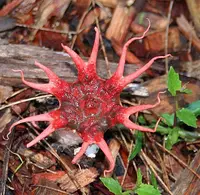
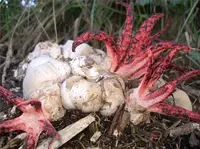
Devil's-fingers, Clathrus archeri, is a saprophytic fungus, not a leafy houseplant. It feeds on decaying organic matter rather than through photosynthesis. Young fruiting bodies start as pale, egg-like structures in soil or mulch, then split open into several bright red, finger-like arms. These arms are coated with a dark, foul-smelling slime that attracts flies, which spread the spores. The species is native to Australia and New Zealand but now appears in parts of Europe and North America, usually in gardens, wood chips, or grass. It is short-lived above ground and not easily controlled once established. Gardeners who want to care for devil's-fingers mainly focus on maintaining moist, organic-rich soil where it naturally thrives.

Main Plant Requirements

Care Difficulty

Moderate Care

Light Preference

Partial Shade

Water Requirements

Keep Soil Moist

Temperature Preference

Warm Climate

Hardiness Zone

9–11

Soil Texture

Loamy, Silty, Organic-rich

Soil pH

Acidic (5.5–6.5), Slightly acidic (6.5–7.0)

Soil Drainage

Moist but well-drained

Fertilization

Minimal (feed rarely)

Get Personalized Care Plan

Scan your plant to receive care tips personalized for your specific plant

Available on iOS and Android

How to Care for the devil's-fingers

This fungus prefers bright outdoor conditions that mimic open, lightly shaded grassland or woodland edges.

  • Provide 3–5 hours of gentle morning sun with dappled or light shade for the rest of the day to prevent drying of the substrate.
  • Tolerates partial shade, but dense shade reduces fruiting; in summer, protect from harsh mid‑afternoon sun, especially in exposed lawns or beds.
  • When caring for devil's-fingers, choose a spot with seasonally stable light, avoiding winter positions that stay in deep shade under evergreen shrubs.

Watering should keep the soil consistently moist but never stagnant around Clathrus archeri.

  • Maintain evenly moist soil, allowing only the top 2–3 cm to begin drying before watering again in active growth or during wet season support.
  • Use well-drained, humus-rich soil; pooling water, foul odor, or algae growth on the surface indicate overwatering and poor aeration.
  • In hot, dry periods, increase watering frequency, watching for shrinking, cracked soil as a sign of underwatering, but reduce input in cool, rainy seasons to avoid rot.

This species prefers mild, temperate conditions without strong temperature extremes.

  • Optimal growth occurs around 55–75°F (13–24°C), typical of cool to mild seasons in many temperate regions.
  • Tolerates brief drops near 32°F (0°C), but repeated hard frosts below 28°F (-2°C) can damage underlying mycelium, especially in exposed, compacted soil.
  • Handles moderate summer warmth up to about 86°F (30°C) if soil stays moist and shaded; prolonged heat with dry ground sharply reduces fruiting.

Humidity is not a key factor for Clathrus archeri, which tolerates a wide range of outdoor conditions.

Clathrus archeri prefers organically enriched, free-draining soil that stays evenly moist but never stagnant.

  • Aim for a loose, crumbly loam or sandy loam with plenty of leaf mold or compost to mimic decomposing forest litter.
  • Ensure rapid drainage, since standing water around the egg stage encourages rot and reduces fungal development success.
  • Maintain slightly acidic to neutral pH, roughly 6.0–7.0, which supports the soil fungi and microbes associated with this species.
  • Improve aeration and drainage in heavy ground by incorporating coarse sand, fine gravel, or bark chips into the upper 15–20 cm.

This species is not well suited to containers, as it prefers natural ground conditions and complex soil life.

This saprophytic fungus relies mainly on decaying organic matter and usually needs no additional fertilizer in garden settings.

Clathrus archeri does not require structured pruning, as its fruiting bodies are short-lived fungal structures rather than woody growth.

Transplanting focuses on moving the soil or substrate containing the fungal mycelium rather than handling the visible fruiting bodies.

  • Transplant only when necessary, such as when reworking beds or moving colonized leaf litter or compost to a new site.
  • Choose mild, moist weather in spring or fall so the underground mycelium experiences minimal temperature and moisture stress.
  • Lift and move chunks of soil or substrate intact, disturbing them as little as possible to maintain existing fungal networks.
  • Water the new site gently after transplanting and keep it evenly moist to help the mycelium reestablish.

Propagation of Clathrus archeri in home gardens is limited and somewhat unpredictable because it depends on spores and suitable decaying material.

  • Allow mature fruiting bodies to release spores naturally into nearby moist, organic-rich soil or compost.
  • Provide a substrate of well-rotted wood chips, leaf litter, or compost where spores can germinate and mycelium can spread.
  • Keep the area evenly moist but not waterlogged, especially in warm seasons that favor fungal activity.
  • Avoid frequent disturbance of the colonized area so underground mycelium remains intact and can fruit in future seasons.

This fungus is generally cold hardy in temperate climates and requires minimal winter care once established outdoors.

  • In colder regions, a 2–5 cm layer of leaf litter or mulch over colonized soil helps buffer freeze–thaw cycles at the mycelium level.
  • Container-grown substrates can be overwintered in a cold, frost-free shed or garage to prevent complete freezing of the medium.
  • Avoid excessive winter watering; keep the substrate barely moist so the mycelium does not rot in cold, saturated conditions.

Care Tips

Use breathable trays

Grow the fungus in shallow, well-ventilated trays or mesh-bottom boxes placed over the prepared substrate so air can circulate freely while still keeping the medium evenly moist but not waterlogged.

Manage odor exposure

Place fruiting containers downwind and away from doors, windows, or shared seating areas, and time outdoor display to coincide with fruiting so the strong odor attracts flies for spore dispersal but does not bother people unnecessarily.

Spore handling hygiene

Handle spent fruiting bodies with gloves, double-bag them, and clean tools with soapy water afterward to avoid spreading spores to unwanted beds or compost areas where the fungus might naturalize.

Substrate rotation

Rotate and partially replace the organic substrate every 6–12 months, keeping a small portion of old colonized material as inoculum so the fungus has fresh nutrients while maintaining an active mycelium base.

Targeted fly access

If fruiting indoors, position containers behind fine insect mesh with a small, controlled opening near a window or vent so flies can access the gleba for spore transfer without freely entering living spaces, which is helpful when caring for devil's-fingers in enclosed areas.

Common Pests and Diseases

Fungus gnat larvae

This pest can develop in very damp organic substrates where the fungus forms, with larvae feeding on decaying tissue and mycelium. Symptoms include small black flying adults around trays or culture boxes and reduced fungal vigor in cultivation setups.

Solution

Reduce excess moisture by allowing the growing medium to partially dry between waterings, improve drainage, and remove any waterlogged organic matter. Use yellow sticky traps to catch flying adults and, if needed in a controlled cultivation setting, apply a biological control such as Bacillus thuringiensis israelensis (Bti) to the substrate according to label directions.

Mite infestation

These insects are actually tiny arachnids that may colonize damp culture boxes or trays, feeding on spores, young fruiting bodies, or associated microorganisms. Symptoms include distorted or aborted emerging arms and fine movement of tiny specks on surfaces when inspected closely.

Solution

Improve ventilation and avoid keeping cultures permanently sealed in high humidity without airflow, as stagnant conditions favor mites. Remove and discard heavily infested material and, in persistent cases, replace the substrate and thoroughly clean containers and tools with hot water and mild detergent before restarting culture.

Bacterial soft rot

This disease can affect cultivated fruiting bodies under very wet, warm, and poorly ventilated conditions, causing foul-smelling, slimy tissue collapse. Symptoms include rapid softening, water-soaked patches, and accelerated decay of the stinkhorn structure beyond its usual short lifespan.

Solution

Limit standing water and avoid overhead misting directly onto developing fruiting bodies, instead keeping the substrate evenly moist but never soggy. Increase airflow around culture vessels or beds, promptly remove and discard affected tissue and surrounding substrate, and sanitize containers if growing devil's-fingers in enclosed or reusable systems.

Interesting Facts

Tentacle-like fruiting body

This fungus emerges from an underground egg as 4–8 bright red, forked arms that spread out and curve upward, giving it the look of a starfish or octopus on land.

Insect-based spore dispersal

The inner surface of the arms is coated with a dark, sticky spore mass that smells strongly of carrion, attracting flies and other insects that pick up and transport the spores.

Non-native in Europe

Although native to Australia and New Zealand, this species was accidentally introduced to Europe in the early 20th century and has since spread through disturbed soils and mulch in several countries.

Botan icon

Did you know?

Molecular studies show that this fungus belongs to the stinkhorn family Phallaceae, an evolutionary lineage specialized for using foul odors and insect visitors instead of wind to move spores across the landscape.

FAQs about devil's-fingers

This fungus usually appears from late summer to autumn. The red, finger-like arms emerge rapidly, often expanding fully within hours, and typically collapse and decay within 1–3 days once spores and odor have attracted insects.

Grow Healthy Plants with Botan Care

Keep your plants happy and healthy with plant identification, disease detection, and easy care guidance.

Botan plant care app — identify plants on mobile

Explore More Plants