Australian Clematis Care (Clematis aristata)

Also known as: Australian Old Man's Beard, Wedding Veil, Australian Traveller's Joy
Australian Clematis

About Australian Clematis

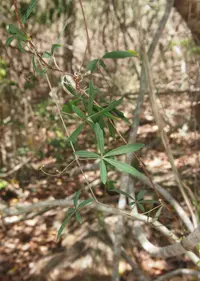
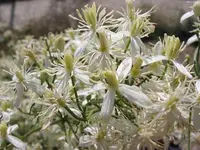
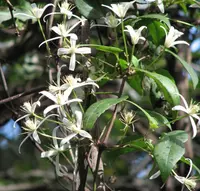
Australian clematis (Clematis aristata) is a vigorous evergreen climber native to temperate forests and woodlands of south‑eastern Australia. It often scrambles over shrubs and trees, forming a light, lacy cover.

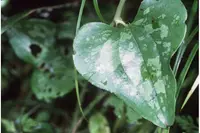
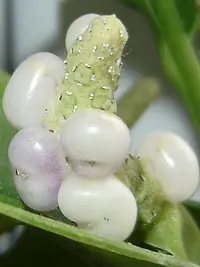
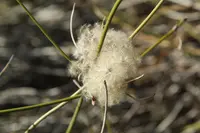
The plant carries glossy green leaves and showy clusters of star-shaped, creamy-white flowers, followed by decorative, feathery seed heads. It has a naturally climbing habit and needs support such as a trellis, fence, or shrub layer.

This species is generally robust once established but can be demanding in small spaces due to its strong growth. It prefers cool, shaded roots, lighter foliage in sun or bright shade, and well-drained soil, which guides how to care for Australian Clematis.

Main Plant Requirements

Care Difficulty

Moderate Care

Light Preference

Partial Shade

Water Requirements

Moderate Water

Temperature Preference

Cool Climate

Hardiness Zone

8–10

Soil Texture

Sandy, Loamy, Organic-rich

Soil pH

Slightly acidic (6.5–7.0), Neutral (7.0)

Soil Drainage

Moist but well-drained

Fertilization

Minimal (feed rarely)

Get Personalized Care Plan

Scan your plant to receive care tips personalized for your specific plant

Available on iOS and Android

How to Care for the Australian Clematis

This vigorous climber prefers bright conditions with protection from harsh extremes, typical when growing Australian Clematis in gardens.

  • Provide 4–6 hours of direct morning sun with light or dappled shade from early afternoon to prevent leaf scorch.
  • Tolerates partial shade, but flowering drops if light falls below about 3–4 hours of sun; stems may become sparse and leggy.
  • In hot summers, use nearby shrubs, fences, or shade cloth to filter strong afternoon sun, especially on north- or west-facing aspects.

Clematis aristata prefers evenly moist, cool root zones rather than constant saturation.

  • Water when the top 3–5 cm of soil feels dry, then soak thoroughly so moisture reaches the deeper roots and drains freely.
  • In spring–summer, expect to water more often during dry spells; reduce frequency in autumn and keep almost dry, not parched, in winter.
  • Improve drainage with coarse organic matter and note signs of stress: yellowing, limp leaves can indicate overwatering, while crisp edges and drooping tips suggest drought.

This species grows best in mild, temperate conditions with moderate seasonal variation.

  • Aim for active growth in 60–77°F (16–25°C); flowering and foliage quality are strongest in this range.
  • Mature plants tolerate brief drops to about 23°F (-5°C), but young plants benefit from protection if temperatures fall below 28°F (-2°C).
  • In hot regions, plants cope with short periods up to 90–95°F (32–35°C) if roots are mulched and shaded; prolonged heat or frost can reduce flowering the following season.

This species copes with a broad humidity range and rarely needs special humidity control outdoors.

  • Aim for 40–60% air humidity; typical outdoor conditions in most temperate gardens are acceptable.
  • Dry air is usually tolerated, but prolonged hot, dry winds can cause leaf edges to brown and flowers to fade faster.
  • In exposed, very dry sites, increase local humidity by mulching the root zone and sheltering vines with nearby shrubs or a fence.

Clematis aristata prefers loose, moisture-retentive yet free-draining soil around a cool root zone.

  • Use a loamy soil rich in organic matter with a crumbly structure that holds moisture without becoming compacted.
  • Ensure sharp drainage by incorporating coarse sand or fine gravel plus composted bark to prevent waterlogging around the crown.
  • Target a slightly acidic to neutral pH of about 6.0–7.0; avoid strongly alkaline or saline conditions that restrict nutrient uptake.
  • Improve aeration in heavy clay by double-digging and mixing in well-rotted compost and coarse grit, avoiding puddling or standing water.

This species can be grown in containers if the pot is large, stable, and drains efficiently.

  • Choose a deep, heavy container to counterbalance climbing growth and prevent the vine from tipping in wind.
  • Fill the pot with a loose, well-draining mix and keep the root zone shaded at the surface using mulch or low groundcovers.
  • Position a strong trellis or support anchored in or behind the pot so stems can be secured without stressing the root ball.

This vigorous native climber usually needs only light feeding, especially in the ground, but benefits from modest support in poor soils or containers.

  • Use a balanced, slow-release fertilizer (around 10-10-10) or well-rotted compost at the start of spring growth.
  • Feed container-grown Clematis aristata every 4–6 weeks in spring–summer with a half-strength balanced liquid fertilizer.
  • Avoid high-nitrogen products, which promote foliage at the expense of flowers.
  • Stop feeding in late summer and do not fertilize during winter dormancy.

Thoughtful pruning keeps Clematis aristata manageable and encourages flowering on vigorous vines.

  • Prune in late winter to early spring before new growth, removing dead, damaged, or weak stems with clean bypass pruners.
  • Thin crowded shoots at the base to improve air flow and light penetration through the vine.
  • Shorten excessively long stems to control size and direct growth along supports or fences.
  • After flowering, lightly tidy spent shoots if needed, avoiding removal of too much new growth.

This species is more often planted in the ground than kept long term in containers, so focus on careful transplanting to reduce stress.

  • Transplant in late winter to early spring when growth is just starting and temperatures are mild.
  • Look for slowed growth, roots circling the pot, or rapid drying of the mix as signs a container plant needs a larger pot.
  • Move up only 1–2 pot sizes using a free-draining mix, keeping the root ball intact and planting at the same depth.
  • Water thoroughly after planting, shade the base for 1–2 weeks, and keep soil evenly moist to help roots re-establish.

Clematis aristata can be propagated by semi-hardwood cuttings, layering, or seeds, but success depends on stable moisture and patience.

  • Take semi-hardwood cuttings in late spring–summer, 10–15 cm long, and root in a free-draining, humid medium under bright, indirect light.
  • Use simple layering in spring by pinning a flexible stem to the soil until it roots, then sever from the mother plant.
  • Sow fresh seed in trays outdoors and allow natural cold stratification, as germination can be slow and irregular.
  • Keep all propagating material just moist, not wet, and avoid disturbing young roots until growth is strong.

This evergreen climber is moderately cold hardy and usually needs minimal winter care in mild to cool climates.

  • Tolerates light frosts but may suffer foliage burn in prolonged freezes below about 20–25°F, especially in exposed sites.
  • Apply a 5–8 cm mulch layer around the root zone in late autumn, keeping mulch away from the stems to prevent rot.
  • In colder regions, grow Australian Clematis in containers that can be moved to a sheltered, frost-free but cool position over winter.
  • Reduce watering in winter, allowing the top layer of soil to dry slightly while avoiding complete dryness.

Care Tips

Early Leader Training

Select 3–5 strong main stems in the first 1–2 years and gently tie them to the support with soft garden ties every 20–30 cm to build a permanent framework that will carry later growth and flowers.

Shaded Root Zone

Place a flat stone, low groundcover, or shallow mulch layer around the base to keep roots shaded and cool while leaving a 5–8 cm gap around the stem to prevent rot.

Support Structure Choice

Provide a sturdy, fine-textured support such as wire mesh, jute netting, or thin trellis slats under 1 cm thick so the leaf petioles can curl and grip securely.

Wind Management

Site plants where strong, drying winds are broken by a fence, shrub, or open lattice, or add discreet windbreak netting to reduce stem breakage and flower desiccation.

Seasonal Tangle Control

In late winter, remove dead, crossing, or backward-growing stems and untangle congested sections so light and air can reach inner growth, which is crucial for long-term success when growing Australian Clematis.

Common Pests and Diseases

Clematis wilt

This disease causes sudden blackening and collapse of stems, often just as new growth is vigorous and leaves are fully expanded.

Solution

Remove and destroy all affected stems back to healthy tissue, disinfect pruning tools, and improve air circulation around the vine; allow new shoots to regrow from the base and avoid overhead watering that keeps foliage wet for long periods.

Powdery mildew

This disease shows as white, powdery patches on leaves and stems, leading to yellowing and premature leaf drop in warm, dry conditions with poor airflow.

Solution

Prune to open the plant for better ventilation, avoid wetting foliage, and treat early with a sulfur or potassium bicarbonate fungicide, ensuring good coverage on both upper and lower leaf surfaces.

Scale insects

These insects appear as small, immobile bumps on stems and leaf midribs, sucking sap and causing yellowing, reduced vigor, and sticky honeydew deposits.

Solution

Gently scrape or wipe off visible scale with a cloth dipped in soapy water, prune heavily infested stems, and apply a horticultural oil spray during the crawler stage to interrupt the life cycle while monitoring for re‑infestation.

Aphids

These insects cluster on tender shoot tips and flower buds, feeding on sap and causing distorted growth, sticky honeydew, and sometimes sooty mold on leaves.

Solution

Dislodge colonies with a firm water spray, pinch off badly infested soft tips, and use insecticidal soap or horticultural oil, repeating treatments while beneficial insects such as lady beetles are protected as part of Clematis aristata care instructions.

Interesting Facts

Australian forest climber

This species is native to southeastern Australia and naturally climbs through wet forests and open woodlands, often scrambling over shrubs and small trees rather than forming a free-standing structure.

Separate male and female flowers

Clematis aristata is dioecious, meaning individual plants are either male or female, so only female plants can produce the clusters of feathery, wind-dispersed seeds after pollination.

Feathery seed plumes

After flowering, the plant develops conspicuous seed heads with long, silky styles that act like sails, helping the seeds travel by wind across gaps in the forest canopy.

Botan icon

Did you know?

In some native forest edges and along road cuttings, this vine can form dense tangles that smother small trees and shrubs, creating a living green curtain that significantly alters the light environment beneath it.

FAQs about Australian Clematis

This species is generally evergreen in mild, frost-free climates, holding foliage year-round. In colder regions it may behave semi-evergreen, shedding some or many leaves after harsh winters before reshooting from its woody stems in spring.

Grow Healthy Plants with Botan Care

Keep your plants happy and healthy with plant identification, disease detection, and easy care guidance.

Botan plant care app — identify plants on mobile

Explore More Plants