Cool root protection
Lay 5–8 cm of organic mulch or flat stones over the root zone, keeping them 5 cm away from stems, to keep roots cool and moist while allowing the top growth to stay in full sun.

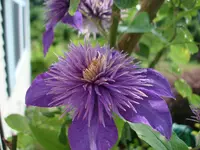
Clematis 'Multi Blue' is a deciduous flowering vine grown mainly for its large, layered, blue-purple double blooms and attractive climbing habit. It is typically trained on trellises, fences, or obelisks and can reach several meters when supported. Originating from garden hybrid breeding rather than a single wild habitat, it belongs to a group of clematis cultivars developed for abundant and repeated flowering. Blooms appear on both old and new stems, which influences pruning needs and makes it moderately easy to manage once established. It prefers sun on the vines with cooler, shaded roots, along with well-drained, fertile soil and consistent moisture, which helps owners understand how to care for Clematis in typical home gardens.

Care Difficulty
Moderate Care

Light Preference
Full Sun

Water Requirements
Regular Water

Temperature Preference
Cold Hardy

Hardiness Zone
4–9

Soil Texture
Loamy, Sandy, Organic-rich

Soil pH
Acidic (5.5–6.5), Slightly acidic (6.5–7.0)

Soil Drainage
Moist but well-drained

Fertilization
Light (every 4–6 weeks)
Scan your plant to receive care tips personalized for your specific plant
Available on iOS and Android
This climber flowers best with strong light on top growth and cooler, shaded roots.
Deep, consistent soil moisture supports strong flowering and root health.
Healthy growth depends on cool roots, moderate air temperatures, and winter chill for dormancy.
Humidity is not a critical factor for Clematis 'Multi Blue' in typical outdoor conditions.
Clematis 'Multi Blue' prefers deep, moisture-retentive but free-draining soil for stable growth and flowering.
This cultivar is well suited to large, stable containers outdoors when root depth and drainage are managed carefully.
Balanced feeding supports strong growth and repeat flowering for Clematis 'Multi Blue'.
Thoughtful pruning keeps Clematis 'Multi Blue' flowering well and within bounds.
Container-grown Clematis 'Multi Blue' benefits from infrequent but careful repotting or transplanting.
Multiplying Clematis 'Multi Blue' is usually done vegetatively to keep the same double-flowered form.
Established Clematis 'Multi Blue' is reasonably cold hardy but benefits from simple winter protection in colder regions.

Plant Health Check
Not sure what's wrong with your plant? Check your plant's health inside the app.
This cultivar originated in the 1980s in the Netherlands as a spontaneous mutation, or sport, of the clematis cultivar 'The President', which is why it shares similar growth habit but has very different flower structure.
The plant typically produces fully double flowers on the first flush from old wood in late spring, then more open, semi-double or single flowers later in the season on new growth, giving a changing flower form through the year.
Its blooms show a distinctive layered structure with petal-like sepals and additional transformed stamens in the center, which creates the densely tufted, almost chrysanthemum-like appearance that distinguishes it from many other large-flowered clematis cultivars.

In mild climates and with proper pruning, this cultivar can flower over an unusually long season for a large-flowered clematis, often producing showy blooms from late spring into early autumn in successive waves rather than a single short display.
Poor flowering usually comes from too little light, heavy pruning at the wrong time, or excess nitrogen fertilizer. Allow strong stems to mature, avoid cutting back hard in early spring, and use balanced fertilizer to support bud formation.
Keep your plants happy and healthy with plant identification, disease detection, and easy care guidance.