Low mound support
Install a short, open plant ring or small peony-style hoop around the clump in early spring to keep the stems upright while still showing off the nodding flowers.

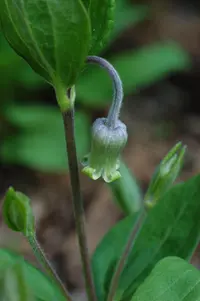
Curlyheads, Clematis ochroleuca, is a small, clump-forming clematis native to dry, open woods and rocky slopes in eastern North America. It stays low and bushy rather than climbing, with nodding, creamy white bell-shaped flowers followed by distinctive curly seed heads. The foliage is somewhat leathery and drought-tolerant once established, which can make it easier to maintain in suitable conditions. It prefers sun to light shade, well-drained, often sandy or rocky soil, and does not like heavy, wet ground. Gardeners who care for curlyheads successfully usually focus on drainage and avoiding overwatering.

Care Difficulty
Moderate Care

Light Preference
Full Sun

Water Requirements
Moderate Water

Temperature Preference
Cold Hardy

Hardiness Zone
6–8

Soil Texture
Sandy, Loamy, Rocky

Soil pH
Acidic (5.5–6.5), Slightly acidic (6.5–7.0)

Soil Drainage
Well-drained

Fertilization
Minimal (feed rarely)
Scan your plant to receive care tips personalized for your specific plant
Available on iOS and Android
Clematis ochroleuca grows best in bright outdoor sites with a balance of sun on top and shade at the roots.
This species prefers evenly moist but not saturated soil, supported by good drainage.
This hardy vine tolerates a wide temperature range but responds best to moderate conditions during active growth.
This species is adaptable and usually does well in typical outdoor humidity conditions of 30–60%.
Clematis ochroleuca prefers freely draining, moderately fertile mineral soils that never stay waterlogged.
This species can be grown in containers if the pot is deep, stable, and drains very freely.
Clematis ochroleuca benefits from light, targeted feeding rather than heavy fertilization.
Pruning helps maintain a compact, flowering clump of Clematis ochroleuca.
This species is usually grown in the ground, so management focuses on careful transplanting rather than frequent repotting.
Clematis ochroleuca is most commonly propagated by semi-ripe cuttings and sometimes by seed.
This species is generally cold hardy in much of its range and needs only modest winter care outdoors.

Plant Health Check
Not sure what's wrong with your plant? Check your plant's health inside the app.
This species is native to dry, rocky slopes and open woodlands of the eastern United States, especially in the Appalachian region, where it thrives in thin, well‑drained soils that many other clematis cannot tolerate.
Unlike many clematis that climb using leaf stalks, this plant grows as a low, somewhat shrubby perennial with mostly upright stems and does not naturally twine or cling to supports.
Its creamy, nodding, bell‑shaped flowers have thick, slightly spreading sepals with purple‑tinged tips, a combination that makes it easy to distinguish from other pale‑flowered clematis in the same range.

The seed heads of this species develop into dense, silky clusters of feathery styles that persist into late season, providing both visual interest and a specialized structure that aids wind dispersal across open, rocky habitats.
Lack of flowers usually comes from too much shade, excess nitrogen fertilizer, or overly dry, compact soil. Ensure strong light, modest feeding, and a cool winter rest. Proper Clematis ochroleuca care encourages reliable spring to early summer flowering.
Keep your plants happy and healthy with plant identification, disease detection, and easy care guidance.