Comocladia macrophylla Care

About Comocladia macrophylla

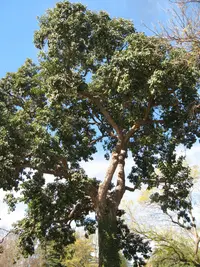
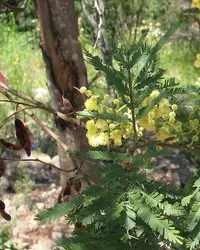
Comocladia macrophylla is a woody shrub or small tree from the cashew family, known for its large, leathery leaflets and often reddish new growth. It has a branching, upright habit and can form a dense, bushy canopy in suitable climates.

This species is native to the Caribbean region and nearby tropical areas, where it grows in dry forests and scrubby coastal habitats. Its stiff leaves and tough stems reflect adaptation to strong sun and periods of limited moisture.

Because of its irritant sap and preference for warm, bright conditions, it is not a beginner-friendly species. Anyone learning how to care for Comocladia macrophylla should respect its skin-irritating properties and need for a warm, well-drained, low-humidity environment.

Main Plant Requirements

Care Difficulty

Moderate Care

Light Preference

Partial Sun

Water Requirements

Moderate Water

Temperature Preference

Tropical / Frost Sensitive

Hardiness Zone

10–11

Soil Texture

Sandy, Loamy, Organic-rich

Soil pH

Slightly acidic (6.5–7.0)

Soil Drainage

Well-drained

Fertilization

Minimal (feed rarely)

Get Personalized Care Plan

Scan your plant to receive care tips personalized for your specific plant

Available on iOS and Android

How to Care for the Comocladia macrophylla

This sun-loving Caribbean shrub needs strong light but benefits from some protection during the hottest hours.

  • Provide 6–8 hours of direct sun, ideally with morning sun and light afternoon shade, especially in hot inland climates.
  • It tolerates light partial shade (around 3–4 hours direct sun), but growth becomes more open and foliage less dense if light is too low.
  • In very bright, exposed sites, monitor for leaf scorch or bronzing and offer filtered light during mid-summer afternoons to balance growth and leaf health.

This drought-tolerant shrub prefers thorough, infrequent watering once established.

  • In the ground, water deeply only when the top 5–7 cm of soil are completely dry, then soak the root zone and allow excess to drain away.
  • Use sharply draining, sandy or rocky soil so the root zone dries between waterings; standing water or heavy clay encourages root rot.
  • In hot, dry periods, watch for dull, drooping leaves as a sign to water; yellowing, soft foliage or persistent wet soil indicates overwatering.

This tropical species thrives in warm, frost-free climates with stable temperatures.

  • Optimal growth occurs around 70–90°F (21–32°C), matching warm subtropical to tropical outdoor conditions.
  • It is highly frost-sensitive and should be protected or relocated if temperatures approach 35–40°F (2–4°C), as brief cold snaps can damage young growth.
  • Mature plants tolerate short heat spikes up to about 100°F (38°C) if soil is not waterlogged, but extended extreme heat with dry winds can cause leaf drop.

This dry-tolerant shrub handles typical indoor humidity but benefits from slightly raised levels in heated homes.

  • Aim for 40–60% humidity; brief drops lower than 30% are usually tolerated without lasting damage.
  • Watch for crispy leaflet edges, slowed growth, and premature leaf drop as signs of humidity stress in Comocladia macrophylla.
  • Increase humidity locally with a nearby open tray of water and stones or by grouping plants, rather than misting leaves.

This species prefers sharply drained, mineral-lean soil that mimics dry, rocky native habitats.

  • Use a sandy or gritty loam with 30–50% coarse material such as pumice, perlite, or horticultural grit to keep pores open.
  • Keep drainage fast; excess water should pass through in seconds rather than pooling on the surface or in the saucer.
  • Maintain slightly acidic to neutral pH, roughly 6.0–7.0, by mixing in modest amounts of compost rather than heavy peat.
  • Avoid dense clay, fine peat-only mixes, or constantly wet substrates, which restrict root aeration and promote rot in Comocladia macrophylla.

This species can be grown in containers if the pot favors rapid drainage and a stable root zone.

  • Choose a deep, relatively narrow pot to anchor the woody root system while limiting excess wet substrate volume.
  • Select a heavy, non-tipping container material like ceramic when grown outdoors in windy sites to support woody stems.
  • Raise the pot slightly on feet or bricks so drainage holes never sit flat on hard surfaces, preventing trapped runoff at the base.

This species is adapted to low-nutrient soils, so Comocladia macrophylla needs only modest, cautious feeding in cultivation.

  • Use a balanced, slow-release fertilizer (around 10-10-10) or light compost top-dressing for container or managed landscape plants.
  • Feed once in early spring and again midsummer during active growth, avoiding midsummer applications in very hot, dry conditions.
  • Apply at half the label strength for woody shrubs, and water thoroughly afterward to limit salt buildup in the root zone.
  • Stop feeding in fall and winter to allow natural dormancy and avoid soft, cold-sensitive new growth.

Pruning is mainly used to remove damaged wood and manage size and structure for Comocladia macrophylla.

  • Plan structural pruning for late winter or very early spring, before vigorous new growth begins.
  • Remove dead, diseased, crossing, or inward-growing branches first to improve light penetration and airflow.
  • Use clean, sharp bypass pruners or loppers, making cuts just above a bud or branch junction without leaving stubs.
  • Limit heavy cuts in a single season to reduce stress and maintain a stable, well-balanced canopy form.

This shrub or small tree is usually grown in the ground, so management focuses on careful transplanting rather than frequent repotting.

  • Transplant in late winter or early spring, when growth is just starting and temperatures are mild.
  • Look for signs such as circling roots in nursery containers or clearly restricted root growth before deciding to shift to a larger pot or planting site.
  • Choose a site with well-drained soil, dig a hole only slightly wider than the root ball, and keep the original soil level at grade.
  • Water deeply after planting, keep soil evenly moist but not waterlogged for several weeks, and avoid disturbing the root zone while it establishes.

Propagation of Comocladia macrophylla is possible but tends to be specialized and slower than many common ornamentals.

  • Use fresh seed collected from mature fruits; sow in a gritty, well-drained mix with gentle, consistent moisture.
  • Provide warm temperatures around 70–80°F and bright, indirect light, as germination can be slow and uneven.
  • Semi-ripe cuttings taken in late spring to midsummer may root under high humidity and bottom heat, though success rates vary.
  • Label and space young plants carefully to avoid crowding, and move them on only once roots hold the potting mix firmly.

This warmth-loving species has limited frost tolerance, so winter care focuses on avoiding prolonged freezing conditions.

  • In regions with light frosts, apply a 5–8 cm mulch layer around the root zone in late fall, keeping it slightly away from the trunk.
  • In colder areas, grow Comocladia macrophylla in containers and move indoors or into a frost-free greenhouse before temperatures approach 32°F.
  • Provide a cool, bright indoor spot with reduced watering over winter, allowing the top layer of soil to dry slightly between waterings.

Care Tips

Protective handling

Always handle branches with nitrile or latex gloves, long sleeves, and eye protection, as the sap can be highly irritant; designate one set of tools for this plant and disinfect blades after use with 70% isopropyl alcohol.

Wind and stake management

In exposed sites, use low, sturdy staking or a short tripod support during the first 1–2 years to prevent wind rock, which can damage the still-establishing root system and lead to lean or instability later.

Controlled size shaping

Plan the final form early by selectively tip-pruning only young, soft shoots at the very start of the growing season to encourage a compact, branching habit while reducing the need for heavy, risky cuts on older wood later.

Underplanting for safety

Create a non-contact buffer around the plant by surrounding it with a ring of low, non-thorny groundcovers or mulch, which discourages foot traffic and accidental brushing against the irritant foliage.

Quarantine and monitoring

When adding a new specimen, keep it in a separate area for 2–3 weeks and inspect the undersides of leaves and young stems weekly for scale or mites, so any pest issue is contained before integrating it with other plants while caring for Comocladia macrophylla.

Common Pests and Diseases

Leaf spot

Symptoms include small water-soaked specks on leaf blades that expand into brown or black spots, sometimes with a yellow halo. This disease develops most readily on young, tender foliage in warm, humid conditions or under overhead irrigation.

Solution

Remove and discard badly spotted leaves and any fallen debris to reduce inoculum. Improve air circulation, avoid wetting the foliage, and, if the problem persists, apply a copper-based fungicide labeled for ornamental trees following label directions carefully.

Powdery mildew

This disease shows as a white or gray powdery film on the upper leaf surface and young shoots, sometimes causing leaf distortion and reduced vigor. It tends to flare up in warm days, cool nights, and shady, crowded conditions.

Solution

Increase light and airflow around the plant by thinning nearby vegetation and avoiding crowding. Prune out heavily infected shoots and, if needed, use a sulfur or potassium bicarbonate fungicide suitable for ornamental plants, applying at first signs of infection.

Scale insects

These insects appear as small, dome-shaped or shell-like bumps on stems and leaf veins, often accompanied by sticky honeydew and sooty mold growth. This pest feeds on plant sap, which can cause leaf yellowing, stunting, and dieback on younger Comocladia plants.

Solution

Gently scrub accessible stems with a soft brush and soapy water, then rinse with clean water. For persistent infestations, apply horticultural oil during mild temperatures, thoroughly coating stems and leaf undersides to suffocate the insects.

Mealybugs

This pest forms white, cottony clusters in leaf axils, along stems, and on young growth where it feeds on sap. These insects can cause leaf curling, yellowing, and sticky honeydew that encourages sooty mold.

Solution

Physically remove small colonies with a cotton swab dipped in isopropyl alcohol and prune heavily infested twigs. For larger infestations, use repeated applications of insecticidal soap or light horticultural oil, ensuring thorough coverage of hidden crevices while monitoring new growth closely.

Anthracnose

This disease causes irregular, sunken dark brown lesions along leaf margins and veins, sometimes leading to partial leaf blight and premature drop. It tends to appear after prolonged rain or overhead watering combined with warm temperatures.

Solution

Collect and destroy fallen, blighted leaves and prune out severely affected shoots with clean tools. To manage recurring outbreaks, avoid overhead watering, maintain good spacing for airflow, and apply a labeled broad-spectrum fungicide preventively during extended wet periods as part of comprehensive Comocladia macrophylla care instructions.

Interesting Facts

Poison ivy relative

This species belongs to the cashew family (Anacardiaceae) and is closely related to poison ivy and poison oak, producing similar skin-irritating compounds in its sap.

Thick, leathery leaves

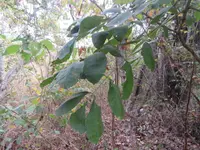
It develops large, thick, leathery leaflets that help reduce water loss and tolerate strong tropical sun in its native Caribbean habitats.

Coastal dry-forest native

The species is naturally found in dry to semi-dry coastal woodlands and scrub in the Caribbean, often growing on rocky, well-drained soils where many broadleaf trees struggle to establish.

FAQs about Comocladia macrophylla

This species contains strong skin irritants similar to poison ivy. Sap contact can trigger severe dermatitis, blisters, and eye irritation. Keep children and pets away, avoid handling without protection, and never burn pruned material because smoke can be harmful.

Grow Healthy Plants with Botan Care

Keep your plants happy and healthy with plant identification, disease detection, and easy care guidance.


Botan plant care app — identify plants on mobile

Explore More Plants