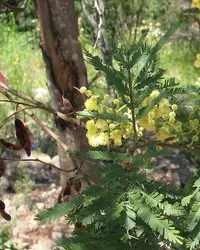
Javanese bishopwood Care (Bischofia javanica)

Also known as: Bishop wood
Javanese bishopwood

About Javanese bishopwood

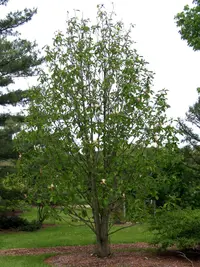
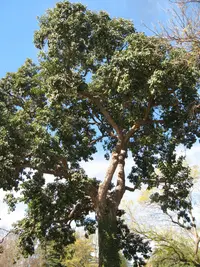
Javanese bishopwood, Bischofia javanica, is a fast-growing evergreen tree that can reach a large size in suitable climates. It has dense foliage, smooth bark when young, and small, clustered flowers followed by reddish to dark fruits.

This species is native to tropical and subtropical Asia and the Pacific, where it grows in warm, humid forests and lowland areas. It is often used as a shade or timber tree in parks, roadsides, and larger gardens.

The tree is robust and adaptable but needs space, consistent moisture, and mild winters, so it is not suitable for small gardens or cold regions. Understanding how to care for Javanese bishopwood starts with providing warmth, sun, and well-drained soil.

Main Plant Requirements

Care Difficulty

Moderate Care

Light Preference

Full Sun

Water Requirements

Moderate Water

Temperature Preference

Tropical / Frost Sensitive

Hardiness Zone

10–12

Soil Texture

Sandy, Loamy, Clay

Soil pH

Acidic (5.5–6.5), Slightly acidic (6.5–7.0)

Soil Drainage

Moist but well-drained

Fertilization

Minimal (feed rarely)

Get Personalized Care Plan

Scan your plant to receive care tips personalized for your specific plant

Available on iOS and Android

How to Care for the Javanese bishopwood

This fast-growing tropical tree prefers strong light but benefits from some protection from intense midday sun.

  • Provide 6–8 hours of direct sun daily, ideally with morning sun and light afternoon shade, especially in hot climates.
  • Tolerates partial shade (around 3–4 hours of direct sun) but growth and canopy density may be reduced in heavily shaded sites.
  • Young Javanese bishopwood trees can scorch in exposed, reflective sites; use temporary shade or companion planting during the first 2–3 summers.

This species prefers consistently moist, deep soil but copes better with short dry spells than with standing water.

  • In the ground, water when the top 5–8 cm of soil feel dry, applying a slow, deep soak to reach the main root zone rather than frequent light sprinklings.
  • Increase watering during hot, dry periods and early establishment (first 2–3 years), then gradually reduce as roots extend and rainfall can cover more of its needs.
  • Avoid poorly drained sites; persistent puddling, sour smell, or soft, yellowing leaves suggest overwatering, while dull, curling, or shedding leaves indicate drought stress.

This tropical tree thrives in warm, frost-free climates and does not tolerate prolonged cold.

  • Optimal growth occurs around 70–90°F (21–32°C), with the strongest extension growth in consistently warm, humid conditions.
  • Mature trees may survive brief drops to about 30°F (-1°C), but foliage damage and dieback are likely; young trees are more sensitive.
  • Avoid planting where hard frosts are common; shelter from drying, hot winds above 100°F (38°C) helps limit leaf scorch and stress during heat waves.

This species tolerates a broad humidity range but grows best in moderately humid air.

  • Aim for 40–60% humidity for steady growth, though mature trees handle drier conditions outdoors.
  • Brown, crispy leaf edges or slow new growth in young plants can indicate air that is too dry for extended periods.
  • Group plants, place containers near other vegetation, or use a pebble tray to slightly raise humidity around young Javanese bishopwood in dry climates.

This tree prefers deep, moist, well-drained loamy soil that supports strong root development.

  • Use a mix of roughly 50% loam or garden soil, 30–40% compost, and 10–20% coarse sand or fine gravel for structure and nutrients.
  • Ensure excess water can drain freely; avoid compacted or heavy clay conditions that stay saturated after rain or irrigation.
  • A slightly acidic to neutral pH around 6.0–7.0 supports nutrient uptake and healthy Bischofia javanica growth.
  • In container or planting areas, improve aeration by incorporating coarse sand or fine bark to prevent waterlogging and root decline.

This tree is only suitable for large, sturdy containers during its juvenile stages due to its eventual size and strong root system.

  • Select a deep, heavy container that resists tipping as the woody stem thickens and the canopy expands.
  • Choose a pot material such as thick ceramic or concrete that adds weight and slows rapid drying in windy, exposed positions.
  • Raise the container slightly on feet or bricks so drainage holes stay clear and runoff moves away quickly from the root zone.

Healthy Bischofia javanica trees in the ground usually need minimal feeding in average garden soil.

  • For young or container-grown plants, use a balanced slow-release fertilizer (for example 10-10-10) once each spring at label rates.
  • Supplement poor soils with a thin layer of well-rotted compost over the root zone, keeping it away from the trunk.
  • During the growing season, avoid strong liquid feeds; if used, dilute to 1/2 strength and apply no more than monthly.
  • Stop fertilizing in late summer to allow new growth to harden before cooler weather.

Bischofia javanica benefits from light, structured pruning to maintain a stable canopy and safe framework.

  • Carry out main pruning in late winter or very early spring before active growth starts.
  • Remove dead, diseased, crossing, or storm-damaged branches with clean, sharp bypass pruners or a pruning saw.
  • Thin crowded inner shoots to improve light penetration and airflow, helping reduce pest and disease pressure.
  • Shape young trees by selecting a single strong leader and well-spaced main branches, avoiding heavy cuts on mature trees.

This tree is usually grown in the ground, so care focuses on correct transplanting of Bischofia javanica rather than frequent repotting.

  • Transplant field or container-grown trees in late winter to early spring when soil is workable and temperatures are mild.
  • Look for roots circling the container or emerging from drainage holes as a sign a nursery plant is ready to move into the landscape.
  • Loosen or slice circling roots gently and plant at the same soil level, firming soil to remove large air pockets and watering deeply.
  • Apply mulch 5–8 cm thick around, but not touching, the trunk to reduce stress, conserve moisture, and encourage new root growth.

Bischofia javanica is most often propagated from seed, with vegetative methods used less commonly in home settings.

  • Collect ripe seeds from mature fruits, clean, and sow fresh in late winter or early spring for best viability.
  • Use a free-draining seed mix, keep it evenly moist, and maintain warm conditions around 70–80°F to support germination.
  • Lightly cover seeds, as very heavy covering can reduce oxygen and slow sprouting.
  • For cuttings, take semi-hardwood pieces in warm weather, use rooting hormone, and place in high humidity with bright, indirect light.

This tropical to subtropical species has low frost tolerance and needs winter attention in cooler climates.

  • In USDA zones marginal for this species, young trees benefit from a 5–8 cm mulch layer over the root zone.
  • Keep mulch a few cm away from the trunk to avoid rot while still insulating roots from temperature swings.
  • Grow Bischofia javanica in large containers in cold regions and move indoors or into a frost-free greenhouse before temperatures drop near 32°F.
  • Reduce watering in winter for container plants, keeping soil just lightly moist to prevent root problems in cool, low-light conditions.

Care Tips

Early structural training

In the first 3–5 years, remove or shorten competing leaders and narrow crotch-angle branches to establish a single strong trunk and well-spaced scaffold branches that will better support the tree’s heavy crown at maturity.

Root space management

When planting near hardscape, provide at least a 4–5 m setback from buildings, pavements, and underground utilities, and use a wide planting area with deep, loosened soil to reduce future root heave and infrastructure damage.

Wind and storm preparation

In windy regions, stake young trees only for the first 1–2 years using flexible ties, then remove stakes to allow trunk taper to develop and reduce the risk of snapping or uprooting during storms.

Canopy density control

Every 2–4 years, carry out light crown thinning by selectively removing crossing, inward-growing, or overly dense interior branches to improve air movement, reduce fungal issues, and increase wind penetration without lion-tailing the canopy.

Long-term site planning

Before growing Javanese bishopwood, assess its mature size and plan for a large, unshaded space where roots and canopy can expand freely, avoiding future conflicts with power lines, roofs, and neighboring trees.

Common Pests and Diseases

Scale insects

This pest attaches firmly to young stems and leaves, sucking sap and causing yellowing, sooty mold, and reduced growth in Javanese bishopwood plantations and ornamental trees.

Solution

Prune and discard heavily infested twigs, then wipe or gently scrub remaining colonies with a cloth or soft brush dipped in dilute soapy water or horticultural oil; repeat at 7–10 day intervals and encourage natural predators such as lady beetles by avoiding broad-spectrum insecticides.

Leaf miners

These insects create winding, pale tunnels within the leaf blade, which can reduce photosynthesis and make foliage of young trees appear blotchy and distorted.

Solution

Remove and destroy mined leaves as soon as damage is noticed, especially on seedlings and saplings, and use targeted treatments such as neem oil or insecticidal soap on the undersides of leaves to reduce adult activity while monitoring new growth closely.

Shoot borers

This pest bores into young shoots and small branches, leading to wilted tips, dieback, and sometimes deformed canopy structure in fast-growing Bischofia javanica stands.

Solution

Cut back and destroy affected shoots below the entry holes, improve tree vigor with adequate water and balanced fertilization, and use pheromone or light traps where available to reduce adult moth or beetle populations, avoiding unnecessary bark injury that can attract borers.

Leaf spot

This disease causes small brown to dark lesions on leaves that may coalesce, leading to premature leaf drop in humid or poorly ventilated conditions.

Solution

Collect and dispose of fallen infected leaves, prune to open the canopy and improve airflow, avoid overhead irrigation on foliage, and apply a copper-based or other registered fungicide if new spots continue to appear during warm, wet periods.

Powdery mildew

This disease forms a white, powdery coating on young leaves and shoots, which can cause distortion and reduced vigor, especially on shaded or crowded trees.

Solution

Thin dense branches to increase light and air movement, avoid excess nitrogen that drives soft new growth, and treat affected foliage with sulfur or potassium bicarbonate-based products labeled for powdery mildew while removing heavily infected shoots if practical.

Interesting Facts

Pioneer rainforest tree

This species is a fast-growing, light-demanding tree that naturally colonizes disturbed tropical forests and abandoned fields, helping to rebuild canopy structure in early successional stages.

Dioecious flowering system

Individual trees are either male or female, producing unisexual flowers on separate plants; this dioecious habit means fruit only develops where male and female trees grow within pollination distance.

Tannin-rich bark and wood

The bark and wood contain high levels of tannins, which has led to traditional use in some regions for tanning animal hides and as a source of reddish dyes.

Botan icon

Did you know?

In parts of the Pacific where it was introduced, this species has become so ecologically dominant on some islands that it can form near-monoculture stands, significantly altering native forest composition and light conditions for understory plants.

FAQs about Javanese bishopwood

This species is typically fast-growing, especially in warm, moist climates. Young trees can add 60–150 cm per year, then slow slightly as they mature. Growth rate depends on moisture, soil fertility, and space for roots.

Grow Healthy Plants with Botan Care

Keep your plants happy and healthy with plant identification, disease detection, and easy care guidance.

Botan plant care app — identify plants on mobile

Explore More Plants