Use clean substrate
Prepare a pasteurized, low-nutrient substrate such as well-rinsed sand mixed with leaf litter or decomposed straw to reduce competing fungi and bacteria when growing common conecap intentionally in containers or trays.

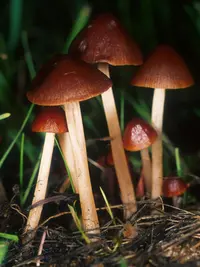
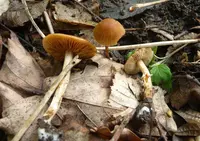
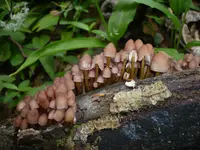
The common conecap (Conocybe tenera) is a small, delicate mushroom rather than a leafy houseplant. It produces slender stems with tiny, conical to bell-shaped caps that are tan to light brown. Caps often appear smooth and fragile, collapsing quickly as they age.
This fungus typically grows in lawns, park grass, compost-rich soil, and other nutrient-rich, disturbed ground, especially after rain. It develops rapidly and disappears just as fast, which makes it unreliable as a long-term ornamental feature.
Moist, organic-rich soil and mild conditions favor its growth, so it often appears without deliberate cultivation. Gardeners who want to care for common conecap mainly manage surrounding soil conditions rather than the mushroom itself.

Care Difficulty
Moderate Care

Light Preference
Partial Shade

Water Requirements
Keep Soil Moist

Temperature Preference
Warm Climate

Hardiness Zone
Unknown

Soil Texture
Loamy, Silty, Organic-rich

Soil pH
Slightly acidic (6.5–7.0), Neutral (7.0)

Soil Drainage
Moist but well-drained

Fertilization
Minimal (feed rarely)
Scan your plant to receive care tips personalized for your specific plant
Available on iOS and Android
This delicate lawn and mulch fungus prefers soft, indirect light rather than strong midday sun.
This small mushroom relies on consistently moist, well‑drained organic material rather than a strict watering schedule.
This species thrives in mild to warm conditions and declines quickly in cold or very hot extremes.
This delicate lawn fungus prefers moderate ambient humidity but generally adapts to typical outdoor ranges.
Conocybe tenera develops most reliably in light, moist but well-drained, organic-rich soil.
This species is only moderately suitable for container growing and tends to perform better in open ground or natural lawns.
Conocybe tenera is a saprophytic mushroom that usually does not need fertilization when grown on appropriately rich organic substrate.
Pruning is not a standard practice for Conocybe tenera, as it is a short-lived mushroom rather than a traditional plant.
Transplanting Conocybe tenera focuses on moving or renewing the colonized substrate rather than handling roots like a typical plant.
Propagation of Conocybe tenera relies on spores and mycelium rather than conventional plant methods like cuttings or division.
Winter care for Conocybe tenera is usually minimal, as outdoor colonies often decline naturally and reappear from spores or residual mycelium.

Plant Health Check
Not sure what's wrong with your plant? Check your plant's health inside the app.
This species often appears suddenly in irrigated lawns, parks, and turf after rain, then collapses within hours as the thin cap dries and disintegrates.
The cap is only 1–3 cm wide, very thin-fleshed, and strongly hygrophanous, meaning it changes from orange‑brown when moist to pale buff as it dries, which helps with moisture regulation and spore release.
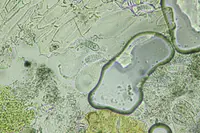
It produces a cinnamon‑brown spore print with smooth, ellipsoid spores and distinct germ pores, features used by mycologists to separate it from similar small brown mushrooms in the field and under the microscope.
This species is considered toxic and should not be eaten by people or animals. Ingestion can cause gastrointestinal upset and potentially more serious symptoms. Keep children and pets from touching or consuming any part of the mushroom.
Keep your plants happy and healthy with plant identification, disease detection, and easy care guidance.