Use rotten wood
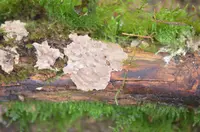
Establish the fungus on a small log or chunk of well-rotted hardwood partially buried in leaf litter to provide a stable, decomposing substrate that supports repeated fruiting.

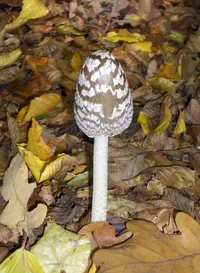
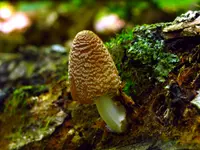
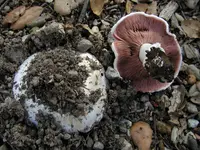
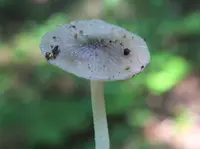
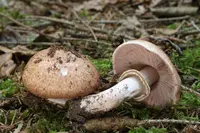
Magpie inkcap (Coprinopsis picacea) is a striking woodland mushroom, not a true plant, recognized by its tall slender stem and conical cap patterned like a magpie’s feathers. The cap starts bell-shaped and dark, then breaks into white patches over a brown to black background.
This fungus typically appears on rich, damp forest soils in Europe and parts of North America, often near leaf litter or decaying wood. It is short-lived and can dissolve into an inky mass as it matures, which makes it challenging to observe or cultivate for long.
Those seeking to care for Magpie Inkcap should know it prefers moist, humus-rich substrates and shaded, undisturbed spots, but it is generally considered difficult to grow intentionally at home.

Care Difficulty
Hard Care

Light Preference
Partial Shade

Water Requirements
Keep Soil Moist

Temperature Preference
Cool Climate

Hardiness Zone
Unknown

Soil Texture
Loamy, Silty, Organic-rich

Soil pH
Strongly acidic (4.5–5.5), Acidic (5.5–6.5)

Soil Drainage
Moist but well-drained

Fertilization
Minimal (feed rarely)
Scan your plant to receive care tips personalized for your specific plant
Available on iOS and Android
This woodland fungus prefers soft, filtered light rather than direct, exposed sun.
This species depends on consistently moist, humus-rich ground rather than a strict watering schedule.
This fungus thrives in cool to mild conditions typical of shaded woodland floors.
This fungus forms best fruiting bodies in consistently moist, humid outdoor air.
Coprinopsis picacea fruits on very moist, organic-rich substrates rather than standard garden soil.
This species is not well suited to conventional container growing and is better established in larger outdoor beds or naturalistic substrate piles.
Coprinopsis picacea is a woodland fungus that usually gains all nutrients from decaying organic matter and rarely needs additional fertilizer.
Pruning is not applicable for Coprinopsis picacea because it is a short-lived mushroom, not a woody or leafy plant.
This fungus is not suited to normal repotting; instead, focus on creating or moving suitable substrate rather than handling individual fruiting bodies.
Coprinopsis picacea is typically left to reproduce naturally through spores in situ rather than being deliberately propagated.
This species survives as underground mycelium and usually needs no special winter care in temperate climates.

Plant Health Check
Not sure what's wrong with your plant? Check your plant's health inside the app.
The gills of this fungus liquefy into a black, ink-like fluid as the spores mature, a process called deliquescence that helps disperse spores more efficiently over time.
It typically fruits in nutrient‑rich, often disturbed soils under broadleaf trees such as beech and oak, indicating a preference for organic matter with high nitrogen content.
The cap shows a characteristic contrast of white, irregular patches on a dark brown to black background, a stable visual feature that makes field identification more reliable than for many other inky caps.

Molecular studies have placed Coprinopsis picacea within a group of inkcap fungi that were formerly all lumped into the single genus Coprinus, and its reclassification reflects how DNA sequencing has reshaped understanding of relationships within these mushrooms.
This mushroom is generally considered inedible and potentially harmful. It contains compounds that may cause gastrointestinal upset or interact badly with alcohol. Identification errors with toxic look-alikes are common, so it should not be collected for food.
Keep your plants happy and healthy with plant identification, disease detection, and easy care guidance.