Rotate Shrub Annually
Mark one side of the plant with a discreet stake and turn the entire root ball 90° when transplanting or root pruning every few years so new colorful stems develop evenly on all sides for winter display.

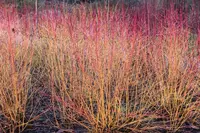
Cornus sanguinea 'Midwinter Fire' is a deciduous shrub valued for its vivid winter stems in shades of yellow, orange, and red. It forms a dense, multi-stemmed clump with a rounded habit.
This cultivar originates from the European bloodtwig dogwood, which grows naturally in woodland edges and hedgerows. In gardens it is usually grown for winter color and reliable structure.
The shrub is generally hardy, adaptable, and forgiving, which makes it suitable for beginners learning how to care for Bloodtwig Dogwood. It tolerates a range of soils and prefers sun to light shade with steady moisture but not waterlogged ground.

Care Difficulty
Easy Care

Light Preference
Full Sun

Water Requirements
Moderate Water

Temperature Preference
Cold Hardy

Hardiness Zone
5–8

Soil Texture
Loamy, Sandy, Clay

Soil pH
Acidic (5.5–6.5), Slightly acidic (6.5–7.0)

Soil Drainage
Moist but well-drained

Fertilization
Minimal (feed rarely)
Scan your plant to receive care tips personalized for your specific plant
Available on iOS and Android
This deciduous shrub colors best when grown with ample sun exposure in the landscape.
This shrub prefers consistently moist, well‑drained soil rather than extremes of dryness or saturation.
This hardy shrub is adapted to cool to temperate outdoor conditions with pronounced winter chill.
This shrub tolerates a wide humidity range and usually does not need special humidity management outdoors.
Cornus sanguinea 'Midwinter Fire' prefers moderately moist, well-structured soil that does not stay waterlogged.
This species can be grown in large containers outdoors if the pot is chosen to support its spreading, woody root system.
Cornus sanguinea 'Midwinter Fire' is a tough shrub that needs only modest feeding in average garden soil.
Pruning helps Cornus sanguinea 'Midwinter Fire' maintain strong, colorful stems and a compact outline.
This shrub is usually grown in the ground, so focus on planting and occasional transplanting rather than routine repotting.
Cornus sanguinea 'Midwinter Fire' is commonly propagated from cuttings and by simple layering.
This dogwood is very cold hardy and usually needs minimal winter care in the ground.

Plant Health Check
Not sure what's wrong with your plant? Check your plant's health inside the app.
The young stems shift from yellow at the base to orange and red toward the tips in cold weather, creating a strong color gradient that is most intense after frost and in full sun. This effect is a winter adaptation of the bark pigments, which become more visible as leaves are shed.
The brightest winter stems usually form on 1–2-year-old shoots, so gardeners often use stooling, a hard annual cutback near ground level, to encourage dense growth of vivid new stems.
This cultivar stays relatively compact compared with many other dogwoods while still tolerating a wide range of soils and cold conditions typical of Cornus sanguinea, making it well suited to small gardens focused on winter structure.

Cornus sanguinea 'Midwinter Fire' was selected and named in the late 20th century specifically for its intense bicolored winter stems, and it has since become one of the most widely used winter-interest shrubs in designed landscapes, influencing how landscape architects plan color for the dormant season.
This shrub performs best outdoors in temperate climates, where it receives natural cold winters that color the stems. Indoors, low light and dry air quickly reduce vigor, so Bloodtwig Dogwood indoor care is generally not recommended long term.
Keep your plants happy and healthy with plant identification, disease detection, and easy care guidance.