water pygmyweed Care (Crassula aquatica)

Also known as: Aquatic pygmyweed, Pigmyweed
water pygmyweed

About water pygmyweed

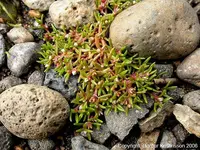
Water pygmyweed (Crassula aquatica) is a tiny, succulent aquatic plant that often forms low mats in shallow water or on muddy shores. It stays very small, with fleshy, opposite leaves and delicate stems that creep along wet substrates.

This species occurs in cool-temperate regions of North America and parts of Europe, usually in ponds, lakes, slow streams, and seasonally flooded ground. Its ability to tolerate both brief flooding and short dry spells makes it adaptable but still dependent on consistent moisture.

Crassula aquatica prefers bright light, cool to mild temperatures, and clean, low-nutrient, sandy or silty substrates. For those who care for water pygmyweed, the main challenge is maintaining stable, shallow water and preventing it from being overgrown by taller plants or algae.

Main Plant Requirements

Care Difficulty

Moderate Care

Light Preference

Full Sun

Water Requirements

Aquatic

Temperature Preference

Cool Climate

Hardiness Zone

5–9

Soil Texture

Sandy, Loamy, Silty

Soil pH

Slightly acidic (6.5–7.0), Neutral (7.0)

Soil Drainage

Waterlogged tolerant

Fertilization

Minimal (feed rarely)

Get Personalized Care Plan

Scan your plant to receive care tips personalized for your specific plant

Available on iOS and Android

How to Care for the water pygmyweed

Crassula aquatica prefers bright, indirect light with some direct sun but is sensitive to harsh drying exposure.

  • Provide 4–6 hours of direct morning sun or soft late-afternoon sun, with filtered or dappled light at midday to prevent leaf scorch.
  • The plant tolerates light partial shade, but stems of water pygmyweed may elongate and lose compact form if light drops below 3–4 hours of sun.
  • In summer, protect from intense midday sun; in winter, choose the brightest site available to compensate for shorter days.

Crassula aquatica is a semi-aquatic succulent that needs consistently moist to saturated conditions, not cycling between very wet and very dry.

  • Keep soil or substrate evenly moist; in shallow water or boggy sites, ensure the crown is not buried under stagnant water to avoid rot.
  • Allow only the top 1–2 cm of substrate to start drying before rewetting in non-flooded setups, watching for slight leaf softening as an early underwatering sign.
  • Reduce standing water depth and frequency of flushing in cooler seasons, and watch for yellowing, mushy stems as a sign of overwatering stress in poorly aerated media.

This species prefers cool to mild conditions and does not handle severe frost or extreme heat well.

  • Aim for active growth in 60–72°F (16–22°C), where stems stay firm and foliage color remains stable.
  • Short dips to 40–45°F (4–7°C) are usually tolerated, but repeated freezes below 32°F (0°C) can damage tissue and reduce survival.
  • In hot spells above 86°F (30°C), growth often slows; provide more shade and stable moisture to limit heat stress and prevent rapid wilting.

This aquatic succulent tolerates a wide humidity range but prefers consistently moist air near 60–80%.

  • Handles dry room air down to about 30–40% if roots stay saturated or submerged.
  • Low humidity stress appears as dull, slightly shriveled foliage and slower growth at exposed margins.
  • Increase local humidity by grouping trays or dishes of water pygmyweed together and keeping water levels steady around the pots or trays.

Crassula aquatica prefers saturated, fine-textured substrates rather than typical potting soils.

  • Use silty or sandy loam with high organic content, such as fine sand mixed with peat or coco coir, to mimic muddy shorelines.
  • Keep the substrate constantly wet or shallowly submerged; drainage is less important than preventing anaerobic rot from foul, stagnant water.
  • Aim for slightly acidic to neutral pH around 6.0–7.0 for reliable nutrient availability and steady growth.
  • Avoid dense clay that compacts heavily or pure gravel that dries too fast, as both restrict root anchoring and oxygen balance.

This species is suitable for container growing in shallow aquatic or bog-style setups.

  • Choose wide, shallow containers so stems can spread horizontally while roots remain close to the saturated surface layer.
  • Use rigid plastic or glazed ceramic pots that hold water steadily and resist bowing when filled with saturated substrate.
  • Place containers inside a larger, watertight tray or basin to maintain a stable water level just over the soil surface.

Crassula aquatica usually needs minimal feeding, especially when grown in natural or nutrient‑rich aquatic settings.

  • In containers, use a very dilute balanced NPK aquatic or succulent fertilizer at 1⁄4 strength.
  • Feed once every 4–6 weeks only during active growth in spring and summer.
  • Avoid fertilizing in winter dormancy to prevent weak, leggy growth.
  • For caring for water pygmyweed in ponds, rely mainly on existing sediment nutrients and avoid heavy dosing.

Crassula aquatica benefits from light, periodic pruning to keep growth compact and healthy.

  • Best time is late spring to early summer when growth is active.
  • Remove dead, decaying, or yellowing stems and any floating debris around plants.
  • Thin crowded patches to improve light and water flow and to limit spread.
  • Use clean scissors or small snips and cut just above healthy nodes to shape low, dense mats.

Transplanting Crassula aquatica is mainly relevant for container setups, marginal shelves, or managed pond edges.

  • Transplant in spring when new growth starts and water temperatures begin to rise.
  • Look for slow growth, roots circling baskets, or plants lifting from the substrate as signs to move or divide.
  • Typically shift or divide clumps every 2–3 years to refresh substrate and manage density.
  • Gently loosen roots, keep them moist at all times, and replant at the same depth into fine aquatic soil or sand.

Crassula aquatica is commonly propagated to establish new patches in ponds, aquariums, or wet trays.

  • Stem cuttings in late spring to summer root well when anchored in shallow, consistently wet substrate.
  • Division of dense clumps is effective; separate small sections with roots attached and replant immediately.
  • Seeds can be sown on the surface of wet, fine substrate with bright light and stable moisture.
  • Maintain gentle water movement, high humidity, and mild temperatures to support rooting and seedling establishment.

Crassula aquatica in its hardy range usually needs limited winter care but may require attention in colder climates.

  • In temperate outdoor ponds, dormant roots often survive light freezing if submerged below ice level.
  • Apply a thin mulch over shoreline or bog plantings to insulate the root zone in cold areas.
  • Move container plants indoors or into frost‑free garages where temperatures stay above 35–40°F.
  • Avoid heavy pruning late in fall so remaining tissue can buffer winter stress.

Care Tips

Seasonal Water Level

In outdoor or pond settings, lower the water level slightly in late summer to encourage denser, more compact growth and reduce the risk of stems rotting at the base.

Substrate Containment

Grow the plant in shallow trays or mesh baskets filled with fine gravel or sand so you can lift and inspect roots easily and keep it from spreading uncontrollably into surrounding areas.

Oxygenation Management

In containers or aquaria, use a gentle air stone or water circulation to keep water slightly oxygenated, which helps prevent anaerobic conditions that can cause root and stem rot.

Algae Competition Control

Limit dissolved nutrients and provide some shading from taller emergent plants so algae does not outcompete the pygmyweed for light and space at the water surface.

Seasonal Renewal

At the end of the growing season, thin and remove older, woody stems and retain only the youngest, healthiest segments as propagation material to simplify caring for water pygmyweed the following year.

Common Pests and Diseases

Algal overgrowth

Symptoms include submerged stems and leaves being smothered by filamentous or slimy algae in slow-moving or stagnant water. This reduces light and gas exchange and can weaken or kill dense patches of plants.

Solution

Limit nutrient pollution by avoiding fertilizer runoff, reduce direct nutrient-rich fish waste where possible, and increase water movement or partial water changes in contained systems. Manually remove algae from and around the plants and, in aquaria, shorten light duration and use fast-growing companion plants or appropriate algae grazers to keep growth in check.

Aquatic snails

These insects are not involved; rather, small freshwater snails may graze on tender shoots and leaves, leaving irregular holes and stunted new growth. Heavy feeding pressure can thin out carpets or shoreline patches over time.

Solution

Hand-pick snails from small ponds or containers and remove egg clusters from plant surfaces and hardscape. In managed water bodies, reduce excess decaying organic matter that supports snail populations and, if needed, introduce natural predators such as certain fish species or use targeted, aquatic-safe snail traps rather than broad toxic baits.

Aquatic leaf spot

This disease causes small, water-soaked or dark lesions on submerged or emergent leaves, which may enlarge, merge, and lead to tissue collapse. Damaged areas often turn translucent, then brown, and the affected foliage disintegrates more quickly than healthy tissue.

Solution

Remove and discard affected leaves and thin dense growth to improve water movement around stems. In controlled setups, refresh part of the water, avoid overcrowding, and prevent strong fertilizer spikes; if outbreaks persist, consider rotating the planting area and sourcing disease-free starter material for new stands.

Stem soft rot

This disease leads to soft, mushy sections on lower stems or leaf nodes, especially in warm, stagnant, nutrient-rich water. Affected portions often darken and detach, and nearby stems may quickly collapse.

Solution

Trim away and discard all softened or discolored tissue, cutting back to firm, healthy stems, and avoid leaving plant debris in the water. Improve water circulation, lower organic buildup, and in containers or aquaria use moderate stocking and feeding levels so that water quality stays stable and does not favor opportunistic bacteria.

Interesting Facts

Amphibious growth habit

This species can grow both submerged in shallow water and on exposed muddy shores, adjusting its leaf size and thickness depending on how long it stays underwater or dries out.

Tiny annual succulent

Unlike many long‑lived Crassula species, Crassula aquatica is a very small annual that completes its life cycle quickly in seasonally wet habitats, then survives unfavorable periods only as seeds.

Wide northern distribution

This plant has a broad native range across cold and temperate regions, including parts of northern Europe, Asia, and North America, where it occupies open, nutrient‑poor shorelines and mudflats.

Botan icon

Did you know?

Crassula aquatica is considered an indicator of relatively undisturbed, low‑nutrient shorelines in some regions, so its presence can help botanists assess the conservation value and ecological quality of small wetland habitats.

FAQs about water pygmyweed

This species spreads by short stems and self-seeding but usually remains low and patch-forming. In small, shallow ponds or damp trays, monitor coverage and thin clumps if they start crowding slower plants or blocking water flow.

Grow Healthy Plants with Botan Care

Keep your plants happy and healthy with plant identification, disease detection, and easy care guidance.

Botan plant care app — identify plants on mobile

Explore More Plants