Rotate for symmetry
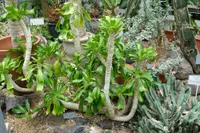
Turn the pot 90° every 2–3 weeks so new stacked leaves develop evenly on all sides and the columns stay upright instead of leaning toward the light source.

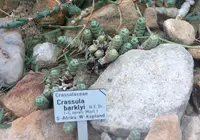
Crassula barklyi is a small, slow-growing succulent from arid regions of South Africa. It forms tight vertical columns of stacked, rounded leaves that resemble miniature towers. The foliage is usually gray-green, sometimes with darker markings, and the plant stays compact, which suits windowsills and small containers. In good conditions, it may produce tiny tubular flowers at the stem tips. This species is generally considered easy to grow for those who understand basic succulent needs. It prefers bright light, very well-draining soil, and infrequent watering that allows the roots to dry between drinks. These traits make it suitable for anyone learning how to care for Crassula barklyi in a home setting.

Care Difficulty
Easy Care

Light Preference
Partial Sun

Water Requirements
Low Water

Temperature Preference
Tropical / Frost Sensitive

Hardiness Zone
10–11

Soil Texture
Sandy, Loamy, Rocky

Soil pH
Slightly acidic (6.5–7.0), Neutral (7.0)

Soil Drainage
Well-drained

Fertilization
Minimal (feed rarely)
Scan your plant to receive care tips personalized for your specific plant
Available on iOS and Android
This compact succulent prefers bright, indirect light with some gentle direct sun for best growth.
Watering should mimic a dry, rocky habitat with thorough soakings followed by clear drying periods.
This species prefers warm, dry conditions and reacts poorly to frost or prolonged cold.
This species tolerates typical indoor humidity and rarely needs special humidity management.
This plant needs a sharply draining, mineral-rich substrate that dries quickly after watering.
This species is well suited to container growing due to its compact, shallow root system.
This compact succulent grows well with light feeding during its active season.
Pruning needs are minimal and mainly focus on tidiness and plant health for Crassula barklyi.
This slow-growing succulent prefers slightly tight pots and infrequent repotting.
New Crassula barklyi plants are most commonly produced from stem or leaf cuttings.
This succulent is not frost hardy and needs protection in regions with cold winters.

Plant Health Check
Not sure what's wrong with your plant? Check your plant's health inside the app.
This species forms tight, vertical columns of stacked, overlapping leaves, an adaptation that reduces the surface area exposed to intense sun and dry air in its native arid habitats of South Africa.
The small, scale-like leaves are densely packed along very short internodes, creating a beaded texture that helps shade the stem and reduce water loss through transpiration.
In cultivation it often shows strongest growth during cooler, brighter seasons, reflecting conditions in its native climate where mild temperatures and winter rainfall trigger active growth rather than hot summer periods.
This species often blooms only when mature and slightly pot-bound. Inadequate light, irregular seasonal rest, or recent repotting can delay flowering. Stable conditions and time are usually more effective than fertilizer for triggering blooms.
Keep your plants happy and healthy with plant identification, disease detection, and easy care guidance.