sand pygmyweed Care (Crassula connata)

Also known as: pygmy stonecrop, pygmy-weed, Erect Pygmyweed
sand pygmyweed

About sand pygmyweed

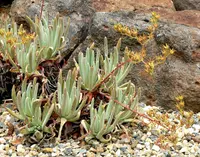
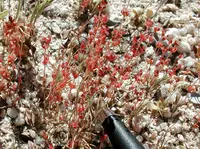
Sand pygmyweed (Crassula connata) is a tiny, low-growing succulent that forms dense mats of small, bead-like leaves. It often turns reddish or bronze in strong light, giving ground patches a subtle, colored tint.

This species is native to dry, sandy or rocky habitats in parts of North America and beyond, where it colonizes open soil and shallow cracks. Its small size and shallow roots make it easy to grow in containers, rock gardens, or as a filler around larger succulents, as long as it has good drainage.

Because it tolerates poor soils and brief dry periods, it is generally considered undemanding, though it prefers bright light and lightly moist, fast-draining substrates. These traits make it straightforward to care for sand pygmyweed in suitable conditions.

Main Plant Requirements

Care Difficulty

Moderate Care

Light Preference

Full Sun

Water Requirements

Moderate Water

Temperature Preference

Warm Climate

Hardiness Zone

7–10

Soil Texture

Sandy, Loamy, Rocky

Soil pH

Slightly acidic (6.5–7.0), Neutral (7.0)

Soil Drainage

Well-drained

Fertilization

Minimal (feed rarely)

Get Personalized Care Plan

Scan your plant to receive care tips personalized for your specific plant

Available on iOS and Android

How to Care for the sand pygmyweed

Crassula connata prefers bright, open light that mimics exposed, sandy habitats.

  • Provide 4–8 hours of direct sun, ideally cool morning sun with some light afternoon shade in hotter, inland areas.
  • Tolerates light partial shade, but plants in less than 3–4 hours of sun become stretched, pale, and sparse in growth.
  • In summer, protect sand pygmyweed from intense midafternoon sun to prevent leaf scorch; in cooler seasons it can handle longer direct exposure.

Water Crassula connata sparingly to match its shallow, succulent root system and fast-draining habitats.

  • Water only when the top 2–4 cm of soil are completely dry; in native-like sandy sites this may mean long gaps between waterings.
  • Use very fast-draining, gritty soil so water runs through in seconds and does not puddle or stay soggy around the roots.
  • Reduce watering sharply in cool seasons; signs of excess moisture include soft, translucent leaves, while slight leaf wrinkling or dullness suggests it is time to water.

This species prefers cool to warm conditions but is short-lived if exposed to hard frost or extreme heat.

  • Aim for active growth in 55–75°F (13–24°C), which suits its natural cool-season pattern in many dry regions.
  • Tolerates brief dips to about 28–32°F (-2–0°C), but repeated freezes or hard frost can damage foliage and reduce survival.
  • Handles dry heat up to 90–95°F (32–35°C) if soil is fast-draining and sun exposure is moderated during the hottest hours.

Humidity is rarely a concern for Crassula connata, which naturally thrives in dry air.

  • Target 30–50% humidity; typical indoor or outdoor dry climates are adequate.
  • Leaves shriveling or becoming oddly soft may indicate combined low humidity and underwatering rather than humidity alone.
  • If air is extremely dry and hot, group pots together on a shallow pebble tray to slightly raise local humidity without wetting foliage.

Use a very fast-draining, sandy substrate that mimics the natural habitat of Crassula connata.

  • Choose a gritty mix such as 40% coarse sand, 30% small gravel or pumice, and 30% cactus mix to prevent waterlogging.
  • Aim for slightly acidic to neutral pH around 6.0–7.0, which keeps nutrients available without stressing roots.
  • Increase aeration by using sharp sand and mineral grit rather than fine compost that compacts and holds water too long.
  • Avoid clay-heavy, peat-heavy, or poorly drained soils, since even short-term saturation can cause root rot in this small annual succulent.

This species is suitable for container growing, especially in shallow, well-drained pots.

  • Select a shallow, wide container to match the fine, surface-leaning root system and allow quick drying after watering.
  • Use unglazed terracotta if possible, as it evaporates moisture faster and reduces the risk of prolonged saturation in the small root zone.
  • Raise the container slightly on pot feet or blocks so drainage holes never sit in collected runoff water, preventing roots from standing in moisture.

This small annual succulent typically grows in nutrient-poor sites and needs only minimal feeding in cultivation.

  • Use a very dilute balanced liquid fertilizer (around 10-10-10 NPK) at 1/4 strength for container-grown sand pygmyweed.
  • Feed lightly once at the start of active growth in spring if plants show pale foliage or weak growth.
  • Avoid fertilizing during summer dormancy or winter, as excess nutrients encourage leggy, weak tissue.
  • Choose lean, gritty soil rather than rich compost; too much organic matter reduces compact growth.

Crassula connata needs only light grooming because it is a tiny, short-lived annual succulent.

  • Trim off dead or discolored mats with small scissors during or after flowering to keep plantings tidy.
  • Remove any damaged or moldy patches promptly to improve airflow and reduce fungal issues.
  • Shape low edges by carefully snipping crowded outer growth without cutting into healthy central areas.
  • Disinfect cutting tools before use to limit disease spread between clumps or nearby plants.

This species is more often grown as a seasonal groundcover or in shallow trays than as a long-term potted specimen.

  • Transplant in early spring when seedlings are small, before roots tangle densely and growth accelerates.
  • Move plants only if roots visibly fill a shallow tray, growth stalls, or soil dries out extremely fast.
  • Shift into a slightly larger, shallow container with gritty, fast-draining mix to minimize root disturbance.
  • Water gently after transplanting, then allow soil to almost dry; avoid heavy handling to limit transplant shock.

This annual succulent is most reliably propagated from seed rather than from cuttings or division.

  • Sow fresh seed in late winter to early spring on the surface of a gritty, well-drained mix.
  • Maintain bright light, gentle airflow, and lightly moist (not wet) substrate until germination.
  • Do not cover tiny seeds heavily; a very thin dusting of sand is enough for good contact.
  • Once seedlings form small clumps, thin or gently separate them to prevent overcrowding and damping-off.

This small annual is quite cold tolerant in its native range and usually needs little specific winter care outdoors.

  • In cold climates with containers, move trays to a cold, bright, frost-free spot if severe freezes are expected.
  • Use a thin layer of coarse sand or fine gravel as mulch in pots to stabilize soil temperature and drainage.
  • Avoid waterlogged conditions in winter, since saturated soil combined with cold promotes root and stem rot.

Care Tips

Seedling density

When sowing, sprinkle seed very thinly and later thin crowded patches so plants stand 1–2 cm apart, which reduces damping-off and gives each rosette room to mature fully.

Preventing algae crust

If growing in trays or pots, top-dress the surface with a 2–3 mm layer of fine grit or sand to limit algae and moss growth that can smother this tiny plant.

Shallow container choice

Use wide, shallow trays or dishes rather than deep pots, since this species has a very shallow root system and spreads as a low mat that benefits from horizontal space.

Seasonal life cycle

Treat it as a short-lived annual and collect seed from the earliest mature, dry capsules, then resow promptly or store cool and dry so you can continue growing sand pygmyweed in future seasons.

Micro-scale weeding

Hand-weed with fine tweezers or a narrow dibber while unwanted seedlings are still very small, so they do not outcompete this miniature species for light and space.

Common Pests and Diseases

Algal overgrowth

Symptoms include a green, slimy film forming on wet soil surfaces and sometimes on the lower stems of the tiny rosettes. This condition appears in containers or trays that stay constantly wet and exposed to strong light.

Solution

Reduce watering frequency so the surface can dry slightly between waterings, improve air movement around the tray, and thin overly dense patches of plants. If needed, gently scrape away the top layer of affected substrate and replace it with fresh, well-drained sand or grit to restore good Crassula connata care conditions.

Damping off

This disease causes newly germinated seedlings to collapse at the soil line, turn water-soaked, and die quickly, often creating small bare patches in dense sowings. It appears most often in crowded, poorly ventilated seed trays kept constantly moist.

Solution

Use a free-draining, low-organic substrate, avoid overwatering, and provide good airflow around young plants. Remove and discard affected seedlings promptly and allow the surface to dry slightly between waterings; for high-value sowings, start with clean pots and substrate and avoid reusing contaminated materials.

Fungus gnat larvae

These insects live as larvae in constantly moist, organic-rich substrates and can damage fine roots and young stems. Adult gnats are small black flies that hover over trays or run across the soil surface.

Solution

Allow the top layer of the substrate to dry between waterings and reduce organic matter by using more mineral components such as sand and fine grit. Place yellow sticky traps to catch adults and, if infestations persist, apply a biological control such as Bacillus thuringiensis israelensis (BTI) according to label directions to target larvae in the substrate.

Aphids

This pest sometimes infests tender new growth, especially along young stems and at the tips of clusters in sheltered or slightly enriched sites. These insects suck sap, causing slight distortion and sticky honeydew on nearby surfaces.

Solution

Rinse plants gently with a soft stream of water to dislodge insects, repeating as needed. For persistent colonies, spot-treat with a dilute insecticidal soap or horticultural oil, applied in the early morning or evening, and avoid overfertilizing, which encourages soft, aphid-prone growth.

Interesting Facts

Ephemeral desert succulent

This small annual succulent completes its entire life cycle rapidly after seasonal rains in arid and semi-arid regions, then disappears as seeds until the next wet period.

Color change with stress

Its tiny fleshy leaves often turn reddish or purplish under strong light, drought, or cold, a response linked to protective pigments called anthocyanins that help limit light and cold damage.

Microhabitat specialist

In the wild it frequently grows in thin soil pockets, sandy depressions, and rock crevices, taking advantage of brief moisture pulses that many larger plants cannot use.

FAQs about sand pygmyweed

This species forms small, patchy mats rather than dense carpets. It self-seeds in open, sandy or gravelly spots but is usually easy to control. Simple hand-pulling or light cultivation keeps growth within the desired area.

Grow Healthy Plants with Botan Care

Keep your plants happy and healthy with plant identification, disease detection, and easy care guidance.

Botan plant care app — identify plants on mobile

Explore More Plants