Summer protection
In hot, inland areas, give the plant light shade or move containers during the hottest weeks of summer to prevent rosette scorch and excessive stress that shortens its lifespan.

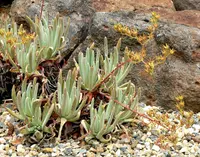
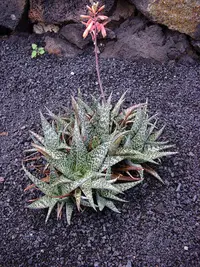
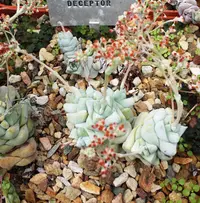
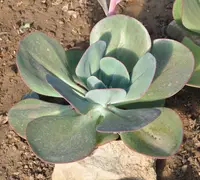
Bright green dudleya (Dudleya virens) is a compact, rosette-forming succulent from coastal bluffs and rocky slopes of southern California and Baja California. It stores water in its fleshy leaves and naturally experiences cool, wet winters and dry summers. The plant typically forms tight clusters of bright green rosettes, sometimes developing tall, slender flower stalks with small, starry blooms. Its slow to moderate growth and drought tolerance make it relatively low maintenance in suitable conditions. It prefers strong light, excellent drainage, and careful watering, which influences how to care for bright green dudleya in home and garden settings.

Care Difficulty
Hard Care

Light Preference
Full Sun

Water Requirements
Low Water

Temperature Preference
Warm Climate

Hardiness Zone
9–11

Soil Texture
Sandy, Rocky, Loamy

Soil pH
Slightly acidic (6.5–7.0), Neutral (7.0)

Soil Drainage
Well-drained

Fertilization
Minimal (feed rarely)
Scan your plant to receive care tips personalized for your specific plant
Available on iOS and Android
This coastal succulent prefers strong, direct light but not extreme, all-day exposure far inland.
This species is adapted to dry, winter-wet, summer-dry conditions and is sensitive to excess moisture.
This succulent favors mild, coastal-type temperatures and dislikes both hard frost and extreme heat combined with moisture.
This species prefers very dry air and does not need added humidity.
Use a very fast-draining, mineral-heavy mix that mimics rocky coastal slopes.
This species is well suited to container growing if drainage is strict and the mix stays very dry between waterings.
Dudleya virens is a nutrient-efficient succulent that benefits from only light, targeted feeding in containers.
Dudleya virens needs only minimal pruning to keep rosettes clean and reduce rot risk.
This coastal succulent prefers stability and should be repotted or transplanted infrequently and gently.
This species is usually propagated by offsets or seed under controlled, careful conditions.
This succulent is adapted to mild, Mediterranean-type winters and needs some protection in colder climates.

Plant Health Check
Not sure what's wrong with your plant? Check your plant's health inside the app.
This species is naturally restricted to a few rocky coastal slopes and sea cliffs on California’s Channel Islands, where it forms dense rosettes in thin, nutrient-poor soils exposed to wind and salt spray.
Its tubular white to pale green flowers are often visited by nocturnal moths as well as diurnal insects, an adaptation linked to its pale flower color and evening nectar availability.
In its native climate it can partially retreat into summer dormancy during the hottest, driest months, reducing above-ground growth to conserve water and protect its growing point.

Conservation guidelines in California specifically discourage removing wild plants or even cultivated rosettes of this species from its native region, after large-scale poaching of Dudleya on coastal cliffs highlighted the vulnerability of these slow-growing island endemics.
Brown leaf tips or patches usually result from excess sun heat, old age, or previous drought stress. Check for mushy tissue, which suggests rot. Remove dead leaves and adjust exposure gradually rather than making sudden changes.
Keep your plants happy and healthy with plant identification, disease detection, and easy care guidance.