Crassula hemisphaerica Care

Crassula hemisphaerica

About Crassula hemisphaerica

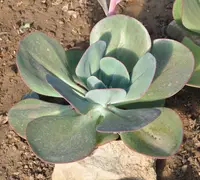
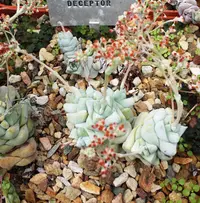
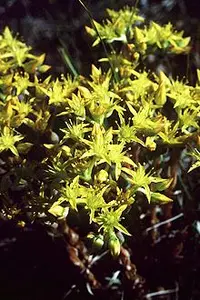
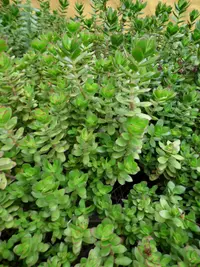
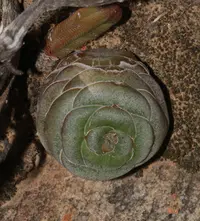
Crassula hemisphaerica is a compact succulent from South Africa, valued for its tight rosettes of fleshy, often hemispherical leaves. The leaves may show subtle color changes under strong light, adding interest despite the plant’s small size.

This species grows slowly and stays low, making it suitable for containers, rock gardens, and windowsill collections. Its thick leaves store water, which increases drought tolerance but also means it is sensitive to overwatering.

In cultivation it favors bright light, low to moderate moisture, and very well-drained, gritty soil. These traits generally make it manageable for growers who learn how to care for Crassula hemisphaerica with a light hand on watering.

Main Plant Requirements

Care Difficulty

Moderate Care

Light Preference

Full Sun

Water Requirements

Low Water

Temperature Preference

Warm Climate

Hardiness Zone

10–11

Soil Texture

Sandy, Loamy, Rocky

Soil pH

Slightly acidic (6.5–7.0), Neutral (7.0)

Soil Drainage

Well-drained

Fertilization

Minimal (feed rarely)

Get Personalized Care Plan

Scan your plant to receive care tips personalized for your specific plant

Available on iOS and Android

How to Care for the Crassula hemisphaerica

This compact succulent prefers bright conditions with some protection from harsh midday sun.

  • Provide 4–6 hours of direct morning sun plus bright, filtered light for the rest of the day for healthy, compact growth in Crassula hemisphaerica.
  • Plant in a spot with light afternoon shade in hot summers to reduce leaf scorch and sunburn, especially in zones with very intense sun.
  • In winter, maximize light by choosing the brightest available position; insufficient light leads to stretched, pale leaves and weak new growth.

This species stores water in its leaves, so it prefers infrequent, thorough watering with fast drainage.

  • Allow the top 3–5 cm of soil to dry completely before watering, using fingertip or a wooden stick to check moisture rather than a fixed schedule.
  • Water deeply until excess drains away, then empty any saucers; pale, mushy leaves signal overwatering, while wrinkled, soft leaves indicate underwatering.
  • Reduce watering sharply in winter, sometimes to only occasional sips, especially in cool conditions, and use a gritty, free-draining mix to prevent root rot.

This succulent favors warm, dry conditions and is sensitive to prolonged cold and frost.

  • Aim for 65–80°F (18–27°C) during active growth for steady development and firm leaf texture.
  • Protect from temperatures below 35–40°F (2–4°C); brief light chills may be tolerated, but hard frost can damage or kill tissues.
  • In hot spells above 90°F (32°C), provide light shade and good airflow, and avoid sudden shifts between very cool nights and intense daytime heat.

This succulent handles typical indoor humidity well and rarely needs special adjustments.

  • Aim for 30–50% humidity, similar to most heated or air-conditioned homes.
  • Dry air is usually tolerated; issues arise only if combined with prolonged underwatering and strong heat.
  • Humidity stress shows as soft, shriveled leaves; improve by watering correctly rather than misting.

Soil for Crassula hemisphaerica must be very fast-draining to prevent root and stem rot.

  • Use a gritty, sandy mix such as 50–60% inorganic material (pumice, perlite, coarse sand) with 40–50% cactus potting mix.
  • Choose a loose, open structure that dries within a few days and allows plenty of air around the roots.
  • Maintain slightly acidic to neutral pH, around 6.0–7.0, which suits most commercial succulent mixes.
  • Avoid peat-heavy, compact, or water-retentive soils; amend with extra pumice or coarse sand to improve drainage and aeration.

This species suits container growing when the pot controls moisture and supports its low, clustering habit.

  • Select a shallow but wide pot that matches the shallow root system and keeps the soil drying evenly.
  • Prefer unglazed terracotta if extra evaporation is needed in humid or cool climates.
  • Place the pot where it cannot be knocked or tilted, as the clustered rosettes can become top-heavy at the edges.

This compact succulent needs only modest feeding under typical indoor and patio conditions.

  • Use a balanced liquid fertilizer (around 10-10-10) diluted to 25–50% strength for caring for Crassula hemisphaerica.
  • Feed once every 4–6 weeks during active growth in spring and summer, only on moist soil to avoid root burn.
  • Skip fertilizer in autumn and winter when growth slows, especially in cooler conditions.
  • Avoid organic compost-heavy mixes that stay wet; choose formulations labeled for cacti and succulents.

Light pruning keeps Crassula hemisphaerica compact and removes weak tissue.

  • Carry out shaping in late spring or early summer when growth resumes strongly.
  • Use clean, sharp scissors or small pruning shears to remove dead, shriveled, or damaged leaves and stems.
  • Shorten leggy stems just above a node to encourage branching and a denser cushion-like shape.
  • Discard diseased material and avoid cutting into soft, water-soaked tissue to reduce infection risk.

This slow-growing succulent prefers tight quarters and infrequent disturbance.

  • Check for roots circling the pot, pushing through drainage holes, or water running straight through; these signal time to move Crassula hemisphaerica.
  • Repot every 2–3 years in spring, stepping up only 1 pot size with a gritty cactus mix.
  • Loosen the rootball gently with fingers, removing old, compacted soil without tearing healthy roots.
  • After repotting, water lightly once, then let the mix dry almost fully to limit root stress and rot.

New plants are most often produced from cuttings rather than seed for this species.

  • Take healthy leaf or short stem cuttings in late spring or early summer from non-flowering shoots of Crassula hemisphaerica.
  • Allow cut ends to callus for 1–3 days in a dry, bright place before planting.
  • Set cuttings on or just in a barely moist, gritty mix and keep at 68–75°F in bright, indirect light.
  • Water sparingly until roots form, then increase light gradually to avoid scorch and etiolation, which is stretched growth.

This succulent is not very frost hardy and benefits from sheltered conditions in winter.

  • Keep Crassula hemisphaerica at 45–55°F in winter, avoiding frost and prolonged exposure below freezing.
  • Move container plants indoors or into a cold greenhouse before nights drop below 40°F.
  • Reduce watering sharply, letting the mix dry fully, to limit rot in cool, low-light conditions.
  • Provide as much bright light as possible indoors to prevent weak, elongated winter growth.

Care Tips

Rot-prevention potting

When repotting, place a thin layer of coarse mineral grit (pumice or small gravel) at the very bottom of the pot to keep the root zone above any brief water accumulation and lower the risk of stem rot, which is especially helpful when caring for Crassula hemisphaerica in small indoor containers.

Controlled clump division

Every 2–3 years, gently divide congested rosettes at the soil line with a clean knife and replant them slightly apart in the same pot to maintain airflow between heads and reduce fungal issues in the crown area.

Low-stress propagation

Take offsets or leaf cuttings only from well-hydrated, firm tissue and let the wounds dry for 2–3 days before placing on dry, sterile grit so new roots form without soft, infection-prone calluses.

Seasonal light shifts

Rotate the pot by 90° every 1–2 weeks and move it 15–30 cm farther from the window if leaf edges start to redden too quickly, which helps prevent one-sided stretching while avoiding sudden sun scorch.

Targeted pest checks

Inspect the tight spaces between lower leaves and the crown once a month with a magnifying glass, and if mealybugs or scale are seen, remove them with a cotton swab dipped in 70% isopropyl alcohol before populations build up in hard-to-reach crevices.

Common Pests and Diseases

Mealybugs

This pest feeds on leaf and stem tissues, often hiding between the tight leaf pairs and along the short stems, causing stunting and distorted new growth. Symptoms include white cottony clusters, honeydew, and sooty mold on older plants or those kept too shaded and still.

Solution

Remove visible clusters with a cotton swab dipped in 70% isopropyl alcohol, then rinse the plant gently with lukewarm water to dislodge remaining insects. Improve light and air movement, isolate the plant, and repeat spot treatments weekly until no new mealybugs appear; for larger collections, use a systemic insecticide labeled for succulents following the product directions.

Soft scale

These insects attach along stems and leaf bases, appearing as small brown or tan bumps that secrete honeydew. This pest weakens plants over time, especially compact clumps grown in low airflow or crowded trays.

Solution

Gently scrape off individual scales with a fingernail or soft toothbrush and wipe stems with a cloth lightly moistened with 70% isopropyl alcohol. Increase light and spacing, monitor weekly, and if populations persist, apply a horticultural oil or insecticidal soap labeled for succulents, ensuring thorough coverage of stems and leaf bases.

Aloe mite (eriophyid mite)

This pest can cause distorted, swollen, or warty growth on leaves and crowns of small Crassula species, sometimes with reddish or corky patches. Symptoms include abnormal clumping and loss of the plant’s normal geometric symmetry.

Solution

Promptly remove and discard all visibly distorted tissue, cutting back into healthy, normal-looking growth and sterilizing tools between cuts. If distortion continues to appear, discard the entire plant to protect nearby succulents, then improve quarantine practices for new plants and avoid placing new acquisitions directly next to established Crassula hemisphaerica collections as part of careful Crassula hemisphaerica plant care.

Oedema

This physiological disorder occurs when roots take up water faster than leaves can transpire, leading to water-soaked blisters that become corky spots on the leaves. Symptoms include rough, tan or brown patches on lower leaves, especially after watering late in the day or during cool, humid weather.

Solution

Reduce watering frequency, allowing the soil to dry more thoroughly between waterings, and avoid watering late in the day. Provide brighter light, improve airflow, and use a fast-draining gritty mix so excess water moves quickly through the root zone, preventing future oedema lesions.

Fungal leaf spots

This disease appears as small brown or black spots on leaves, sometimes with a yellow halo, and may follow overhead watering or poor ventilation in dense trays. Symptoms include gradual spotting on older leaves that can lead to premature leaf drop in very compact plants.

Solution

Remove and discard affected leaves, then adjust care to reduce humidity around the foliage by improving airflow and watering at the soil surface rather than overhead. Allow the plant to dry between waterings, and if spotting progresses, apply a sulfur or copper-based fungicide labeled for ornamental succulents, following label directions carefully.

Interesting Facts

Stacked leaf geometry

This species forms tight, opposite leaf pairs that stack in a spiral around the stem, creating a low, hemispherical mound that inspired its species name hemisphaerica, meaning half-spherical.

Karoo microhabitat specialist

It is native to arid parts of the Western and Eastern Cape in South Africa, where it often grows in shallow rocky soils or crevices that provide excellent drainage and protect its roots from prolonged moisture.

Seasonal growth rhythm

In its native range it tends to grow actively in the cooler, drier months and slows or rests during the hottest period, reflecting an adaptation to the winter-rainfall climate of parts of the Cape region and informing Crassula hemisphaerica care instructions in cultivation.

FAQs about Crassula hemisphaerica

Yellowing leaves usually result from excess moisture around the roots, poor drainage, or compacted soil. Less often, it comes from abrupt light changes or heavy fertilizer. Check the roots, improve drainage, and remove persistently soggy, damaged foliage.

Grow Healthy Plants with Botan Care

Keep your plants happy and healthy with plant identification, disease detection, and easy care guidance.

Botan plant care app — identify plants on mobile

Explore More Plants