Rock crevice planting
Tuck plants into narrow rock crevices or between pavers so roots stay cool and anchored while foliage receives maximum light and good runoff.

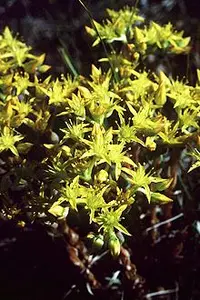
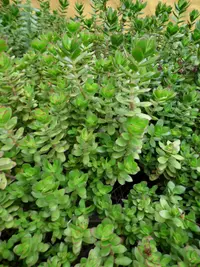
Wormleaf stonecrop (Sedum stenopetalum) is a small, mat-forming succulent native to rocky slopes and cliffs in western North America. It is typically found in well-drained, often gravelly or sandy sites at higher elevations. Plants form low clumps of narrow, fleshy leaves and produce clusters of star-shaped yellow flowers in late spring or summer. This species is adapted to bright light, dry conditions, and lean soils, which makes it well suited to rock gardens and troughs. Its drought tolerance and slow, compact growth habit generally make it easy to care for wormleaf stonecrop in suitable climates.

Care Difficulty
Easy Care

Light Preference
Full Sun

Water Requirements
Low Water

Temperature Preference
Cold Hardy

Hardiness Zone
4–9

Soil Texture
Sandy, Loamy, Rocky

Soil pH
Slightly acidic (6.5–7.0), Neutral (7.0)

Soil Drainage
Well-drained

Fertilization
Minimal (feed rarely)
Scan your plant to receive care tips personalized for your specific plant
Available on iOS and Android
This sun-loving alpine succulent thrives in bright, open conditions with protection from extreme afternoon heat.
This drought-tolerant Sedum needs infrequent, careful watering to avoid root rot.
This hardy succulent tolerates a wide temperature range but performs best in moderate conditions.
This drought-adapted succulent tolerates a wide humidity range and rarely needs special adjustment indoors or outdoors.
Sedum stenopetalum needs very fast-draining, mineral-rich soil to prevent root and stem rot.
This species is well suited to container growing, including shallow pots, troughs, and rock-garden planters.
Sedum stenopetalum needs very little feeding, especially in the ground with reasonably well-drained soil.
Sedum stenopetalum benefits from light, periodic pruning to keep clumps dense and tidy.
This sedum is usually grown in the ground or shallow rock garden containers and rarely needs frequent repotting.
Sedum stenopetalum is commonly propagated from stem cuttings and division, with seeds used less often.
This species is cold hardy and usually needs minimal winter care in the ground.

Plant Health Check
Not sure what's wrong with your plant? Check your plant's health inside the app.
This species is native to western North America and is strongly associated with rocky outcrops, cliffs, and talus slopes, where its shallow, fibrous roots anchor into thin, mineral-rich soils that many other plants cannot tolerate.
Its yellow flowers have unusually narrow, pointed petals, which give each bloom a fine, star-like appearance that distinguishes it from many other stonecrops with broader-petaled flowers.
Unlike many succulents from warmer regions, this plant is adapted to cold mountain climates and can overwinter under snow while remaining evergreen or semi-evergreen in many parts of its range.

This species often forms low, mat-like colonies that help stabilize loose rock and gravel on steep slopes, contributing to erosion control and creating small microhabitats where other alpine and subalpine plants can later establish.
This species forms low, slowly expanding clumps or small mats. It spreads by short stems and self-seeding but is not usually aggressive. In most gardens it behaves as a manageable ground cover that stays within its area.
Keep your plants happy and healthy with plant identification, disease detection, and easy care guidance.