Seasonal light shift
Move the plant to a brighter, cooler spot in winter and a slightly filtered, airy position in peak summer to reduce etiolation and sun scorch as day length and sun angle change.

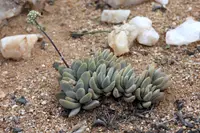
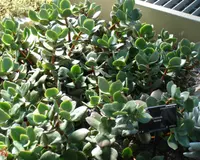
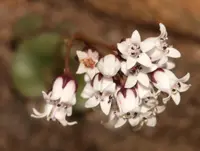
Crassula namaquensis is a small, slow-growing succulent from arid regions of South Africa and Namibia. It forms low cushions or clumps of short, branching stems. The leaves are thick, often blue-green and densely covered with fine hairs, giving the plant a soft, silvery look. Mature plants may produce small, star-shaped flowers on short stalks. This species stays compact, so it suits pots, small succulent collections, and bright windowsills. It tolerates drought well but is sensitive to excess moisture and poor drainage. Understanding how to care for Crassula namaquensis mainly involves providing strong light, airy soil, and careful watering.

Care Difficulty
Moderate Care

Light Preference
Full Sun

Water Requirements
Low Water

Temperature Preference
Tropical / Frost Sensitive

Hardiness Zone
10–11

Soil Texture
Sandy, Loamy, Rocky

Soil pH
Slightly acidic (6.5–7.0), Neutral (7.0)

Soil Drainage
Well-drained

Fertilization
Minimal (feed rarely)
Scan your plant to receive care tips personalized for your specific plant
Available on iOS and Android
This compact succulent thrives in bright, dry light similar to high desert conditions.
This drought-adapted species prefers deep, infrequent watering and fast-drying soil.
This species favors warm, dry air and cool but frost-free nights.
This species prefers dry indoor air, so humidity is rarely a concern.
This succulent needs a very fast-draining, mineral-based soil to protect its roots from rot.
This species is well suited to container growing.
This compact succulent has modest nutrient needs, so focus on light, infrequent feeding during active growth.
Pruning is minimal and mainly used to maintain shape and remove decline on this small succulent.
This species prefers tight quarters and only needs infrequent repotting in a fast-draining mix.
This plant is commonly propagated from stem or leaf cuttings under warm, bright, and dry-leaning conditions.
This succulent is not frost hardy and needs protection in regions with cold winters.

Plant Health Check
Not sure what's wrong with your plant? Check your plant's health inside the app.
This species forms tight rosettes of small, cylindrical or club-shaped leaves that are densely covered in fine hairs, giving them a soft, felted texture that helps reduce water loss and sun stress in its arid habitat.
Crassula namaquensis is naturally found in the Namaqualand region of South Africa and southern Namibia, growing in rocky, very well-drained sites within a winter-rainfall desert environment.
Botanists recognize several subspecies, including forms with more elongated leaves or different degrees of hairiness, reflecting local adaptation to microclimates and substrates within its restricted range.

During the Namaqualand spring bloom, this species can form small clustered mats among stones and other succulents, becoming part of one of the most botanically diverse and seasonally spectacular dryland floras on Earth.
This species often needs a cool, bright, dry winter rest to set buds. If nights stay warm, or watering and fertilizing continue heavily in winter, it may focus on foliage and skip flowering for the season.
Keep your plants happy and healthy with plant identification, disease detection, and easy care guidance.