flame chanterelle Care (Craterellus ignicolor)

flame chanterelle

About flame chanterelle

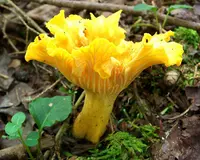
The flame chanterelle, Craterellus ignicolor, is a small, funnel-shaped wild fungus, not a typical houseplant. It forms thin, bright orange to yellow fruiting bodies with hollow centers and a flaring, sometimes wavy cap. In nature, it grows on forest floors, often among moss, in mixed or deciduous woodlands of eastern North America.

This species forms mycorrhizal relationships, meaning it lives in close association with tree roots, which makes it difficult to cultivate at home. Gardeners who want to care for flame chanterelle usually focus on protecting suitable woodland habitat rather than trying to grow it in containers.

It prefers moist, well-drained, humus-rich soils and stable, shaded woodland light conditions where leaf litter and natural organic matter are abundant.

Main Plant Requirements

Care Difficulty

Hard Care

Light Preference

Shade

Water Requirements

Keep Soil Moist

Temperature Preference

Cool Climate

Hardiness Zone

Unknown

Soil Texture

Loamy, Silty, Organic-rich

Soil pH

Strongly acidic (4.5–5.5), Acidic (5.5–6.5)

Soil Drainage

Moist but well-drained

Fertilization

Minimal (feed rarely)

Get Personalized Care Plan

Scan your plant to receive care tips personalized for your specific plant

Available on iOS and Android

How to Care for the flame chanterelle

This woodland fungus prefers soft, filtered light similar to a mixed forest floor.

  • Provide dappled shade or high, open shade with 1–3 hours of weak morning sun, avoiding direct midday and afternoon sun that can dry the substrate too quickly.
  • Site flame chanterelle under deciduous trees so it receives brighter conditions in spring and fall, then light shade under full summer canopy.
  • Watch for pale, elongated fruiting bodies as a sign of too little light, and cracked, dried caps as a sign of excessive sun exposure.

Craterellus ignicolor depends on consistently moist, well-drained forest soil, not waterlogged ground.

  • Aim for soil that feels evenly moist 3–5 cm below the surface; it should never be saturated or form puddles after rain or irrigation.
  • During dry spells, water the surrounding soil lightly whenever the top 2–4 cm feel dry, allowing excess to drain away to protect fine fungal structures.
  • Suspect overwatering if the area stays soggy and develops a sour smell, and underwatering if the upper layer becomes powdery, pale, and cracks.

This species fruits best in mild, cool to moderately warm conditions typical of temperate forests.

  • Optimal fruiting temperatures are around 55–70°F (13–21°C), with mycelium growth remaining active in a slightly wider band of 45–75°F (7–24°C).
  • Short drops to about 32°F (0°C) may be tolerated in dormant periods, but repeated hard frosts and frozen, heaving soil can reduce future fruiting.
  • Sustained heat above 80°F (27°C), especially with dry air and soil, often halts fruiting; provide shade and mulch to buffer temperature swings.

Craterellus ignicolor needs consistently moist, humid conditions similar to a damp forest floor.

  • Aim for 70–90% humidity, as this fungus fruits poorly in dry air and often fails entirely indoors.
  • Dry household air causes shriveling, tough caps, and stalled growth at pin-stage primordia.
  • Increase humidity with a closed, ventilated fruiting chamber, frequent fine misting of the substrate surface, and a damp perlite layer.

This fungus requires a loose, organic, forest-like substrate rather than standard potting soil.

  • Use a mix of well-rotted hardwood leaf litter, composted wood chips, and coarse sand to mimic natural forest duff.
  • Ensure the substrate drains freely yet stays evenly moist, never waterlogged, to avoid anaerobic conditions that suppress fruiting.
  • Aim for slightly acidic conditions around pH 5.0–6.5, which matches typical habitats of Craterellus ignicolor.
  • Improve aeration by incorporating coarse bark or chipped wood so air pockets remain even after repeated watering.

This species is challenging in containers and is usually only grown experimentally rather than as a standard potted crop.

  • Use a wide, shallow tub to provide a broad surface area for substrate and potential mycorrhizal contact rather than depth.
  • Drill multiple side holes near the base to let excess water escape while still allowing high-humidity air exchange across the substrate.
  • Choose opaque, rigid containers to reduce light on developing mycelium and keep the moist substrate thermally stable.

Craterellus ignicolor usually thrives without additional fertilizer when grown in a suitable woodland-style substrate rich in organic matter.

Craterellus ignicolor requires no structured pruning, only simple hygiene to keep fruiting areas healthy.

  • After each fruiting flush, remove spent or decayed fruiting bodies with clean hands or a sanitized knife to limit fungal disease spread.
  • Gently clear away slimy, moldy, or insect-damaged material while leaving the underlying mycelium and forest duff undisturbed.
  • Avoid cutting into the substrate or mycelial mat, since this can reduce future fruiting and disturb the natural colony structure.

This woodland fungus is seldom grown in conventional pots, so focus on carefully transplanting colonized substrate rather than standard repotting.

  • Transplant only when growth is clearly limited by container size or when colonized substrate is fully occupying a tray or box.
  • Plan moves for cool, moist weather in spring or early fall to reduce desiccation stress on the mycelium.
  • Lift and transfer colonized wood chips or leaf litter as intact blocks, disturbing the mycelial network as little as possible.
  • After transplanting, water gently, keep shade high and airflow moderate, and avoid letting the substrate dry out completely.

Reproducing Craterellus ignicolor is specialized work that relies on spores and mycelium rather than typical plant-style propagation.

In suitable temperate climates, this species usually tolerates natural winter conditions without special intervention.

  • In outdoor beds, maintain a loose mulch of leaves or wood chips 3–5 cm deep to buffer freeze–thaw cycles around the mycelium.
  • Avoid deep digging or turning the substrate in winter so the fungal network remains insulated and stable.
  • Container-based culture, if attempted, benefits from an unheated but frost-free shed or garage to limit extreme drying winds.

Care Tips

Habitat mimicry

Establish a shaded outdoor bed using well-rotted hardwood leaf litter and small rotting branches from oak, beech, or similar trees to better mimic the natural forest floor where Craterellus ignicolor associates with tree roots.

Leaf-litter layering

Top up the fruiting area with a thin layer (1–2 cm) of fresh, unsprayed hardwood leaves each autumn to maintain a loose, cool, and slowly decomposing organic layer that supports ongoing mycelium health.

Minimal disturbance

Mark the inoculated area clearly and avoid digging, raking, or stepping on it, since mechanical disturbance can break mycelial networks and sharply reduce future fruiting.

Gentle harvesting

Harvest by carefully cutting mushrooms at the base with a clean knife rather than pulling, and leave very small or damaged specimens in place so the mycelium can redirect resources to healthier fruiting bodies.

Moisture buffering

Use a breathable top layer such as shredded hardwood mulch or coarse leaf mold around but not directly on the fruiting clusters to reduce evaporation and keep the substrate evenly moist during dry spells when growing flame chanterelle.

Common Pests and Diseases

Fungus gnat larvae

This pest lives in moist organic debris and feeds on fine fungal tissue and developing fruiting bodies. Symptoms include slow colony expansion, tunneled caps, and small surface pits on young mushrooms.

Solution

Reduce excess surface moisture, remove decaying plant litter, and use fine mesh or breathable covers over cultivation trays to block adult gnats. For heavy infestations, apply a biological control with Bacillus thuringiensis israelensis (Bti) to the moist substrate surface according to label directions.

Mite infestation

These insects are actually tiny arachnids that graze on mycelium and young fruiting bodies, leaving pale, scarred, or misshapen mushrooms. Symptoms include reduced yield, distorted caps, and fine moving specks on the substrate when observed closely.

Solution

Lower the introduction risk by keeping leaf litter or cultivation areas clean, avoiding storage of compost or spoiled mushrooms nearby, and using clean tools. In small setups, discard heavily infested material, then reset with fresh substrate and maintain moderate airflow and humidity stability to discourage mite buildup.

Green mold (Trichoderma)

This disease starts as white fungal growth that quickly turns bright or dark green on the substrate surface, overtaking the mycelium. Symptoms include stalled or patchy colonization and poor or absent fruiting.

Solution

Promptly remove and discard heavily contaminated patches or entire trays, since Trichoderma spreads quickly by spores. For future cycles, sterilize or pasteurize substrate, sanitize tools and containers, and avoid overwatering or stagnant, poorly ventilated conditions that favor competitor fungi.

Bacterial blotch

This disease appears as greasy, water-soaked spots or streaks on caps that may turn yellow-brown and soft. Symptoms include deformation of fruiting bodies and a sour or foul smell under very wet conditions.

Solution

Reduce prolonged surface wetness by avoiding direct overhead misting on caps and improving air movement to dry them within a few hours after humidity cycles. Remove and dispose of affected mushrooms, clean nearby surfaces with a mild disinfectant, and keep humidity high but not condensing on the fruiting bodies.

Interesting Facts

Bright orange hymenium

The fertile surface of this species is a vivid orange to yellow-orange, which contrasts with its paler outer surface and helps distinguish it from similar Craterellus species in mixed hardwood forests.

Association with hardwoods

This fungus forms mycorrhizal partnerships with deciduous trees, especially oaks and beeches, exchanging mineral nutrients for sugars in the soil around their roots.

Thin, trumpet-shaped fruiting body

It produces delicate, tubular to trumpet-shaped fruiting bodies with a hollow center and thin flesh, which makes it lighter and more fragile than many other chanterelle relatives.

FAQs about flame chanterelle

Yes, this species is considered an edible wild mushroom in many regions and is often foraged for its mild flavor. Only eat specimens that are confidently identified, fresh, and collected from unpolluted, pesticide-free areas.

Grow Healthy Plants with Botan Care

Keep your plants happy and healthy with plant identification, disease detection, and easy care guidance.

Botan plant care app — identify plants on mobile

Explore More Plants