Cool root zone
Apply a 3–5 cm layer of loose, fine bark or leaf mold around the rhizomes to keep the root zone cool and evenly moist while preventing heavy mulches from smothering the emerging shoots.

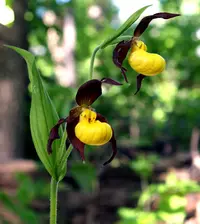
Lesser yellow lady's slipper (Cypripedium parviflorum) is a hardy terrestrial orchid native to woods, fens, and stream edges in North America. It forms clumps of upright stems with pleated green leaves and distinctive pouch-shaped yellow flowers marked with darker streaks.
This species grows from underground rhizomes and usually appears in spring, then goes dormant later in the season. It prefers cool conditions, filtered light, and consistently moist, well-drained, humus-rich soil.
Gardeners find it moderately challenging because it dislikes disturbance and needs stable moisture and temperature. Learning how to care for Lesser yellow lady's slipper is important for long-term success in temperate gardens and specialized collections.

Care Difficulty
Hard Care

Light Preference
Partial Shade

Water Requirements
Regular Water

Temperature Preference
Cold Hardy

Hardiness Zone
3–7

Soil Texture
Loamy, Silty, Organic-rich

Soil pH
Acidic (5.5–6.5), Slightly acidic (6.5–7.0)

Soil Drainage
Moist but well-drained

Fertilization
Minimal (feed rarely)
Scan your plant to receive care tips personalized for your specific plant
Available on iOS and Android
This hardy woodland orchid prefers bright, indirect light that mimics dappled forest shade.
This species needs consistently moist but not waterlogged soil, especially during active growth.
This orchid is a cold-hardy perennial adapted to temperate climates with distinct seasons.
This species prefers moderately moist air but copes with typical outdoor humidity in temperate climates.
Cypripedium parviflorum grows best in cool, moist but sharply drained, organic-rich ground.
This species is moderately suitable for outdoor container growing when the pot mimics a cool, deep woodland substrate.
Cypripedium parviflorum is a light feeder that benefits from modest nutrition in well-prepared soil.
Pruning needs for Cypripedium parviflorum are minimal and focus on hygiene rather than shaping.
This hardy orchid is usually grown in the ground, so care focuses on careful transplanting rather than frequent repotting.
Cypripedium parviflorum is usually propagated by careful division; seed propagation is slow and specialized.
This species is cold hardy in much of the US and needs only moderate winter care once established.

Plant Health Check
Not sure what's wrong with your plant? Check your plant's health inside the app.
This species occurs in two main forms, a brighter yellow variety often called var. pubescens and a smaller, more northern form known as var. parviflorum, which differ in flower size, color intensity, and typical habitat range across North America.
Its inflated slipper-shaped pouch traps small bees, which must exit through a narrow passage dusted with pollen, ensuring cross‑pollination while preventing many insects from stealing nectar without pollinating.
Unlike many tropical orchids, this is a hardy temperate species that survives freezing winters by retreating to underground rhizomes and emerging again in spring in moist, cool woodland or fen habitats.

This orchid can form long‑lived clonal colonies through slowly spreading rhizomes, so what looks like a patch of many individuals may actually be one genetically identical plant that has persisted in the same site for decades.
Lack of flowers usually comes from immature plants, division too recently, or insufficient winter chilling. Disturbance during dormancy, excess shade, or heavy feeding can also suppress buds. Stable, cool winters and minimal digging encourage reliable flowering.
Keep your plants happy and healthy with plant identification, disease detection, and easy care guidance.