Dinnerplate Dahlia Care (Dahlia 'Akita')

Also known as: Dahlia, Novelty Fully Double Dahlia

About Dinnerplate Dahlia

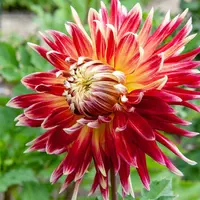
Dinnerplate dahlia Dahlia 'Akita' is a summer-flowering tuberous perennial grown for its very large, showy blooms. It is usually cultivated as a seasonal garden plant in cooler climates. Flowers are fully double, often bicolor in red, orange, and yellow tones, held on sturdy stems above bushy green foliage. Plants form upright, branching clumps that stand out well in borders and cutting gardens. Dahlias originate from highland regions of Mexico and Central America, so they prefer mild temperatures and do not tolerate hard frost.

Dahlia 'Akita' is moderately demanding, needing regular deadheading, staking in windy spots, and lifting of tubers in cold regions. Understanding how to care for Dinnerplate Dahlia helps maintain strong flowering and healthy plants.

Main Plant Requirements

Care Difficulty

Moderate Care

Light Preference

Full Sun

Water Requirements

Regular Water

Temperature Preference

Tropical / Frost Sensitive

Hardiness Zone

8–11

Soil Texture

Sandy, Loamy, Organic-rich

Soil pH

Acidic (5.5–6.5), Slightly acidic (6.5–7.0)

Soil Drainage

Moist but well-drained

Fertilization

Moderate (every 2–4 weeks)

Get Personalized Care Plan

Scan your plant to receive care tips personalized for your specific plant

Available on iOS and Android

How to Care for the Dinnerplate Dahlia

This large-flowered dahlia needs strong outdoor light to form full Dinnerplate Dahlia blooms.

  • Provide 6–8 hours of direct sun daily, with morning sun and light afternoon shade in hot climates to reduce scorch on petals and leaves.
  • Allow for light or dappled shade during the hottest afternoon hours, especially where summer temperatures exceed 85°F (29°C).
  • In shorter-day seasons, choose the sunniest, open position available; long, weak stems and few buds indicate insufficient light and the need for more exposure.

This dahlia prefers consistently moist but never waterlogged soil during the growing season.

  • Water when the top 3–5 cm of soil feels dry, giving a deep soak so moisture reaches the tubers, then let excess drain away fully.
  • Use well-drained soil or raised beds to prevent standing water; soft, yellowing stems or a sour smell in the soil suggest overwatering and potential rot.
  • In cool spring, water sparingly until strong shoots form; increase in midsummer heat, and reduce again as foliage yellows and growth slows in fall for Dahlia 'Akita'.

This dahlia thrives in mild, frost-free conditions with warm days and cool nights.

  • Aim for active growth in 65–80°F (18–27°C); buds and flowers develop best within this range with good air movement.
  • Protect from frost; tubers are damaged below 32°F (0°C), so lift and store them in cold-winter regions once foliage blackens from the first frost.
  • In heat waves above 90°F (32°C), provide afternoon shade and mulch to keep roots cooler, as prolonged extreme heat can reduce flowering and stress the plant.

Humidity is not a critical factor for Dahlia 'Akita', which thrives in typical outdoor air conditions.

  • Target ambient humidity around 40–60% for best vigor, similar to most temperate outdoor gardens.
  • Plants tolerate short periods of drier air if soil moisture is kept consistent and tubers do not dry out completely.
  • Leaf edges browning or curling in hot, very dry wind indicate stress; use windbreaks or light mulch rather than misting when caring for Dinnerplate Dahlia.

Dahlia 'Akita' prefers loose, fertile, well-drained ground that stays evenly moist but never waterlogged.

  • Use a loamy mix rich in organic matter, for example 50–60% garden loam with 30–40% compost and 10–20% coarse sand or perlite.
  • Aim for slightly acidic to neutral pH around 6.2–7.0, which supports nutrient uptake and strong tuber growth.
  • Improve aeration and drainage in heavy clay by incorporating coarse sand, fine bark, or grit into the top 20–30 cm.
  • Avoid compacted, soggy, or peat-only mixes, which reduce oxygen to the tubers and increase rot risk.

This cultivar is suitable for container growing if the pot is large, stable, and drains very efficiently.

  • Choose a deep, heavy container at least 35–40 cm wide to anchor the tall, top-heavy stems against wind sway.
  • Use a free-draining mix, such as 60% peat-free potting mix with 20% compost and 20% perlite or grit, to prevent tuber rot.
  • Raise the pot on feet or bricks so drainage holes stay clear and excess water escapes quickly after rain or irrigation.

Dahlia 'Akita' responds well to consistent, moderate feeding throughout its active growing season.

  • Apply a balanced liquid fertilizer (around 10-10-10) at half-strength every 2–3 weeks from sprouting until early fall when caring for Dinnerplate Dahlia.
  • Incorporate compost or well-rotted manure into the planting area in spring to improve soil fertility and structure.
  • Use a slow-release granular fertilizer at planting time, keeping granules away from direct tuber contact.
  • Stop or greatly reduce feeding once flowering declines and foliage begins yellowing toward dormancy.

Thoughtful pruning keeps Dahlia 'Akita' compact, sturdy, and blooming strongly.

  • In late spring, pinch out the growing tips above the 3rd–4th leaf pair to encourage branching and more flower stems.
  • Throughout summer, deadhead spent blooms down to a strong leaf node to extend the flowering period.
  • Remove any dead, damaged, or crossing stems with clean, sharp pruners to improve air flow and reduce disease risk.
  • After the first frost blackens foliage, cut stems back to 5–10 cm above soil before lifting or mulching.

Transplanting and lifting are more important than true repotting for Dahlia 'Akita', which is usually grown outdoors from tubers.

  • Transplant in spring after frost, placing healthy tubers with visible eyes into well-drained soil once it has warmed.
  • Lift and divide clumps every 2–3 years if flowering declines, or when tubers become crowded and growth weakens.
  • When grown in containers, shift to a slightly larger pot if roots circle the drainage holes or soil dries very quickly.
  • Water newly transplanted plants thoroughly, provide light shade for a few days, and avoid heavy feeding until new growth is established.

New Dahlia 'Akita' plants are commonly produced by division of tubers and by spring cuttings.

  • Divide tuber clumps in late winter or early spring, ensuring each division carries at least one firm eye attached to a tuber section.
  • For cuttings, take 7–10 cm shoots from sprouting tubers, then root them in a sterile, moist, free-draining mix under bright, indirect light.
  • Maintain 65–75°F and high humidity around cuttings, using a propagator lid or clear cover to limit moisture loss.
  • Seed propagation is possible but does not reliably reproduce the named cultivar’s flower traits.

Dahlia 'Akita' tubers are frost-sensitive and need protection in regions with cold winters.

  • In mild climates (roughly USDA zones 8–9), cut back blackened stems after frost and mulch the root zone with 10–15 cm of dry material.
  • In colder areas, dig tubers after the first hard frost, label clumps, and dry them briefly in a cool, airy place.
  • Store cleaned tubers in barely moist peat, vermiculite, or sawdust at 40–50°F in darkness until spring replanting.
  • For container plants, move pots indoors to a frost-free, cool, dark space and keep soil only slightly moist during dormancy.

Care Tips

Sturdy stem support

Install tall, rigid stakes or a wire cage at planting time and loosely tie stems as they grow to prevent large blooms from snapping in wind or heavy rain.

Disbud for size

For exhibition-size flowers, remove side buds on each stem when they are pea-sized so the plant directs energy into a single central bloom per stem.

Regular deadheading

Check plants weekly and remove spent flower heads down to a strong leaf pair to prolong blooming and reduce energy wasted on seed formation.

Airflow and spacing

Space plants 45–60 cm apart and avoid dense surrounding vegetation to improve airflow, which helps reduce powdery mildew and botrytis on large blooms.

Lift and store tubers

After frost blackens foliage, cut stems to 10–15 cm, carefully lift clumps, label them, then dry and store tubers in slightly damp peat or sawdust at 40–50°F for reliable regrowth next season when you grow Dahlia 'Akita'.

Common Pests and Diseases

Aphids

This pest clusters on tender shoots and buds, sucking sap and causing curling, yellowing, and distortion of young growth, often leaving sticky honeydew that can attract sooty mold. Heavy infestations weaken flower stems and reduce bloom quality.

Solution

Spray plants with a strong stream of water to dislodge colonies, then treat remaining insects with insecticidal soap or a horticultural oil, ensuring thorough coverage of shoot tips and leaf undersides. Encourage natural predators such as lady beetles and avoid high-nitrogen overfertilization that promotes soft, aphid-prone growth when growing Dinnerplate Dahlia.

Spider mites

These insects are tiny sap-feeders that thrive in hot, dry conditions, causing fine stippling on leaves, dulling of foliage color, and eventual bronzing or leaf drop. Symptoms include delicate webbing between leaves and stems, especially during warm spells.

Solution

Increase humidity around plants and hose foliage regularly, focusing on leaf undersides to wash off mites. If damage persists, apply insecticidal soap or a labeled miticide at 5–7 day intervals, rotating products if needed and avoiding water stress to keep plants less susceptible.

Powdery mildew

This disease produces white, powdery patches on leaves, stems, and sometimes buds, often starting on lower or shaded foliage. Symptoms include distorted growth, premature leaf yellowing, and reduced flowering when infection is heavy.

Solution

Improve air circulation by spacing plants properly and removing dense, damaged, or heavily infected foliage; avoid overhead watering late in the day. Apply a preventive or early-stage fungicide labeled for powdery mildew on dahlias, such as products based on sulfur, potassium bicarbonate, or myclobutanil, following label directions and repeating during humid periods.

Botrytis blight

This disease, caused by Botrytis cinerea, leads to brown, water-soaked spots on petals and leaves, which quickly develop fuzzy gray mold, especially in cool, damp weather. Buds may fail to open, and flowers can collapse or rot on the stem.

Solution

Promptly remove and dispose of infected flowers, buds, and foliage, and keep spent blooms deadheaded to limit inoculum. Water at soil level rather than over the top, maintain good spacing, and use a suitable fungicide during extended wet or cool conditions if botrytis has been a recurring issue.

Dahlia mosaic virus

This disease causes mottled, yellow or light-green patterns on leaves, along with distorted or stunted growth and reduced flower size and number. Symptoms include uneven variegation that does not follow the leaf veins and may worsen over time.

Solution

Remove and destroy symptomatic plants to prevent spread, as there is no cure once a plant is infected. Control sap-sucking insects such as aphids that vector the virus, disinfect cutting tools between plants, and start each season with certified disease-free tubers for reliable Dahlia 'Akita' care.

Interesting Facts

Bi‑color decorative blooms

This cultivar is known for large decorative-type flower heads with sharply contrasting crimson-red outer petals and creamy white to yellow centers, a color pattern that remains stable through the flowering season under normal garden conditions.

Showbench favorite

It is widely used in dahlia exhibitions and competitions because the flower form tends to be symmetrical with strong petal substance and good stem length, traits that make it easier to stage and transport without petal damage.

Late‑season color

In suitable climates it flowers from mid to late summer into fall, providing intense color later in the season when many perennials are fading, which makes it valuable in mixed borders aimed at growing Dinnerplate Dahlia forms for extended display.

FAQs about Dinnerplate Dahlia

Poor flowering often results from inadequate light, low nutrients, or overcrowded tubers. Ensure full outdoor exposure, feed with a balanced, low-nitrogen fertilizer, and divide congested clumps every few years to maintain strong bloom production when growing Dinnerplate Dahlia.

Grow Healthy Plants with Botan Care

Keep your plants happy and healthy with plant identification, disease detection, and easy care guidance.

Botan plant care app — identify plants on mobile

Explore More Plants