Establish a dry zone
Create a wide, slightly raised, gravelly mound around the plant’s base so water drains away from the crown and lower leaves, which greatly reduces crown rot in heavy or compacted soils.

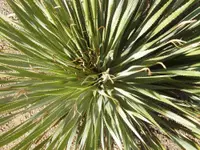
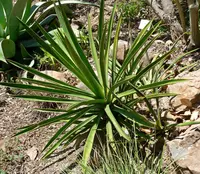
Common sotol (Dasylirion wheeleri) is a desert shrub-like succulent native to arid regions of the southwestern United States and northern Mexico. It forms a dense rosette of narrow, toothed, blue-green leaves that radiate from a short trunk. Over time, it develops a striking architectural shape and may produce a tall flower spike that rises well above the foliage. Its slow growth, drought tolerance, and ability to handle poor, rocky soils make it relatively easy to maintain in dry gardens. Those learning how to care for common sotol should note its preference for strong sun, very well-drained soil, and minimal watering once established.

Care Difficulty
Easy Care

Light Preference
Full Sun

Water Requirements
Low Water

Temperature Preference
Cold Hardy

Hardiness Zone
5–10

Soil Texture
Sandy, Loamy, Rocky

Soil pH
Slightly acidic (6.5–7.0), Slightly alkaline (7.0–7.5)

Soil Drainage
Well-drained

Fertilization
Minimal (feed rarely)
Scan your plant to receive care tips personalized for your specific plant
Available on iOS and Android
This desert species requires strong sun to maintain compact growth and healthy leaf color.
This plant is highly drought-tolerant and must dry well between waterings.
This species is adapted to wide temperature swings but still has clear limits.
Humidity is rarely a concern for this arid-adapted species in home or outdoor conditions.
This desert species needs very fast-draining, mineral-based soil to prevent root and crown rot.
This species can be grown in containers, especially in cooler or wetter climates where drainage control is important.
This arid-adapted species needs only light feeding to maintain healthy growth in containers or poor soils.
Pruning needs for Dasylirion wheeleri are minimal and focus on cleanliness and safety rather than reshaping.
This desert shrub is usually grown in the ground, with container repotting or transplanting needed only after many years.
This species is most often propagated from seed, and vegetative methods are uncommon for home growers.
Mature plants are quite cold hardy but still benefit from some winter management in colder regions.

Plant Health Check
Not sure what's wrong with your plant? Check your plant's health inside the app.
This species forms a dense hemispherical rosette up to several feet across, with hundreds of stiff, narrow leaves that radiate from a single stem and help funnel scarce desert rainwater toward its root zone.
Each leaf bears sharp, regularly spaced teeth along the margins that can catch and shred passing vegetation or clothing, a structural defense against herbivores in its native Chihuahuan Desert habitat.
The stem or trunk of this plant has long been harvested and slow-cooked by Indigenous peoples of northern Mexico and the southwestern US as the carbohydrate-rich base for the regional distilled spirit known as sotol.

This species is extremely long-lived in arid landscapes, with individual plants in the wild estimated from growth structure and stand age analyses to be several centuries old, making mature specimens ecological fixtures in their desert communities.
Brown leaf tips usually result from old age, intense reflected heat, or past drought stress. Occasional browning on outer, oldest leaves is normal; simply trim them cleanly at the base and avoid sudden changes in watering.
Keep your plants happy and healthy with plant identification, disease detection, and easy care guidance.