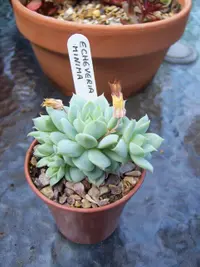
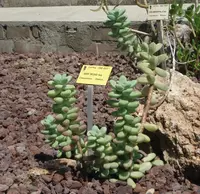
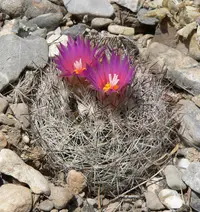
White Gardenroute Sheepfig Care (Delosperma inconspicuum)

White Gardenroute Sheepfig

About White Gardenroute Sheepfig

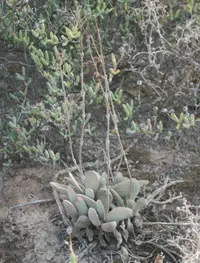
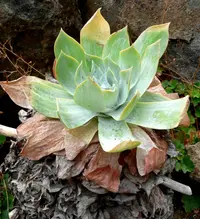
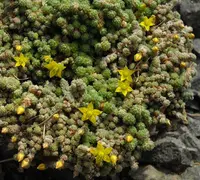
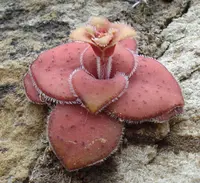
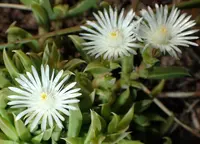
White Gardenroute Sheepfig (Delosperma inconspicuum) is a compact, mat-forming succulent from rocky areas of South Africa. It forms dense cushions of small, fleshy leaves that store water. In suitable conditions it produces tiny, daisy-like flowers that add a subtle but attractive display over the foliage. The plant naturally grows in harsh, well-drained sites, which makes it quite drought tolerant and generally low maintenance. Understanding how to care for White Gardenroute Sheepfig mainly involves providing strong light, minimal watering, and gritty, free-draining soil to prevent root problems.

Main Plant Requirements

Care Difficulty

Easy Care

Light Preference

Full Sun

Water Requirements

Low Water

Temperature Preference

Cold Hardy

Hardiness Zone

5–9

Soil Texture

Sandy, Loamy, Rocky

Soil pH

Slightly acidic (6.5–7.0), Neutral (7.0)

Soil Drainage

Well-drained

Fertilization

Minimal (feed rarely)

Get Personalized Care Plan

Scan your plant to receive care tips personalized for your specific plant

Available on iOS and Android

How to Care for the White Gardenroute Sheepfig

This compact ice plant thrives in bright, open sites with strong sun exposure.

  • Provide 6–8 hours of direct sun daily; full sun promotes dense growth and abundant flowering for White Gardenroute Sheepfig.
  • It tolerates light afternoon shade in very hot climates, but deep or constant shade causes weak, stretched stems and fewer blooms.
  • In winter, especially in higher latitudes, prioritize the sunniest south- or west-facing spot to compensate for shorter, lower-intensity light.

This drought-tolerant succulent prefers infrequent, deep watering in fast-draining soil.

  • Allow the top 3–5 cm of soil to dry completely before watering; in many outdoor beds this means waiting until foliage looks slightly less plump.
  • Water slowly at the base, then let excess drain away; gritty, sandy soil helps prevent root rot, which shows as yellowing, mushy stems in Delosperma inconspicuum.
  • Reduce watering sharply in cool or cloudy seasons; underwatering causes shriveled leaves, but the plant usually recovers once deeply soaked.

This hardy groundcover tolerates a wide temperature range but grows best in moderate warmth.

  • Optimal growth occurs around 65–80°F (18–27°C); flowering is strongest with warm days and cooler nights.
  • Mature plants often survive down to about 0–10°F (-18 to -12°C) if soil drains very well, though repeated freeze-thaw in wet soil increases crown damage risk.
  • In summer, it handles heat up to 95–100°F (35–38°C) if roots stay cool in coarse, dry-leaning soil and foliage is not confined against heat-reflective walls.

Humidity is rarely a concern, as this succulent thrives in dry air typical of heated or air-conditioned homes.

  • Tolerates 20–40% humidity without stress, matching its arid natural habitats.
  • Leaves may soften, wrinkle, or develop pale, limp tips if combined drought and very hot, stagnant air occur.
  • If air is extremely dry and hot, move the White Gardenroute Sheepfig away from strong heat sources rather than misting.

This species needs very sharply drained, mineral-based soil to prevent root rot and maintain compact growth.

  • Use a gritty, sandy mix such as 50–60% coarse sand or fine gravel with 40–50% cactus mix or lean loam.
  • Aim for slightly acidic to neutral pH, around 6.0–7.2, avoiding strongly acidic or alkaline substrates.
  • Improve aeration by adding extra pumice, perlite, or crushed granite so water runs through within seconds of watering.
  • Avoid dense, peat-heavy, or clayey soil that stays wet, as this quickly causes root and stem rot in Delosperma inconspicuum.

This mat-forming succulent is well suited to container growing outdoors on sunny balconies, decks, and rock-style planters.

  • Choose a wide, shallow container that matches the spreading root system and allows the foliage mat to drape over the rim.
  • Select unglazed terracotta or other porous materials to speed moisture loss and protect against prolonged wetness after rain.
  • Use a pot with large, unobstructed drainage holes and elevate it slightly so runoff escapes freely in heavy storms.

Delosperma inconspicuum is a low-nutrient, drought-adapted succulent that needs only light feeding for best flowering.

  • Use a very dilute balanced fertilizer (around 10-10-10) or cactus feed at 1/4 strength during active growth in spring–early summer.
  • Apply no more than once every 4–6 weeks; overfertilizing reduces bloom and can cause soft, weak growth.
  • Avoid feeding in late fall and winter when growth slows or stops, especially in cold climates.
  • In lean, sandy soils, a thin layer of coarse compost in spring supports growing White Gardenroute Sheepfig without waterlogging.

Delosperma inconspicuum benefits from light, selective pruning to maintain a dense, flowering mat.

  • Best time is late winter or early spring before strong new growth, with a light clean-up again after peak flowering.
  • Use clean, sharp scissors or hand pruners to remove dead, damaged, or winter-burned stems and spent flower stalks.
  • Shortening straggly or leggy runners by 1/3 encourages branching and a tighter, more compact carpet of foliage.
  • Avoid cutting into thick, woody bases; focus on soft, green growth to reduce stress and maintain vigor.

This ice plant dislikes frequent disturbance, so repot or transplant Delosperma inconspicuum only when clearly needed.

  • Check for roots circling the pot, pushing through drainage holes, or for stalled growth despite good light as signs to move it.
  • Plan repotting or garden transplanting for spring, once frost risk has passed and new growth is starting.
  • Expect container plants to need a larger pot only every 2–3 years; in-ground clumps usually just need space, not lifting.
  • Water lightly a day before moving, handle the root ball gently, and replant into sharply drained, gritty soil to limit shock.

Delosperma inconspicuum is commonly propagated vegetatively and from seed under warm, bright conditions.

  • Take 5–8 cm non-flowering stem cuttings in late spring–summer, let cut ends dry for 1–2 days, then place in gritty, barely moist mix.
  • Divide small clumps in spring, keeping chunky root pieces attached to healthy shoots, and replant immediately in well-drained soil.
  • Sow fresh seeds on the surface of sandy mix in spring, keep at 65–75°F with bright light, and maintain only light moisture.
  • Provide excellent air flow, avoid overwatering, and keep new plants in bright but not scorching sun until well rooted.

This species is relatively cold hardy in well-drained soil but still benefits from simple winter care in colder areas.

  • In-ground plants tolerate light to moderate frost when soil drains freely and does not stay saturated.
  • Apply a thin layer of gravel or coarse sand around crowns in fall to keep stems dry and reduce freeze–thaw damage.
  • In very cold or wet winter regions, grow in containers and move to a bright, cool, frost-free spot until spring.

Care Tips

Winter wet protection

In regions with cold, wet winters, plant on a slight mound or in a rock crevice so excess water drains quickly away from the crown and roots, which greatly improves long-term survival.

Gravel surface mulch

Apply a 1–2 cm layer of coarse grit or small gravel around the plants to keep the foliage dry at the base, reduce rot, and prevent soil from splashing onto the leaves and flowers.

Rooting stem cuttings

When stems sprawl beyond the desired area, lightly pin them down onto gritty soil with small U-shaped wire pins so the nodes root and form a denser, more resilient mat.

Container refresh cycle

For plants grown in shallow containers, shear back the mat lightly and repot into fresh gritty mix every 2–3 years to prevent congestion and maintain strong flowering.

Heat and drought acclimation

In hot, dry climates, gradually extend the interval between waterings in late spring so the plant develops deeper, more drought-resilient roots before peak summer heat while still supporting growing White Gardenroute Sheepfig in active growth.

Common Pests and Diseases

Aphids

These insects cluster on tender new growth and flower stems, sucking sap and causing distortion, yellowing, and sticky honeydew on leaves. Symptoms include stunted shoots and reduced flowering in dense colonies.

Solution

Rinse colonies off the foliage and stems with a firm stream of water, repeating every few days until numbers drop. For persistent infestations, spot-treat clusters with insecticidal soap or a ready-to-use neem oil spray in the early morning, and encourage natural predators such as lady beetles by avoiding broad-spectrum insecticides nearby.

Mealybugs

This pest appears as white, cottony clusters tucked into stem joints and under leaves, where it feeds on sap and weakens the plant. Symptoms include sticky honeydew, sooty mold growth, and gradual decline of affected shoots.

Solution

Isolate the plant and dab visible mealybugs with cotton swabs dipped in 70% isopropyl alcohol, then gently rinse the foliage. For larger outbreaks, apply insecticidal soap or neem oil thoroughly to all plant surfaces every 7–10 days until new growth is clean, and reduce excess nitrogen fertilizer that encourages soft, vulnerable growth.

Spider mites

These insects thrive in hot, dry conditions and feed on the undersides of leaves, causing fine speckling, dull coloration, and sometimes delicate webbing between stems. Symptoms include slowed growth and a dusty, faded appearance of foliage.

Solution

Increase humidity around the plant slightly and hose down the foliage, focusing on leaf undersides to dislodge mites. When populations are high, use insecticidal soap or horticultural oil applied in the cool part of the day, repeating weekly until no new stippling or webbing appears, and avoid drought stress which favors mite buildup.

Leaf spot

This disease produces small tan to brown spots on leaves that may enlarge and coalesce, leading to premature leaf drop in wet or crowded conditions. Symptoms include patchy discolored pads and thinning foliage in the affected areas of the mat-forming plant.

Solution

Remove and discard affected leaves and any nearby plant debris to reduce the source of spores, then improve airflow by thinning overcrowded stems and avoiding overhead watering. If wet weather persists and spotting continues to spread, apply a labeled copper or chlorothalonil-based fungicide as a protective spray, keeping the foliage as dry as practical between waterings.

Crown rot

This disease develops where the plant’s base stays wet, leading to soft, darkened tissue at the crown and sudden collapse of entire sections of the mat. Symptoms include yellowing and wilting of shoots near the soil line, especially in poorly drained or overwatered sites.

Solution

At the first sign of rot, cut out and discard all affected sections, including soft basal tissue, and improve drainage by amending soil with coarse grit or small gravel and avoiding waterlogging. For long-term Delosperma inconspicuum care, plant on a slope or in a raised, sharply drained bed, water only when the soil has fully dried, and avoid heavy mulches that trap moisture around the crown.

Interesting Facts

Tiny succulent specialist

This species is one of the smallest hardy iceplants, forming very low, tight mats with leaves only a few millimeters thick, adapted to conserve water in exposed, rocky habitats.

Cryptic white flowers

Its flowers are very small and pale, often white to off‑white, and can blend into the surrounding gravel or rock, which likely inspired the epithet inconspicuum, meaning inconspicuous or not easily seen.

South African origin

The species is native to specific regions of South Africa, where it grows in well-drained, often stony sites that experience strong sun, periodic drought, and cooler nights.

FAQs about White Gardenroute Sheepfig

This species forms a low, slowly spreading mat. It can fill small gaps between rocks or paving but is not considered aggressive. Edge it or limit planting pockets if a very tight outline is desired.

Grow Healthy Plants with Botan Care

Keep your plants happy and healthy with plant identification, disease detection, and easy care guidance.


Botan plant care app — identify plants on mobile

Explore More Plants