Summer dormancy handling
Reduce all disturbance during hot, dry summer dormancy by avoiding repotting, dividing, or heavy watering so the plant can rest without exhausting its stored reserves.

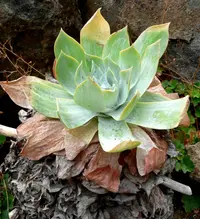
Chalk dudleya (Dudleya pulverulenta) is a rosette-forming succulent native to rocky slopes and cliffs in coastal and inland southern California and Baja California. It is adapted to harsh, dry conditions and seasonal drought.
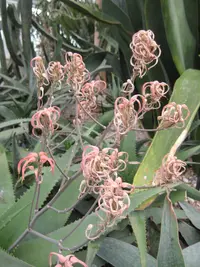
Plants form large, flat rosettes of powdery, silver-white leaves and send up tall stalks with tubular red flowers that attract hummingbirds. The chalky coating helps reduce water loss and sun damage.
This species suits dry gardens, rock gardens, and containers where drainage is excellent and watering stays light. Understanding how to care for chalk dudleya is important because it dislikes summer water, rich soils, and high humidity, which often makes it challenging outside its native-type climates.

Care Difficulty
Hard Care

Light Preference
Full Sun

Water Requirements
Low Water

Temperature Preference
Warm Climate

Hardiness Zone
9–11

Soil Texture
Sandy, Rocky, Loamy

Soil pH
Slightly acidic (6.5–7.0), Neutral (7.0)

Soil Drainage
Well-drained

Fertilization
Minimal (feed rarely)
Scan your plant to receive care tips personalized for your specific plant
Available on iOS and Android
This coastal succulent prefers strong light and low humidity similar to its native cliff habitats.
This species is highly drought-adapted and is more often harmed by excess water than by dryness.
This succulent prefers mild, dry conditions and reacts poorly to prolonged cold or humid heat.
This species prefers dry air and low humidity, similar to arid outdoor conditions.
This succulent needs very fast-draining, mineral-based soil that dries quickly between waterings.
This species is suitable for container growing when drainage and root zone drying are tightly controlled.
Dudleya pulverulenta is adapted to nutrient-poor soils and usually needs no fertilizer in the ground.
Dudleya pulverulenta needs only light, hygienic pruning to keep rosettes clean and healthy.
Transplanting or potting this succulent should be infrequent and done with minimal root disturbance.
Dudleya pulverulenta propagation is possible but slow and best suited to patient growers.
This species prefers mild, dry winters and is only moderately frost tolerant.

Plant Health Check
Not sure what's wrong with your plant? Check your plant's health inside the app.
The leaves are covered in a thick, powdery wax layer called epicuticular wax, which reflects intense sunlight and reduces water loss in its native coastal and inland chaparral habitats.
In late spring to early summer it sends up tall, arching flower stalks that can reach over 1 m, bearing many tubular red flowers that attract hummingbirds and native bees.
This species often grows on nearly vertical rocky slopes and cliffs in California and northern Baja California, where its rosettes anchor in narrow rock crevices that shed competing vegetation.

This species is highly sensitive to removal from its native habitat, and large-scale poaching from wild populations in California has been significant enough that conservation agencies closely monitor and regulate collection to protect remaining natural stands.
Blooming is reduced when the plant is too shaded, overwatered, or kept too fertile. It needs a cool winter rest, very sharp drainage, and strong light. Old, exhausted rosettes may flower less over time.
Keep your plants happy and healthy with plant identification, disease detection, and easy care guidance.