



Dumb Cane (Dieffenbachia 'Marianne') Light Needs

Dumb Cane grows best in bright, indirect light with protection from harsh direct afternoon sun.

Light Preference

Bright Indirect Light

Dieffenbachia 'Marianne' Light Requirements

Dieffenbachia comes from warm, humid tropical forest habitats in the Americas, where taller vegetation breaks up direct sun. Plants receive bright filtered light, shifting shade, and occasional gentle sun near canopy gaps rather than open, all-day exposure.

This background explains why cultivated selections keep their leaf color best with steady brightness but can scorch in harsh rays. Preferred light is bright, indirect or filtered light.

  • Ideal exposure:

    Dumb Cane needs about 6–8 hours of bright, indirect or filtered light daily, including up to 1–2 hours of gentle direct morning sun.

  • Sun limit:

    Harsh midday or afternoon sun can bleach or burn the thin leaves, especially through hot glass.

  • Lower light:

    It tolerates shade or lower indoor light, but growth often slows and the pale patterning may become less distinct.

  • Safer transition:

    Early morning sun is the safest direct exposure, and changes from shade to brighter light should be gradual.

Indoors, place the plant where it receives steady brightness without prolonged direct sun.

NConditional
North-facing window:

A north-facing window can work if it is large and unobstructed, but growth may slow in dim rooms.

EBest
East-facing window:

An east-facing window is usually best because it gives bright light and mild morning sun without harsh afternoon heat.

SSuitable
South-facing window:

A south-facing window is suitable if the plant sits 3–6 ft back or the rays are softened with a sheer curtain.

WConditional
West-facing window:

A west-facing window needs filtering or extra distance because late-day sun can be hot enough to mark the leaves.

Choose the brightest position that keeps direct sun gentle, brief, or filtered.

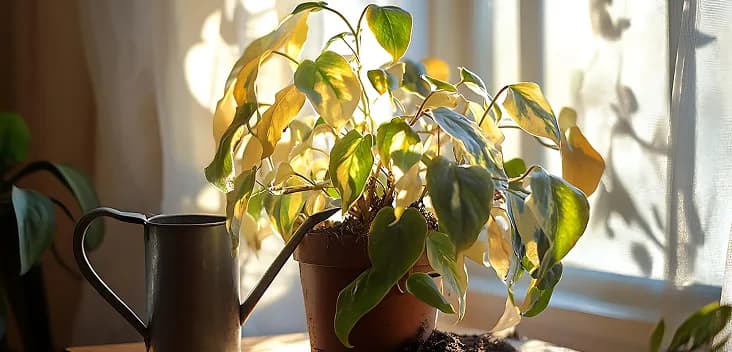
Excess light usually shows first on the most exposed leaves.

Bleached patches:

Creamy areas may turn washed out or pale when direct sun is too intense.

Tan scorch marks:

Dry tan spots can appear where rays hit the leaf surface through a window.

Faded contrast:

The normal marbled pattern may look flatter after repeated exposure to strong afternoon sun.

Heat droop:

Leaves may sag during hot direct sun, then look firmer once the plant is moved away.

Move Dieffenbachia 'Marianne' back from the glass or add a sheer curtain. Keep the new position bright, but out of harsh midday and afternoon rays.

Low light often causes gradual changes rather than sudden damage. Compare new growth with older leaves.

  • Leaning growth:

    Stems and leaves may angle toward the nearest brighter area instead of staying balanced.

  • Longer spacing:

    New leaves may emerge farther apart along the stem as the plant reaches for light.

  • Fainter patterning:

    The pale variegation on Dieffenbachia 'Marianne' can look greener or less crisp in dim conditions.

  • Smaller leaves:

    New leaves may be smaller than older ones during the active growing season.

  • Slow growth:

    Little change in spring or summer can suggest the available light is too weak.

Move it gradually into brighter indirect light and watch the next few leaves for improvement. Avoid placing it straight into hot sun.

Choose the brightest spot that avoids direct midday rays; this is the best compromise when ideal light is not available. If only moderate light is available, place the pot closer to the light source and remove objects that cast shade.

Rotate the pot a quarter turn every 1–2 weeks to keep growth even.

A dark corner is unsuitable because it weakens the leaf pattern and slows new growth.

Get Personalized Care Plan

Scan your plant to receive care tips personalized for your specific plant

FAQ

This plant does best in bright, indirect light for most of the day. Gentle morning sun is usually tolerated, but strong midday or afternoon sun can scorch the foliage.

More Plant Light Guides

Get the Botan App

Discover how to care for your plants with Botan.

Botan app identifying a plant with a phone camera
How Often to Water Fruit Trees

7 min read · 11 Aug 2026

How Often to Water Fruit Trees

Irrigation needs change as roots establish and weather shifts. This guide gives practical starting intervals, explains how soil and tree type change them, and shows how to recognize both excess moisture and drought stress.

Plant Care

How Often to Water Fruit Trees
12 Best Landscaping Trees for Your Garden

8 min read · 6 Oct 2026

12 Best Landscaping Trees for Your Garden

Choosing the landscape tree depends on what your garden needs most. These 12 options include compact flowering specimens, colorful deciduous trees, shade varieties, and evergreens suitable for screening and year-round structure.

Plant Recommendations
12 Best Landscaping Trees for Your Garden
How to Bottom Water Plants: Complete Guide

6 min read · 13 Jul 2026

How to Bottom Water Plants: Complete Guide

Bottom watering helps soil absorb moisture evenly and keeps foliage dry, reducing the risk of missed dry spots or root problems. Place the pot in a tray of water for a short time, then let it drain well.

Plant Care
How to Bottom Water Plants: Complete Guide