



hairy crabgrass Identification (Digitaria sanguinalis)

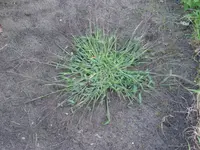
Recognize hairy crabgrass by its low, spreading clumps with bent stems that root at the lower nodes, broad flat leaf blades, and long hairs on the leaves and sheaths.

The seedhead is another strong clue: several finger-like spikes radiate from one point at the stem tip, often on plants under 2 feet (60 cm) tall.

Digitaria sanguinalis Identification

Is This hairy crabgrass?

Upload a clear image to check whether your plant ID is correct.

Clear images work best. Avoid photos taken too close or too far away

  • 1 free identification
  • No sign-up
  • 30,000+ plants in database

Use these visible traits to check Digitaria sanguinalis at a glance.

  • Growth is low and spreading, forming flat mats with stems that branch from the base and often root at lower joints.
  • Leaf blades are narrow, soft, and usually hairy, about 2 to 6 inches (5 to 15 cm) long.
  • Leaf sheaths and nodes are noticeably hairy, giving the stems a fuzzy look near the base.
  • Seedheads have 4 to 10 fingerlike spikes clustered at the stem tip, like a loose hand.

Check both the hairy stems and the fingerlike seedhead, since together they are especially useful.

Digitaria sanguinalis shows clear visual shifts from seedling growth to distinctive flowering stems.

  • Seedling: First leaves are narrow and flat, with soft hairs on blades and sheaths. Stems stay short and upright before the plant begins spreading.
  • Young plant: Plants start to sprawl from the base, producing branching stems that root at lower nodes. Leaf blades lengthen, and the hairy surfaces become easier to see.
  • Mature plant: The plant forms a broad, low mat, often 1-3 feet (30-90 cm) across, with many radiating stems and numerous long, rough-edged leaves.
  • Flowering stage: Seedheads rise above the foliage as several fingerlike spikes from one point. This stage looks more upright than earlier growth and breaks the matlike outline.

In late spring and summer, hairy crabgrass shifts from a low seedling to spreading mats with obvious long hairs on leaves and sheaths, making patches easier to spot. By mid to late summer, finger-like seed heads rise above the foliage. After frost, plants turn brown and collapse, often leaving flattened dead mats and persistent seed heads for a short time.

Several annual lawn grasses are regularly mistaken for hairy crabgrass.

smooth crabgrass(Digitaria ischaemum)

Both form low, spreading mats with finger-like seedheads. Smooth crabgrass is usually less hairy overall, especially on leaves and sheaths, and its leaf blades are often a bit narrower.

southern crabgrass(Digitaria ciliaris)

This species also sprawls and makes similar seed spikes. It often has softer, denser hairs and typically more strongly fringed leaf sheaths, while Digitaria sanguinalis is usually coarser-looking.

goosegrass(Eleusine indica)

Young plants can mimic a flat crabgrass rosette. Goosegrass is more flattened and silvery at the center, with smoother leaves and stiffer, zipper-like seedheads rather than fuzzy-looking spikes.

Digitaria sanguinalis is generally treated as native to Europe and temperate Asia, though it is now widespread elsewhere. That range matters less in practice than habitat. For identification, its usual setting is more useful: disturbed ground such as lawns, gardens, crop fields, roadsides, and waste areas. Finding it in open, trampled, recently cleared places helps separate it from grasses more typical of wetlands, shade, or intact prairie.

Scan. Check. Confirm.

Use Botan to identify or verify a plant from a photo, which helps avoid mix-ups before taking the next step.

FAQ

The clearest clue is dense hair on the leaf blades and especially the leaf sheaths, plus finger-like seedheads with several narrow spikes from one point. That combination is central to hairy crabgrass identification.

More Plant Identification Guides

Scan Your Plant. Get the Details.

Identify a plant from a photo with Botan, then review species details, care information, and common problems.

Botan app identifying a plant from a photo
Plant Pot Sizes: How to Choose the Right Plant Container

7 min read · 20 Aug 2026

Plant Pot Sizes: How to Choose the Right Plant Container

Plant pot sizes can be confusing because the number on the label only tells you part of the required information. A container may look spacious but actually be too shallow. So, how to choose pot size for plant species?

Beginner Guides
Plant Pot Sizes: How to Choose the Right Plant Container
Can Plants Grow With Artificial Light?

6 min read · 15 Sept 2026

Can Plants Grow With Artificial Light?

Plants can grow under artificial light when the setup provides a suitable spectrum, enough intensity, and sufficient daily exposure. This guide explains how artificial lighting compares with sunlight, which options work indoors, and how to match a setup to houseplants.

Plant Care
Can Plants Grow With Artificial Light?
Top 15 Plants That Don’t Need Sunlight

8 min read · 17 Sept 2026

Top 15 Plants That Don’t Need Sunlight

Some plants thrive in dim rooms, shaded corners, and places with indirect light. In this guide, you’ll explore the top 15 species best suited to low-light conditions and how to care for them.

Plant Recommendations
Top 15 Plants That Don’t Need Sunlight