

Red Clover Identification (Trifolium pratense)

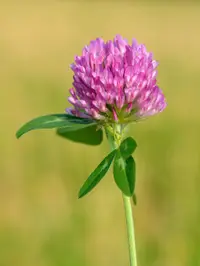
Recognize Red Clover by its trifoliate leaves, each leaflet oval and often marked with a pale V, and by rounded flower heads made of many small pink to purple pea-like flowers.

It forms clumps on upright, branching stems, usually 8 to 24 inches (20 to 60 cm) tall.

Trifolium pratense Identification

Is This Red Clover?

Upload a clear photo to check your plant identification with Botan.

Clear images work best. Avoid photos taken too close or too far away

Check the flower heads, leaves, and stem habit first.

  • Leaves are divided into 3 oval leaflets, each often showing a pale V-shaped mark.
  • Leaflets are about 3/4-2 inches (2-5 cm) long and usually have very fine teeth near the tips.
  • Flower heads are rounded and dense, about 3/4-1 inch (2-3 cm) across, with many small pink to purplish flowers.
  • Stems are upright to ascending, softly hairy, and commonly branch from the base, forming clumps about 8-24 inches (20-60 cm) tall.

A combination of 3-part leaves and round pink-purple flower heads is the fastest visual check.

Red Clover shows clear visual shifts from low seedling growth to conspicuous flowering heads.

  • Seedling: Seedlings are small and low, with the first true leaves appearing trifoliate, each leaflet rounded to oval on short stalks.
  • Young plant: Young plants form a tufted base, then send up hairy, branching stems; trifoliate leaves show the pale chevron more consistently than seedlings.
  • Mature plant: Mature plants are upright to ascending rather than flat, often 1-2 feet (30-60 cm) tall, with several branched stems arising from the crown.
  • Flowering stage: Flowering stems carry rounded, dense heads of many pink to purplish florets near the stem tips, making the plant visually top-heavy compared with leafy stages.

In spring, Trifolium pratense forms fresh trifoliate leaves, often with a pale V-shaped mark that stands out on new growth. From late spring into summer, rounded pink to rosy-purple flower heads become the clearest clue. After flowering, the heads turn brown and dry, and winter often leaves only low, sparse foliage or short dead stems.

A few clovers and clover-like legumes are often mistaken for Red Clover.

white clover(Trifolium repens)

Similar trifoliate leaves can confuse it at a glance. It stays low and creeping, while Trifolium pratense grows upright. Its flower heads are usually white to pinkish and smaller.

alsike clover(Trifolium hybridum)

It also has pink clover heads and trifoliate leaves. The leaflets lack the clear pale V mark often seen on Trifolium pratense, and the stems are smoother and less hairy.

crimson clover(Trifolium incarnatum)

Both have pink-red flower color and clover leaves. Crimson clover has narrow, elongated flower spikes rather than rounded heads, which is the quickest visible difference.

Trifolium pratense is native to Europe, western Asia, and northwestern Africa. It typically occurs in meadows, pastures, roadsides, and other open grassy places. Habitat can help narrow identification because this species is most often found in sunny, disturbed grassland rather than woodland or wetland settings. In North America, it is widely naturalized, so habitat is usually a stronger clue than geography alone.

Confirm It from a Photo

Use Botan to identify or verify the plant from an image, helping avoid mix-ups with similar species.

FAQ

Unlike white clover, this species usually has taller, hairy stems and larger pinkish-purple flower heads. Each leaf has three oval leaflets, often with a pale V-shaped mark, useful when identifying Red Clover.

More Plant Identification Guides

Find the Plant. Get the Details.

Identify it from a photo with Botan, then get plant details, care information, and common problems for that species.

Botan app identifying a plant from a photo
Dill Companion Plants – What to Grow Next to Dill

9 min read · 17 Jul 2026

Dill Companion Plants – What to Grow Next to Dill

Dill is an easy-to-grow plant that gets along well with many vegetables. This guide describes 15 plants that can be planted alongside it, a few to avoid, and mistakes that can quietly sabotage the entire process.

Plant Recommendations
Dill Companion Plants – What to Grow Next to Dill
15 Best Scary Halloween Plants and Fungi for a Spooky Garden

8 min read · 9 Oct 2026

15 Best Scary Halloween Plants and Fungi for a Spooky Garden

Want a garden that looks eerie in October? Here are 15 Halloween plants and fungi, from carnivorous traps to bleeding mushrooms. For each species, we cover its appearance, care requirements, and potential uses in your landscape.

Plant Recommendations
15 Best Scary Halloween Plants and Fungi for a Spooky Garden
20 Funny Plant Names That Make You Laugh

8 min read · 16 Oct 2026

20 Funny Plant Names That Make You Laugh

Some plants carry names that sound like jokes. This guide explains the origins of 20 funny plant names. You will also see which of these plants you can grow at home.

Plant Recommendations
20 Funny Plant Names That Make You Laugh