
mugwort Identification (Artemisia vulgaris)

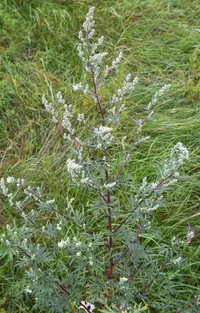
Recognize mugwort by its alternate, deeply lobed leaves with dark green upper surfaces and distinctly white, felted undersides. The plant forms upright, branching stems and usually grows in dense clumps.

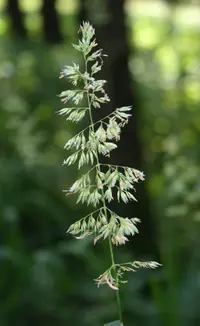
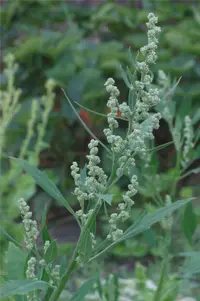
Another strong clue is the flower structure: many small, drooping flower heads carried in narrow, branched clusters near the stem tips.

Artemisia vulgaris Identification

Identify a Plant by Photo

Upload a clear image to check whether your plant ID is correct.

Clear images work best. Avoid photos taken too close or too far away

Use these quick checks for Artemisia vulgaris.

  • Leaves are alternate and deeply lobed, often 2-4 inches (5-10 cm) long, with pointed segments.
  • Leaf undersides look noticeably white or silvery, contrasting with the darker green upper surface.
  • Stems are upright, usually branching near the top, and often show a reddish or purplish tint.
  • Flower heads are very small, clustered in branched sprays, and sit close along the upper stems.

The pale leaf undersides are often the fastest useful check.

Artemisia vulgaris shows clear stage-by-stage changes in leaf shape, stems, and flower structure.

  • Seedling: Seedlings show small first leaves, then shallowly lobed true leaves with a whitish underside; stems are slender and unbranched.
  • Young plant: Young plants form upright shoots with alternate, more deeply cut leaves; the pale felted undersides become obvious as stems lengthen.
  • Mature plant: Mature plants develop stiff, branching stems and a broad, colony-forming clump, often reaching 3-6 feet (0.9-1.8 m) tall.
  • Flowering stage: At flowering, upper stems carry narrow, branched clusters of many small nodding flower heads, making the plant look finer-textured than before.

In spring, Artemisia vulgaris sends up fresh shoots with deeply lobed green leaves that show a distinctly white, felted underside. By mid to late summer, small flower clusters become visible above the foliage. After frost, the top growth dies back, leaving dry upright stems that can persist into winter.

Several weeds and wildflowers are mistaken for mugwort at a glance.

Common ragweed(Ambrosia artemisiifolia)

Often confused because both have deeply cut leaves and upright, weedy growth. Ragweed leaves are green on both sides, while Artemisia vulgaris has a distinctly whitish, silvery underside.

Common tansy(Tanacetum vulgare)

Can resemble it from a distance in roadside patches. Tansy has fernlike leaves divided into many narrow leaflets, not broader lobes, and it bears flat-topped clusters of button-like yellow flower heads.

Motherwort(Leonurus cardiaca)

Young plants can suggest the same jagged foliage. Motherwort has opposite leaves in pairs and a square stem, while Artemisia vulgaris has alternate leaves and a rounder stem.

Artemisia vulgaris is native across Europe, temperate Asia, and parts of North Africa. It typically occurs in disturbed ground, roadsides, field margins, riverbanks, waste places, and open grassland. That setting helps with identification because this species is most often found in sunny, weedy, human-influenced places rather than shaded woodland or wetlands. Finding it in rough urban edges or neglected fields can help narrow it from similar garden Artemisia species.

  • Skin contact: Leaves and stems can irritate skin in some people, especially when brushed repeatedly during handling. The risk is from contact, not from sap.
  • Pollen allergy: Flowers release pollen that is a well-known allergen for humans. Exposure mainly affects breathing and eyes rather than ingestion.
  • Pregnancy concern: Ingestion of Artemisia vulgaris is generally avoided during pregnancy because plant compounds have a long-standing uterine stimulant concern in humans.

Scan. Check. Confirm.

Use Botan to identify or confirm a plant from a photo, helping avoid mix-ups with similar species.

FAQ

The best single clue is the leaf: dark green above and bright silvery white beneath. In mugwort identification, the leaf undersides stay notably pale from dense fine hairs, unlike many similar weeds.

More Plant Identification Guides

Scan Your Plant. Get the Details.

Use Botan to identify a plant from a photo, then review plant details, care information, and common problems for that species.

Botan app identifying a plant from a photo
How to Group Plants in Landscaping: A Practical Layout Guide

8 min read · 31 Aug 2026

How to Group Plants in Landscaping: A Practical Layout Guide

Good plant grouping can mean the difference between a well-planned garden and one that looks sloppy. This guide explores layers, spacing, cluster shapes, and the plants that thrive when you group them.

Plant Care
How to Group Plants in Landscaping: A Practical Layout Guide
What Do Plants Need to Grow – 5 Things Every Greenery Can't Live Without

8 min read · 31 Jul 2026

What Do Plants Need to Grow – 5 Things Every Greenery Can't Live Without

To keep plants healthy and thriving, provide the right balance of light, humidity, nutrients, airflow, and quality soil. This guide covers the essentials of year-round plant care.

Beginner Guides
What Do Plants Need to Grow – 5 Things Every Greenery Can't Live Without
Is Sugar Water Good for Plants?

4 min read · 14 Sept 2026

Is Sugar Water Good for Plants?

Sugar water may sound like an easy boost, but most rooted plants do not need extra sucrose. This guide explains how green tissues produce carbohydrates, when a sweetened solution can be useful, and why too much can cause problems.

Plant Care
Is Sugar Water Good for Plants?