Wormwood Identification (Artemisia absinthium)

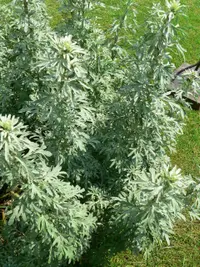
Recognize Wormwood by its deeply divided, silvery gray leaves set alternately on upright stems, forming a clumping, bushy plant about 2 to 4 feet (0.6 to 1.2 m) tall.

It also shows many small, rounded, nodding yellow flower heads held in loose branched clusters above the foliage.

Artemisia absinthium Identification

Check Your Plant ID

Take a photo and use Botan to confirm your plant identification.

Clear images work best. Avoid photos taken too close or too far away

Check the plant’s overall shape, foliage, and flower heads first.

  • Forms an upright, bushy clump, often 2-4 feet (0.6-1.2 m) tall.
  • Leaves are silvery gray to gray-green and deeply divided into narrow lobes.
  • Lower leaves are larger, often 2-5 inches (5-13 cm) long, with a fernlike outline.
  • Stems are ridged, branching, and usually carry the same pale gray cast as the foliage.
  • Flower heads are small, rounded, and nodding, held in loose branched clusters near the stem tips.

The silvery, finely cut leaves and drooping round flower heads are especially useful visual clues.

Artemisia absinthium shows clear age-related changes in leaf division, branching, and flowering structure.

  • Seedling: Seedlings form a small basal cluster of soft, gray-green leaves; early leaves are simpler and less deeply cut than later foliage.
  • Young plant: Wormwood then produces longer, more divided lower leaves and upright silvery stems, while the plant remains a compact clump under 12 inches (30 cm) tall.
  • Mature plant: Mature plants become erect and strongly branched, with lower leaves on stalks and narrower upper leaves that sit directly against the stems.
  • Flowering stage: At flowering, the upper stems carry many small, nodding yellow flower heads in loose branched clusters, giving the plant a taller, more open outline.

In spring, Wormwood sends up fresh silver-gray leaves that give the plant a soft, finely divided look. By early to midsummer, taller stems carry small, nodding yellowish flower heads above the foliage, adding a distinct seasonal clue. After flowering, the plant often keeps its gray tone until cold weather. In winter, top growth dies back, leaving a dried, cut-back clump or bare base rather than leafy evergreen stems.

A few silver-leaved species are regularly mistaken for Wormwood.

mugwort(Artemisia vulgaris)

Both have gray-green, divided leaves and a shrubby habit. Mugwort is greener overall, with dark green upper leaf surfaces and white undersides, while Artemisia absinthium is more evenly silvery on both sides.

southernwood(Artemisia abrotanum)

Both are aromatic and finely divided. Southernwood has threadlike, very narrow leaf segments, giving a feathery look; Artemisia absinthium has broader, flatter lobes and a coarser texture.

silver ragwort(Jacobaea maritima)

Its silvery foliage can cause confusion at a glance. Silver ragwort forms broader, thicker, felted leaves and bears daisy-like yellow flower heads, not the small rounded heads typical of Artemisia absinthium.

Artemisia absinthium is native to temperate Europe, western Asia, and parts of North Africa. It is most often associated with dry, open ground such as roadsides, field edges, waste places, stony slopes, and disturbed grassland. That setting can help with identification. A strongly aromatic Artemisia found in sunny, disturbed, inland habitats fits this species better than similar plants tied to wetlands, dense woodland, or coastal marsh.

  • Ingestion risk: Artemisia absinthium contains bitter compounds and thujone, mainly in the leaves and flowering tops. Ingestion can be harmful to humans and pets.
  • Skin contact: Handling the leaves and stems can irritate skin in some people, especially those sensitive to plants in the daisy family (Asteraceae).

Scan. Check. Confirm.

Use Botan to compare a photo and verify the plant before you label it, buy it, or add it to a collection.

FAQ

Check for deeply cut, silvery gray leaves covered in fine hairs and a strong aromatic scent when crushed. Many look-alike Artemisia species are greener, less hairy, or have narrower, less divided leaves.

More Plant Identification Guides

Identify First. Learn What Comes Next.

Use Botan to identify a plant from a photo, then review plant details, care information, and common problems.

Botan app identifying a plant from a photo
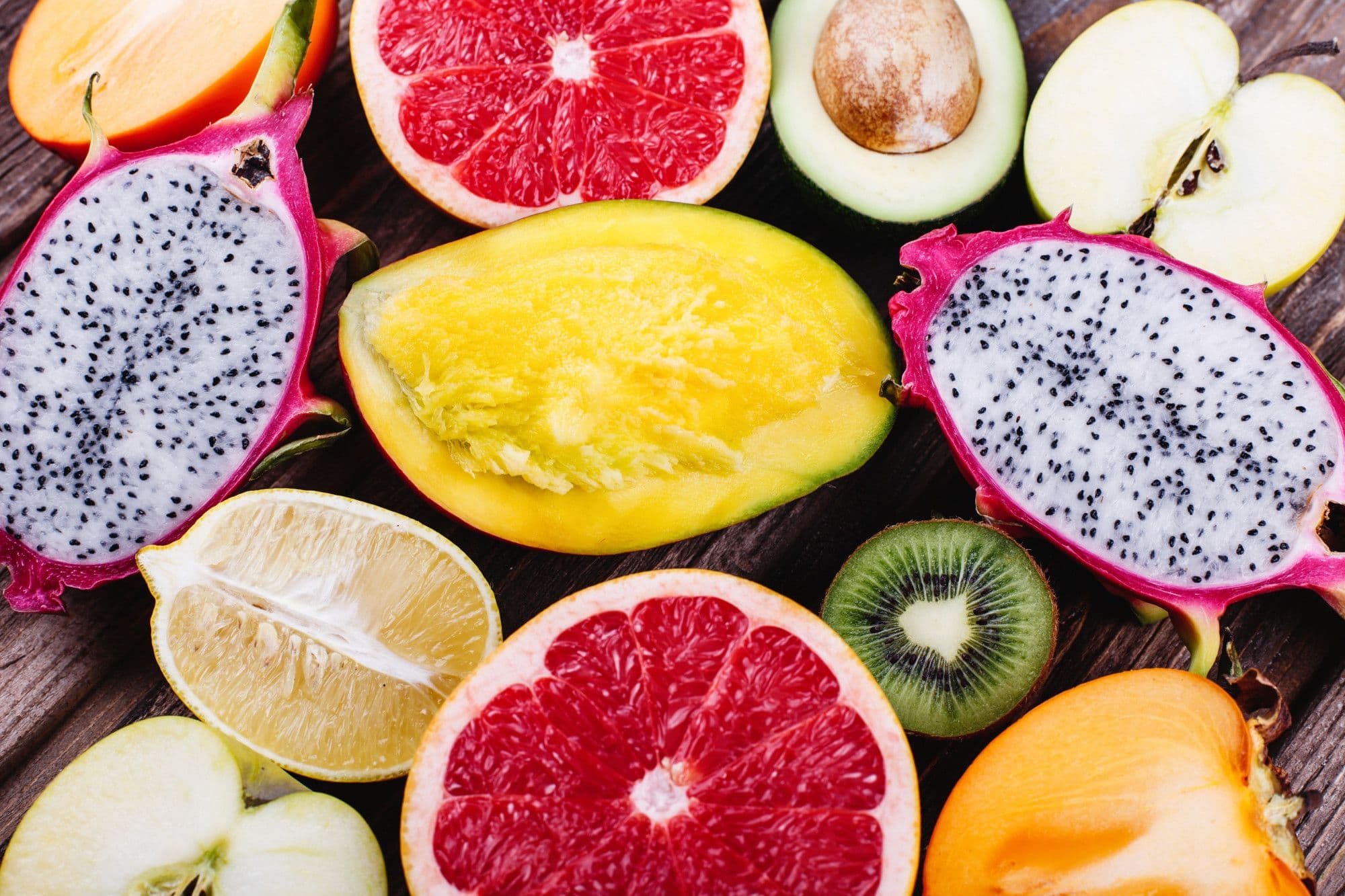
20 Most Popular Fruits Around the World

7 min read · 22 Jul 2026

20 Most Popular Fruits Around the World

Curious which fruits the world actually eats the most? Here's the top-20 by production volume, an overview of what people choose in each region, and a few figures that defy common assumptions.

Plant Recommendations

20 Most Popular Fruits Around the World
Can Plants Grow With Artificial Light?

6 min read · 15 Sept 2026

Can Plants Grow With Artificial Light?

Plants can grow under artificial light when the setup provides a suitable spectrum, enough intensity, and sufficient daily exposure. This guide explains how artificial lighting compares with sunlight, which options work indoors, and how to match a setup to houseplants.

Plant Care
Can Plants Grow With Artificial Light?
Plants That Repel Bugs – 20 Effective Options

12 min read · 16 Jul 2026

Plants That Repel Bugs – 20 Effective Options

Mosquitoes on the patio? Gnats in the kitchen? Some plants keep them away with the scent of their own leaves. Here are 20 that deal with mosquitoes, flies, aphids, and more, plus where to put them so they help.

Plant Recommendations
Plants That Repel Bugs – 20 Effective Options