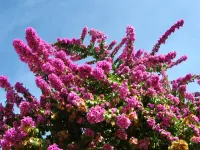
Support the vines
Install a narrow trellis, string, or mesh close to the caudex so the twining stems can climb vertically, which reduces tangling and makes inspection for pests much easier.

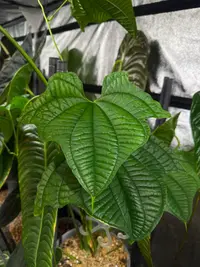
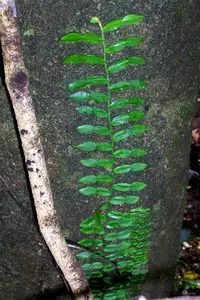
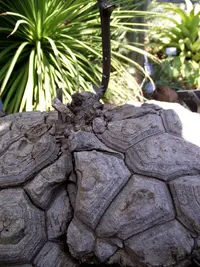
Dioscorea sambiranensis is a rare yam species forming a woody, often sculptural caudex, or swollen stem base, from which slender climbing vines emerge. The foliage is typically green and heart-shaped, giving a delicate contrast to the rugged base.
This species is native to Madagascar, where it grows in seasonally dry habitats. Its caudiciform growth habit allows it to store water and tolerate short dry periods, but it can be sensitive to overwatering and cold.
For those learning how to care for Dioscorea sambiranensis, it generally prefers bright light, moderate moisture during active growth, and a very well-drained, gritty soil mix.

Care Difficulty
Moderate Care

Light Preference
Partial Shade

Water Requirements
Moderate Water

Temperature Preference
Tropical / Frost Sensitive

Hardiness Zone
11–12

Soil Texture
Sandy, Loamy, Organic-rich

Soil pH
Acidic (5.5–6.5), Slightly acidic (6.5–7.0)

Soil Drainage
Well-drained

Fertilization
Light (every 4–6 weeks)
Scan your plant to receive care tips personalized for your specific plant
Available on iOS and Android
This species prefers bright, indirect light with some gentle direct sun, similar to open woodland edges.
Watering should follow soil moisture and growth phase rather than a fixed calendar.
Stable warm conditions support strong growth and a healthy caudex.
This species tolerates typical indoor humidity but grows best with slightly raised moisture in the air.
Dioscorea sambiranensis prefers a loose, sharply drained yet moisture-retentive mix that protects the tuber from rot.
This yam is well suited to container growing when the pot is chosen to protect the tuber and support climbing vines.
This species grows on poor soils in nature and needs only modest feeding in cultivation.
Pruning needs are minimal and mainly focus on managing the vine and removing unhealthy growth.
Handling the tuber gently is the key concern when repotting or transplanting this species.
Propagation is possible but slow, and usually done from seed or divisions of the tuber.
This tropical yam is frost sensitive and needs protection in regions with cold winters.

Plant Health Check
Not sure what's wrong with your plant? Check your plant's health inside the app.
This yam species is naturally restricted to the Sambirano region of northwestern Madagascar, where it grows as a twining vine in seasonally dry tropical forests.
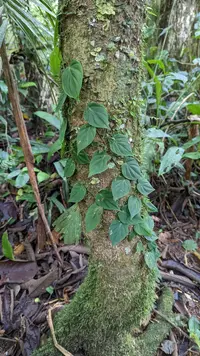
The plant produces slender, climbing stems that coil around nearby vegetation for support, an adaptation that allows it to reach better light in dense forest edges.
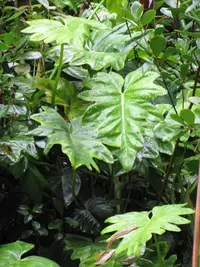
Its foliage typically shows heart-shaped to ovate leaves with clearly defined veins, a feature used by botanists to distinguish it from closely related Malagasy Dioscorea species.
This species is a twining vine. Stems naturally climb upward by wrapping around nearby supports, rather than creeping across the ground. In cultivation it benefits from a trellis, stake, or other vertical structure to guide growth.
Keep your plants happy and healthy with plant identification, disease detection, and easy care guidance.