Encourage Ground Coverage
Pinch back the longest runners in early spring to encourage branching, which creates a denser mat that suppresses weeds and stabilizes sandy or rocky soil.

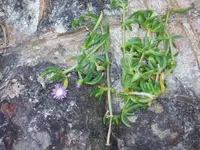
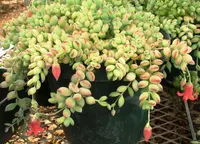
New Zealand ice plant, Disphyma australe, is a low, mat-forming succulent commonly found on coastal cliffs, sand dunes, and rocky shores. It spreads into dense cushions that help stabilize soil in windy, salty sites. Its fleshy, cylindrical leaves and bright, daisy-like flowers give it a distinctive look, especially in full sun. The plant is adapted to dry, exposed conditions and tolerates salt spray and poor, sandy soils. Thanks to its toughness and drought tolerance, it is generally easy to grow in suitable climates. Gardeners who care for New Zealand Ice Plant usually focus on providing strong light, sharp drainage, and avoiding prolonged wetness.

Care Difficulty
Easy Care

Light Preference
Full Sun

Water Requirements
Low Water

Temperature Preference
Warm Climate

Hardiness Zone
9–11

Soil Texture
Sandy, Loamy, Rocky

Soil pH
Slightly acidic (6.5–7.0), Slightly alkaline (7.0–7.5)

Soil Drainage
Well-drained

Fertilization
Minimal (feed rarely)
Scan your plant to receive care tips personalized for your specific plant
Available on iOS and Android
This coastal succulent needs abundant direct light to stay compact and flower well.
This species is drought-tolerant and prefers infrequent, deep watering over light, frequent splashes.
This coastal succulent prefers mild conditions but tolerates a broad temperature range when kept dry.
This coastal succulent handles low humidity well and rarely needs special humidity care indoors.
This succulent prefers lean, very free-draining, sandy soil that mimics coastal habitats.
This low, mat-forming species is suitable for container growing, especially in shallow, wide pots or troughs.
This coastal succulent needs only light feeding to stay compact and healthy.
Disphyma australe responds well to light pruning that maintains a dense, tidy mat.
This species is usually grown as a groundcover, with occasional transplanting rather than frequent repotting.
Disphyma australe is commonly propagated from stem cuttings and divisions for rapid coverage.
In mild coastal climates this plant needs little winter attention but dislikes hard frost.

Plant Health Check
Not sure what's wrong with your plant? Check your plant's health inside the app.
This species naturally grows on sea cliffs, dunes, and salt marsh margins in New Zealand and southern Australia, tolerating both salt spray and occasional seawater inundation that would kill most non-halophytic plants.
Its low, mat-forming growth and succulent leaves help stabilize sandy and rocky coastal soils, reducing erosion and providing ground cover in extreme, wind-exposed habitats.
Māori communities traditionally ate the fleshy leaves of this plant, either raw or cooked, using the naturally salty, slightly sour taste as a coastal vegetable.

Disphyma australe can accumulate high levels of salt in its succulent tissues and compartmentalize this salt inside specialized vacuoles in its cells, allowing normal photosynthesis to continue even when exposed to conditions close to seawater salinity.
This species spreads low and wide, but usually not aggressively in garden settings. It forms a dense mat over time. In mild coastal climates, monitor and trim edges occasionally so it does not smother smaller, slower plants.
Keep your plants happy and healthy with plant identification, disease detection, and easy care guidance.