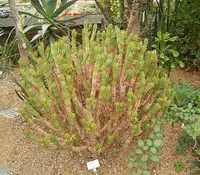
Winter rain protection
In regions with cool, wet winters, place a simple clear cover or cold frame over outdoor plants to keep the crown and roots from sitting in cold, saturated soil that encourages rot.

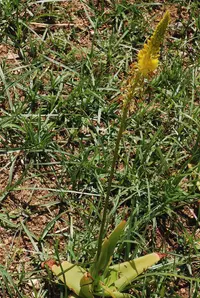
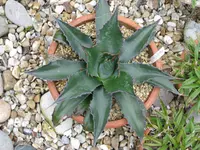
Bulbine latifolia, sometimes sold as Waterglass Kopieva, is a small, stemless succulent from South Africa. It forms tight rosettes of thick, smooth, lance-shaped leaves that store water. The plant typically produces upright flower stalks with small yellow star-shaped blooms, giving a neat, architectural look in pots or rock gardens. It stays relatively compact and slow-growing, which suits indoor containers and small outdoor spaces. This species comes from dry, rocky habitats, so it copes well with brief neglect and irregular watering. To care for Waterglass Kopieva successfully, provide bright light, a free-draining gritty soil mix, and allow the roots to dry slightly between waterings.

Care Difficulty
Easy Care

Light Preference
Full Sun

Water Requirements
Low Water

Temperature Preference
Warm Climate

Hardiness Zone
9–11

Soil Texture
Sandy, Loamy, Rocky

Soil pH
Slightly acidic (6.5–7.0), Neutral (7.0)

Soil Drainage
Well-drained

Fertilization
Minimal (feed rarely)
Scan your plant to receive care tips personalized for your specific plant
Available on iOS and Android
This sun-loving succulent thrives in bright, open positions with protection from the harshest afternoon rays.
This drought-tolerant species prefers deep but infrequent watering in sharply drained soil.
This plant is adapted to warm, dry conditions and performs best where frost is light and brief.
Bulbine latifolia tolerates typical indoor humidity, so focus more on light and watering than on air moisture.
Bulbine latifolia prefers a fast-draining, mineral-rich substrate that mimics its native rocky habitats.
This species is well suited to container growing when the pot and drainage are chosen carefully.
Bulbine latifolia is a light feeder but responds to modest nutrition during active spring–summer growth when grown in pots or lean soils.
Bulbine latifolia benefits from light, periodic pruning to maintain a tidy clump and sustain flowering.
Bulbine latifolia tolerates slightly root-bound conditions, so repotting or transplanting is only needed occasionally.
Bulbine latifolia is commonly propagated by division and seeds under warm, bright conditions.
Bulbine latifolia has moderate frost tolerance but benefits from simple winter precautions in colder regions.

Plant Health Check
Not sure what's wrong with your plant? Check your plant's health inside the app.
This species forms a tight basal rosette of thick, boat-shaped leaves that store water, an adaptation to the arid, rocky slopes and sandstone outcrops of its native South African habitat.
Its roots can pull the plant deeper into the soil over time, helping protect the leaf base from heat and desiccation in exposed, sun-baked environments.
In the wild it is often restricted to nutrient-poor, well-drained sandstone or quartzitic soils in the Western and Eastern Cape, making it a specialist of dry fynbos and succulent karoo ecosystems.

Genetic and morphological studies have shown that plants once described as Bulbine natalensis are now treated as conspecific with Bulbine latifolia, meaning they are considered the same species rather than two separate ones.
Lack of flowering usually comes from insufficient light, nutrient-poor soil, or an exhausted, overcrowded clump. Check that the plant receives strong light, has been fed lightly, and consider lifting, dividing, and replanting older, congested rosettes.
Keep your plants happy and healthy with plant identification, disease detection, and easy care guidance.