Use clean substrates
When cultivating this fungus on wood or agar, always sterilize or pasteurize the substrate to reduce competing molds that can quickly overrun slow-forming colonies.

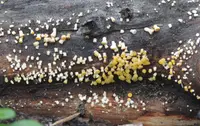
Ditiola radicata is a small, jelly-like fungus rather than a traditional leafy plant. It forms irregular, cushiony to club-shaped fruiting bodies with a gelatinous texture, usually yellowish to pale orange. These structures often appear on decaying wood in damp forests, especially in temperate regions. As a saprobe, it helps break down dead wood and recycle nutrients in the ecosystem. It is not commonly cultivated, and conditions suitable to care for Ditiola radicata are hard to reproduce reliably at home. Its growth depends strongly on constant moisture, shaded locations, and access to well-decayed wood rather than ordinary potting soil.

Care Difficulty
Moderate Care

Light Preference
Partial Shade

Water Requirements
Moderate Water

Temperature Preference
Warm Climate

Hardiness Zone
Unknown

Soil Texture
Loamy

Soil pH
Slightly acidic (6.5–7.0)

Soil Drainage
Well-drained

Fertilization
Minimal (feed rarely)
Scan your plant to receive care tips personalized for your specific plant
Available on iOS and Android
This wood-inhabiting fungus prefers cool, shaded forest conditions with only brief periods of direct light.
Moist, consistently damp wood or woody debris is essential for fruiting and persistence of this fungus.
This species is adapted to cool, temperate conditions and declines in prolonged heat or hard frost.
Humidity is not a significant factor for Ditiola radicata in typical outdoor conditions.
Ditiola radicata prefers light, well-drained substrates on decaying wood rather than conventional garden soil.
This species is not well suited to traditional container growing, as it develops best on natural decaying wood rather than in pots.
This wood-inhabiting fungus typically gains nutrients from decaying wood and does not require supplemental fertilization in cultivation.
Ditiola radicata needs no true pruning, but minor cleanup can maintain hygiene in cultivated or display settings.
Management of Ditiola radicata focuses on moving colonized wood or substrate rather than traditional repotting.
Propagation relies on spores or transferring colonized substrate rather than standard plant techniques.
This saprotrophic fungus is generally cold tolerant and needs minimal dedicated winter care in temperate climates.

Plant Health Check
Not sure what's wrong with your plant? Check your plant's health inside the app.
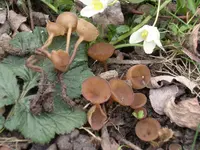
This species produces small, gelatinous fruiting bodies that are cushion-shaped to irregular, often with a translucent yellow to orange color when fresh and moist.
It is characterized by a distinct, tough, rooted basal portion that anchors the soft, upper fertile tissue to the substrate, a key feature used by mycologists to identify the species.
The fungus grows on dead angiosperm wood, where it contributes to the decomposition of lignocellulose, helping recycle nutrients back into forest ecosystems.
This jelly fungus is regarded as inedible. It is small, insubstantial, and not used as food. Identification can also be difficult, so it should not be collected for consumption or used in culinary dishes.
Keep your plants happy and healthy with plant identification, disease detection, and easy care guidance.