Host tree matching
Establish the fungus only with compatible pine species (especially 2–4-year-old Pinus seedlings in pots or beds), since this mushroom forms a mycorrhiza that is highly host-specific and will not persist on unsuitable trees.

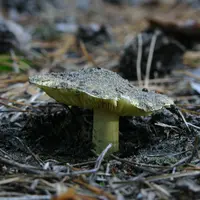
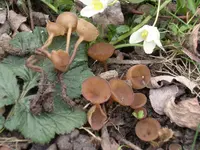
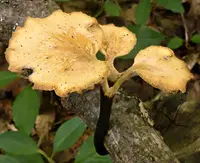
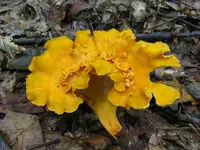
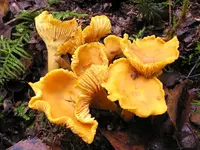
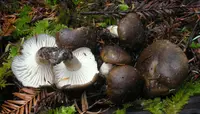
Yellow knight, Tricholoma equestre, is a wild mushroom-forming fungus rather than a typical garden plant. It forms fleshy, yellow caps with pale gills and a sturdy stem, usually appearing in small groups.
This species naturally occurs in pine forests across parts of Europe, Asia, and North America, often fruiting in sandy, well-drained soils with conifer roots. It depends on a mycorrhizal partnership, where fungal threads exchange nutrients with tree roots, which makes it difficult to grow in ordinary garden or container conditions.
Anyone planning to care for Yellow Knight should understand that replicating its forest soil community and tree association is challenging, so it is not a beginner-friendly species to cultivate.

Care Difficulty
Hard Care

Light Preference
Partial Shade

Water Requirements
Keep Soil Moist

Temperature Preference
Cool Climate

Hardiness Zone
Unknown

Soil Texture
Sandy, Loamy, Organic-rich

Soil pH
Acidic (5.5–6.5)

Soil Drainage
Moist but well-drained

Fertilization
Minimal (feed rarely)
Scan your plant to receive care tips personalized for your specific plant
Available on iOS and Android
This mycorrhizal mushroom prefers cool, dappled forest light rather than open, direct sun.
This forest fungus depends on steady, moderate soil moisture rather than frequent surface wetting.
This species fruits best in cool to mild conditions typical of autumn pine forests.
Humidity is not a key factor for Tricholoma equestre, which forms fungi in outdoor soil rather than living as a houseplant.
This fungus relies on specific outdoor soil conditions rather than a standard potting substrate.
This species is not suitable for container growing because it depends on a complex mycorrhizal association with living trees in open soil.
This ectomycorrhizal fungus relies on its tree partners for nutrition and usually does not benefit from added fertilizer in garden settings.
Tricholoma equestre is a wild, mycorrhizal fungus that is not pruned in the way ornamental plants or shrubs are managed.
This species is not suited to conventional repotting because it forms essential root partnerships with living trees in the soil.
Tricholoma equestre propagation under garden or indoor conditions is very unreliable and rarely attempted by non-specialists.
This forest-dwelling fungus is naturally cold hardy in its native range and needs no special winter care in the ground.

Plant Health Check
Not sure what's wrong with your plant? Check your plant's health inside the app.
This species was long regarded as a good edible mushroom in parts of Europe and was traditionally collected in large quantities, especially in France and Eastern Europe, before safety concerns emerged.
Several well-documented poisoning cases linked to repeated meals of this species have shown delayed onset muscle breakdown (rhabdomyolysis), leading many mycologists and health authorities to now classify it as a dangerous mushroom.
It typically forms mycorrhizal associations with pines on nutrient-poor, sandy soils, and is often found in coastal or inland dune forests where few other larger fungi fruit abundantly.

Despite its historical reputation as an edible, some European countries have imposed formal restrictions or strong official warnings against collecting and consuming this species, making it one of the few once-popular wild mushrooms to be effectively reclassified as unsafe.
This mushroom was once eaten in parts of Europe but is now considered unsafe. Repeated meals have been linked to severe muscle breakdown and even death. Modern field guides classify it as toxic and strongly advise against consumption.
Keep your plants happy and healthy with plant identification, disease detection, and easy care guidance.